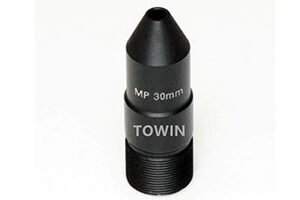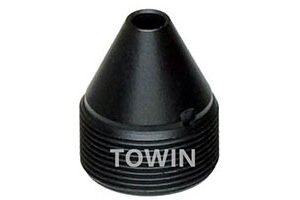


In the realm of optical engineering and imaging technology, innovation often hinges on refining existing tools to achieve unprecedented precision. Enter the 3D scanning pinhole lens, a groundbreaking advancement that merges the simplicity of pinhole optics with the sophistication of 3D scanning. This hybrid technology is redefining standards in fields like medical imaging, industrial inspection, and cultural heritage preservation.
What Is a 3D Scanning Pinhole Lens?
A 3D scanning pinhole lens is a specialized optical device that combines the principles of pinhole photography—where light passes through a tiny aperture to form an image—with 3D scanning capabilities. Unlike traditional lenses, which rely on curved surfaces to focus light, a pinhole lens uses a minuscule opening to project a sharp, distortion-free image. When integrated with 3D scanning systems, this setup captures depth data alongside visual information, enabling the creation of detailed 3D models with submillimeter accuracy.
The core advantage of a 3D scanning pinhole lens lies in its ability to eliminate optical aberrations common in conventional lenses, such as chromatic distortion or spherical aberration. This results in cleaner, more reliable scans, even in challenging lighting conditions. Additionally, its compact design makes it ideal for portable 3D scanners, drone-mounted systems, and endoscopic devices.
How Does a 3D Scanning Pinhole Lens Work?
The operation of a 3D scanning pinhole lens hinges on two key processes: light projection and data capture. Here’s a step-by-step breakdown:
- Light Projection: The lens projects a structured light pattern (e.g., laser grids or infrared dots) onto the object’s surface. This pattern deforms based on the object’s contours, encoding depth information into the reflected light.
- Image Capture: The pinhole aperture captures the reflected light, forming a 2D image. Due to the pinhole’s small size, the image is inherently sharp, with minimal blurring.
- 3D Reconstruction: Software analyzes the deformation of the light pattern in the captured image, triangulating millions of data points to generate a high-resolution 3D model.
This process is faster and more accurate than traditional photogrammetry, which requires multiple images from different angles. A 3D scanning pinhole lens achieves similar results in a single pass, making it invaluable for time-sensitive applications like quality control in manufacturing or real-time surgical navigation.
Applications of the 3D Scanning Pinhole Lens
- Medical Imaging: Surgeons use pinhole-based 3D scanners to create detailed anatomical models for preoperative planning. The lens’s precision ensures minimal margin for error during complex procedures.
- Industrial Inspection: Automakers and aerospace engineers deploy these lenses to detect microscopic defects in components, ensuring compliance with stringent safety standards.
- Cultural Heritage Preservation: Archaeologists leverage 3D scanning pinhole lens technology to digitize fragile artifacts, preserving their structure for future generations without physical contact.
- Robotics and AI: Autonomous systems rely on pinhole-lens 3D scanners for environmental mapping, enabling navigation in cluttered spaces with unparalleled accuracy.
Advantages Over Traditional 3D Scanning Methods
- Higher Resolution: The pinhole’s small aperture minimizes light diffraction, capturing finer details than larger lenses.
- Compact Size: Its lightweight design allows integration into handheld devices, drones, or even smartphones.
- Cost-Effectiveness: Fewer moving parts and reduced calibration needs lower manufacturing and maintenance costs.
- Durability: Without delicate curved surfaces, the lens resists scratches and environmental damage, extending its lifespan.
Challenges and Limitations
Despite its strengths, the 3D scanning pinhole lens isn’t without challenges. Its narrow aperture limits light intake, requiring longer exposure times in low-light conditions. Additionally, achieving deep depth of field (the range of distances where objects appear sharp) can be difficult, though advancements in sensor technology are mitigating this issue.
Future Innovations in 3D Scanning Pinhole Lens Technology
Researchers are exploring ways to enhance the 3D scanning pinhole lens further. One promising avenue is the use of metamaterials—engineered surfaces that manipulate light at the subwavelength scale—to improve light efficiency. Another is the integration of AI-driven algorithms to auto-correct distortions in real time, boosting scan speed and accuracy.
FAQs
What is the primary use of a 3D scanning pinhole lens?
The primary use is capturing high-precision 3D models of objects by projecting structured light through a tiny aperture and analyzing the reflected patterns.
How does a 3D scanning pinhole lens differ from a regular pinhole camera?
A regular pinhole camera captures 2D images, while a 3D scanning pinhole lens works with 3D scanning systems to measure depth and create 3D models.
Can a 3D scanning pinhole lens be used in low-light environments?
Yes, but it may require longer exposure times or supplemental lighting due to the pinhole’s limited light intake.
Is 3D scanning pinhole lens technology expensive?
While initial costs can be high, advancements in manufacturing are driving down prices, making it more accessible for small businesses and researchers.
What industries benefit most from 3D scanning pinhole lens technology?
Medical, industrial, and cultural heritage sectors see significant advantages due to the lens’s precision and non-invasive scanning capabilities.
Conclusion
The 3D scanning pinhole lens represents a leap forward in imaging technology, offering unmatched precision, portability, and cost-efficiency. As industries continue to demand faster, more accurate 3D scanning sol-utions, this innovation is poised to become a cornerstone of modern engineering and research.