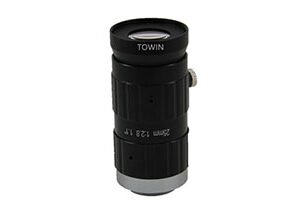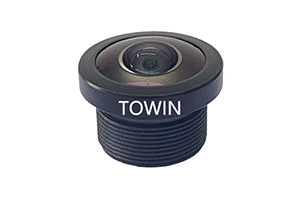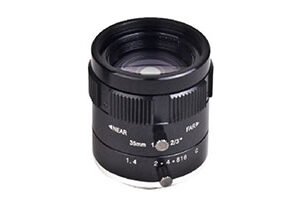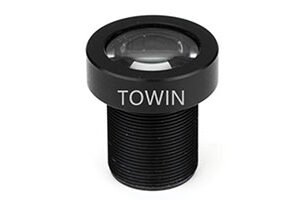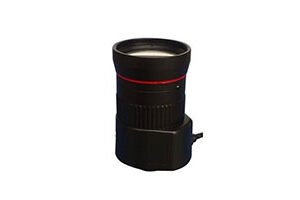


When it comes to Industrial Lens, selecting the right focal length is critical for achieving optimal performance in machine vision, quality control, and automation systems. Two common options—3mm vs. 6mm Industrial Lenses—offer distinct advantages depending on the application.
Understanding Focal Length in Industrial Lenses
The focal length of an Industrial Lens determines its field of view (FOV), depth of field (DOF), and resolution capabilities. Shorter focal lengths (e.g., 3mm) provide a wider FOV but shallower DOF, while longer focal lengths (e.g., 6mm) narrow the FOV but increase DOF and magnification.
Key Factors to Consider:
- Resolution: Higher magnification lenses (like 6mm) often resolve finer details but require precise alignment.
- Depth of Field: 6mm lenses excel in applications requiring focus across varying distances, such as 3D inspections.
- Light Sensitivity: Shorter focal lengths gather more light, making 3mm lenses ideal for low-light environments.
- Cost: 6mm lenses are typically pricier due to their advanced optics.
3mm Industrial Lenses: When to Use Them
3mm Industrial Lenses are best suited for applications requiring a wide FOV and compact setups. Here’s why:
1. Wide-Angle Imaging
- Perfect for capturing large areas in a single frame, such as warehouse inventory tracking or large-scale material inspections.
- Example: Monitoring a conveyor belt carrying multiple products simultaneously.
2. Low-Light Performance
- The wider aperture of 3mm lenses allows more light to enter, reducing the need for external illumination.
- Ideal for outdoor or dimly lit industrial environments.
3. Space Constraints
- Their compact size makes them suitable for robotic arms or drones where space is limited.
Limitations:
- Shallower DOF may blur objects outside a narrow focal plane.
- Lower magnification reduces detail resolution for small features.
6mm Industrial Lenses: When to Use Them
6mm Industrial Lenses shine in applications demanding precision and flexibility. Here’s why:
High Magnification
- Captures fine details, such as micro-defects on electronic components or pharmaceutical packaging.
- Example: Inspecting solder joints on circuit boards.
Extended Depth of Field
- Maintains focus across varying distances, crucial for 3D measurements or curved surfaces.
- Useful in automotive part inspections where components have complex geometries.
Reduced Distortion
- Longer focal lengths minimize lens distortion, ensuring accurate measurements in metrology applications.
Limitations:
- Narrower FOV requires multiple cameras or lens adjustments for large areas.
- Higher cost and sensitivity to misalignment.
3mm vs. 6mm Industrial Lens Guide: Comparative Analysis(999)
How to Choose Between 3mm and 6mm Industrial Lenses
Define Your Application Requirements
- Do you need to inspect large areas or tiny defects?
- Is lighting controlled, or will the lens operate in low light?
Evaluate Space Constraints
- A 3mm lens fits better in compact systems, while a 6mm lens may require additional mounting space.
Consider Budget
- For cost-sensitive projects, a 3mm lens may suffice. For mission-critical precision, invest in a 6mm lens.
FAQs
Can a 6mm Industrial Lens replace a 3mm lens?
Not always. A 6mm lens narrows the FOV, which may not be suitable for applications requiring broad coverage.
Are 3mm Industrial Lenses cheaper than 6mm lenses?
Generally, yes. 3mm lenses are simpler in design and cost less to manufacture.
Which lens is better for outdoor use?
A 3mm Industrial Lens performs better in low-light outdoor conditions due to its wider aperture.
Do 6mm Industrial Lenses require more maintenance?
Yes. Their higher precision makes them more sensitive to dust, vibrations, and misalignment.
Final Thoughts
Choosing between 3mm vs. 6mm Industrial Lenses depends on your specific needs. For wide-area, low-light applications, a 3mm lens is ideal. For high-magnification, detail-oriented tasks, a 6mm lens is the better choice. Always test lenses in real-world conditions to ensure compatibility with your system.