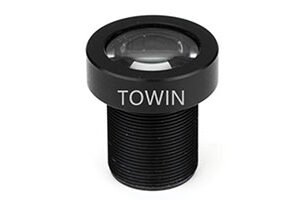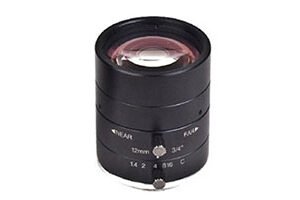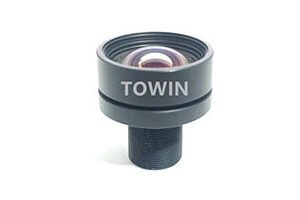


In an era where visual clarity is non-negotiable, the Ultra-low distortion lens stands as a game-changer. Designed to minimize optical aberrations like chromatic distortion, barrel distortion, and pincushion effects, these lenses deliver unparalleled accuracy.
What Makes an Ultra-Low Distortion Lens Special?
An Ultra-low distortion lens is engineered using advanced optical designs and materials to correct imperfections that plague standard lenses. Traditional lenses often bend light unevenly, causing straight lines to appear curved or colors to separate at edges. In contrast, Ultra-low distortion lenses use aspherical elements, low-dispersion glass, and multi-coating technologies to ensure light travels uniformly, preserving image integrity.
For instance, in architectural photography, even slight distortion can warp building edges, making them look unnatural. An Ultra-low distortion lens eliminates this issue, capturing structures with pixel-perfect accuracy. Similarly, in industrial machine vision systems, these lenses ensure quality control by detecting defects without optical interference.
Technical Specifications of Ultra-Low Distortion Lenses
-
- Aspherical Elements: Unlike spherical lenses, aspherical surfaces curve more gradually, reducing distortion and improving edge sharpness.
-
- ED (Extra-Low Dispersion) Glass: Minimizes chromatic aberration by focusing all wavelengths of light to the same point.
-
- Multi-Layer Coatings: Reduce glare and reflections, enhancing contrast and color fidelity.
- Floating Elements: Adjust the distance between lens groups to maintain focus at varying distances, critical for macro photography.
A study by Optical Engineering Journal found that Ultra-low distortion lenses reduce total distortion to below 0.1%, compared to 1-2% in standard lenses. This precision is vital for applications like 3D scanning, where even minor errors can disrupt measurements.
Applications of Ultra-Low Distortion Lenses
-
- Photography & Cinematography: Professional filmmakers and photographers rely on these lenses for wide-angle shots without warping. For example, the Canon EF 11-24mm f/4L USM, a popular Ultra-low distortion lens, is praised for its near-zero distortion in landscape photography.
-
- Industrial Inspection: In semiconductor manufacturing, Ultra-low distortion lenses inspect wafer surfaces for defects with microscopic accuracy.
-
- Medical Imaging: Endoscopes and MRI machines use these lenses to produce clear, undistorted images for diagnostics.
- Augmented Reality (AR): AR headsets depend on distortion-free optics to overlay digital content seamlessly onto the real world.
FAQs
1. What is the main advantage of an Ultra-Low Distortion Lens?
The primary benefit is eliminating optical distortions, ensuring straight lines remain straight and colors are true-to-life. This is critical for technical photography, surveillance, and scientific research.
2. Are Ultra-Low Distortion Lenses more expensive?
Yes, due to their complex design and premium materials. However, the cost is justified for professionals who need flawless results.
3. Can I use an Ultra-Low Distortion Lens for portrait photography?
Absolutely! While these lenses excel in wide-angle and macro shots, they also produce sharp, natural-looking portraits by avoiding facial distortion.
4. How do I clean an Ultra-Low Distortion Lens?
Use a microfiber cloth and lens-cleaning solution. Avoid abrasive materials, as scratches can degrade optical performance.
5. Why Invest in an Ultra-Low Distortion Lens?
The answer lies in precision and reliability. For industries where errors cost millions—like aerospace or pharmaceuticals—an Ultra-low distortion lens is indispensable. Even hobbyists upgrading from standard lenses notice a dramatic improvement in image quality.
Conclusion
The Ultra-low distortion lens is not just a tool—it’s a standard for excellence. By combining cutting-edge materials with meticulous engineering, these lenses push the boundaries of what’s visually possible.