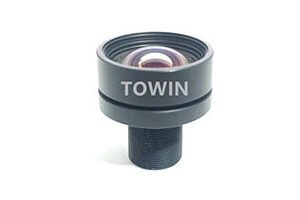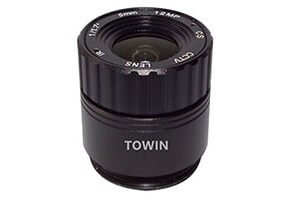


Machine vision systems rely on precision optics to capture crisp, detailed images. Among the critical components, Fixed focus lenses stand out for their ability to maintain sharp focus across a defined depth of field (DoF), eliminating the need for manual adjustments.
Understanding Depth of Field in Machine Vision
Depth of field refers to the range of distances within which objects appear acceptably sharp in an image. In machine vision, a controlled DoF is vital for tasks like quality inspection, barcode scanning, and 3D reconstruction. Fixed focus lenses simplify this by locking focus at a specific distance, ensuring consistent performance across predefined working ranges.
Unlike variable-focus lenses, which require mechanical adjustments, Fixed focus lenses offer:
- Stability: No moving parts reduce wear and tear.
- Speed: Instant focus eliminates calibration delays.
- Cost-Efficiency: Lower maintenance and simpler design.
Towin’s Fixed Focus Lenses: Technical Specifications
Towin’s Fixed focus lenses are engineered for high-precision machine vision applications. Below are their key parameters:
- 1. Focal Length: Ranges from 8mm to 50mm, catering to diverse field-of-view requirements.
- 2. Aperture: Fixed f/2.8 to f/16, balancing light intake and DoF control.
- 3. Resolution: Up to 5 megapixels, ensuring clarity for detailed inspections.
- 4. Mount Type: C-Mount and CS-Mount compatibility for seamless integration.
- 5. Operating Distance: 100mm to 2,000mm, adaptable to industrial setups.
- 6. Distortion: <0.1%, minimizing geometric errors in imaging.
- 7. Environmental Resistance: IP67-rated housing for dust and water protection.
Why Towin Stands Out
Towin’s lenses incorporate advanced aspherical elements to reduce aberrations, enhancing edge-to-edge sharpness. Their compact design suits space-constrained environments, while anti-reflective coatings improve light transmission by up to 99%.
Applications of Fixed Focus Lenses in Machine Vision
Fixed focus lenses excel in scenarios where:
- High Throughput is critical (e.g., conveyor belt inspections).
- Environmental Stability is required (e.g., outdoor surveillance).
- Cost-Effectiveness is prioritized over adjustable focus.
Case Study: Automotive Part Inspection
A leading automotive manufacturer deployed Towin’s 16mm Fixed focus lenses to inspect engine components. The lenses’ 50mm DoF allowed simultaneous focus on multiple parts, reducing inspection time by 30% compared to auto-focus alternatives.
FAQs
1. How does depth of field vary with aperture in Fixed focus lenses?
A smaller aperture (higher f-number) increases DoF but reduces light intake. Towin’s lenses optimize this balance, offering f/8 as a standard for most industrial applications.
2. Can Fixed focus lenses replace auto-focus systems?
Yes, in static or repetitive tasks where the working distance is constant. Auto-focus is preferable for dynamic environments with varying object distances.
3. What is the maximum resolution Towin’s Fixed focus lenses support?
Towin offers lenses up to 5 megapixels, suitable for high-detail applications like semiconductor inspection.
4. Are Fixed focus lenses suitable for low-light conditions?
While they lack adjustable apertures, Towin’s lenses feature low-f-number options (e.g., f/2.8) to maximize light intake.
5. How do environmental factors affect Fixed focus lenses?
Towin’s IP67-rated lenses resist dust and moisture, making them ideal for harsh industrial settings.
Choosing the Right Fixed Focus Lens: Towin’s Advantage
Selecting a Fixed focus lens involves evaluating:
- Working Distance: Match the lens’s focal length to your setup.
- Sensor Size: Ensure compatibility with your camera’s sensor.
- Lighting Conditions: Opt for lower f-numbers in dim environments.
Towin provides customization options, including focal length adjustments and specialized coatings. Their technical team offers free consultations to align lens specifications with your project needs.
Conclusion
Fixed focus lenses: depth of field in machine vision is not just a technicality—it’s a strategic advantage. By eliminating focus drift and reducing complexity, these lenses enhance reliability and efficiency. Towin’s products, with their precision engineering and robust design, exemplify how Fixed focus lenses can elevate machine vision systems to new heights.