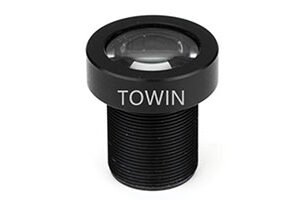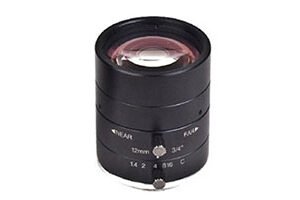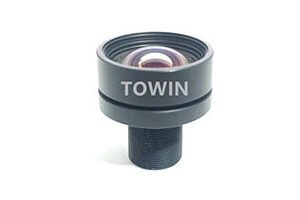


Photography enthusiasts and professionals alike understand the frustration of distorted images—curved lines, warped edges, and compromised clarity. Enter the low distortion prime lens, a game-changer in optical technology designed to deliver razor-sharp, true-to-life visuals.
What Makes a Low Distortion Lens Stand Out?
A low distortion lens is engineered to reduce geometric distortions, such as barrel distortion (where straight lines bulge outward) or pincushion distortion (where lines pinch inward). Unlike zoom lenses, which often compromise on optical purity to accommodate multiple focal lengths, prime lenses focus on a single focal length, allowing manufacturers to optimize design elements like lens elements, coatings, and aperture mechanisms.
The result? Images with near-perfect straight lines, minimal chromatic aberration, and edge-to-edge sharpness. For architects capturing skyscrapers or portrait photographers framing subjects, this precision is invaluable.
Key Advantages of a Low Distortion Prime Lens
1. Crystal-Clear Sharpness
A low distortion prime lens eliminates the softness often seen at the edges of zoom lenses. This makes it ideal for high-resolution cameras, ensuring every detail—from fine textures to distant subjects—remains crisp.
2. Accurate Geometric Representation
Architectural and product photographers rely on straight lines to convey realism. A low distortion prime lens ensures vertical and horizontal lines stay perfectly parallel, avoiding the need for heavy post-processing corrections.
3. Compact and Lightweight Design
Prime lenses typically have fewer moving parts than zooms, making them lighter and more portable. This is a boon for travel photographers or those shooting handheld for extended periods.
4. Superior Low-Light Performance
Many low distortion prime lenses feature wide apertures (e.g., f/1.4 or f/2.8), allowing more light to hit the sensor. This reduces noise in low-light conditions and enables creative depth-of-field effects.
5. Cost-Effective Optical Excellence
While high-end zoom lenses can be prohibitively expensive, a quality low distortion prime lens often offers better value for money, delivering professional-grade results without breaking the bank.
How to Choose the Right Low Distortion Prime Lens
When selecting a low distortion prime lens, consider these factors:
- Focal Length: Common options include 35mm, 50mm, and 85mm. Wide-angle primes (e.g., 24mm) are great for landscapes, while telephoto primes (e.g., 85mm) excel in portraits.
- Aperture: A wider aperture (lower f-number) provides better low-light performance and bokeh.
- Build Quality: Look for weather-sealed lenses if you shoot outdoors frequently.
- Autofocus Speed: For action photography, prioritize lenses with fast, accurate autofocus.
FAQs
1. What is the main benefit of a low distortion prime lens?
The primary advantage is minimizing geometric distortions, ensuring straight lines in architecture or product shots remain unaltered. This saves time in post-processing and delivers a more professional look.
2. Are low distortion prime lenses only for professionals?
Not at all! Hobbyists and enthusiasts benefit equally from the sharpness and clarity these lenses offer. Their affordability and ease of use make them accessible to all skill levels.
3. Can a low distortion prime lens replace a zoom lens?
While a prime lens excels in optical quality, it lacks the versatility of a zoom. However, many photographers carry multiple primes to cover different focal lengths without sacrificing image integrity.
4. Do low distortion prime lenses work well in low light?
Yes! Many models feature wide apertures (e.g., f/1.4), allowing them to gather more light than zoom lenses with narrower apertures (e.g., f/4). This makes them ideal for indoor or nighttime photography.
5. How often should I clean my low distortion prime lens?
Regular cleaning is essential to maintain image quality. Wipe the front and rear elements with a microfiber cloth after each shoot, and use a blower to remove dust from the barrel.
Final Thoughts
In an era where image quality is non-negotiable, a low distortion prime lens is a must-have tool. Its ability to deliver distortion-free, tack-sharp images elevates your work from amateur to professional.