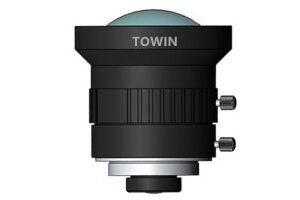


Machine vision lenses are transforming industries by enabling high-speed, high-accuracy imaging systems that automate processes, reduce errors, and enhance productivity. From manufacturing floors to medical labs, these advanced optical components are critical for applications requiring precision, reliability, and efficiency.
What Industries Use Machine Vision Lenses?
Machine vision lenses are specialized optical systems designed to capture, process, and analyze visual data with minimal human intervention. Their ability to detect defects, measure dimensions, and guide robotic systems makes them indispensable across multiple sectors.
1. Manufacturing & Industrial Automation
The manufacturing sector is the largest adopter of machine vision lenses, using them for quality control, assembly verification, and robotic guidance. These lenses enable:
- Defect Detection: Identifying surface flaws, cracks, or misalignments in real time.
- Dimensional Measurement: Ensuring components meet precise specifications.
- Barcode & Text Recognition: Tracking products through production lines.
For example, in automotive manufacturing, machine vision lenses inspect engine parts for defects at speeds exceeding 1,000 units per hour. This reduces waste and ensures compliance with strict safety standards.
2. Automotive Industry
The automotive sector relies heavily on machine vision lenses for:
- Assembly Line Inspection: Verifying part placement and alignment.
- Paint & Finish Quality: Detecting imperfections in vehicle exteriors.
- ADAS Calibration: Testing sensors for advanced driver-assistance systems.
Companies like Tesla and BMW use machine vision systems to automate inspections, cutting inspection times by up to 70% while improving accuracy.
3. Pharmaceutical & Healthcare
In healthcare, machine vision lenses are revolutionizing diagnostics and drug production:
- Pill Inspection: Sorting tablets by size, shape, and color.
- Medical Device Assembly: Ensuring sterile components are correctly assembled.
- Microscopic Imaging: Analyzing tissue samples for disease detection.
4. Food & Beverage Processing
Machine vision lenses play a critical role in ensuring food safety and quality:
- Foreign Object Detection: Identifying contaminants like metal or glass.
- Packaging Integrity: Checking seals and labels for compliance.
- Sorting & Grading: Classifying produce by size, ripeness, or defect level.
For instance, a leading potato chip manufacturer uses machine vision to reject 99.9% of defective chips before packaging, reducing waste and improving customer satisfaction.
5. Electronics & Semiconductor Manufacturing
The electronics industry demands microscopic precision, making machine vision lenses essential for:
- PCB Inspection: Detecting soldering defects or missing components.
- Wafer Inspection: Identifying flaws in silicon chips during production.
- Component Placement: Guiding robots to place tiny parts accurately.
Semiconductor giants like Intel and TSMC rely on machine vision systems to maintain yield rates above 95%, even as chip sizes shrink to nanometer scales.
6. Logistics & Warehousing
E-commerce and logistics companies use machine vision lenses to optimize operations:
- Barcode Scanning: Accelerating package sorting in warehouses.
- Dimensional Weighing: Calculating shipping costs automatically.
- Robotic Picking: Guiding robots to select items from shelves.
Amazon’s robotic fulfillment centers, for example, use machine vision to process over 500,000 orders daily with near-perfect accuracy.
7. Agriculture & Farming
Precision agriculture leverages machine vision lenses for:
- Crop Monitoring: Assessing plant health via drone imagery.
- Fruit Picking: Identifying ripe produce for automated harvesting.
- Livestock Management: Tracking animal behavior and health.
Startups like Blue River Technology (acquired by John Deere) use machine vision to spray herbicides only on weeds, reducing chemical use by 90%.
Why Machine Vision Lenses Are Critical for Modern Industries
The adoption of machine vision lenses is driven by their ability to:
- Reduce Labor Costs: Automating tasks that once required manual inspection.
- Improve Accuracy: Eliminating human error in quality control.
- Enhance Speed: Processing thousands of items per minute.
- Enable Data-Driven Decisions: Providing real-time analytics for process optimization.
FAQs
1. What makes machine vision lenses different from regular lenses?
Machine vision lenses are engineered for industrial environments, offering higher resolution, durability, and compatibility with specialized lighting and sensors.
2. How do industries choose the right machine vision lens?
Selection depends on factors like resolution requirements, working distance, and environmental conditions (e.g., temperature, vibration).
3. Can machine vision lenses work in low-light conditions?
Yes, many lenses are designed with low-light capabilities and can integrate with infrared or structured lighting systems.
4. Are machine vision lenses expensive?
While high-end lenses can be costly, advancements in manufacturing have made them more affordable for small and mid-sized businesses.
5. What industries use machine vision lenses the most?
Manufacturing, automotive, and electronics are the top adopters, but healthcare, agriculture, and logistics are rapidly catching up.
Conclusion
As industries continue to prioritize automation and efficiency, the demand for machine vision lenses will surge. From ensuring flawless car parts to sorting ripe strawberries, these tools are reshaping how businesses operate.