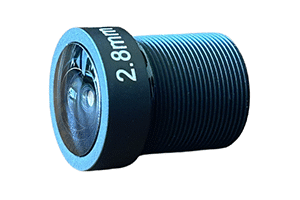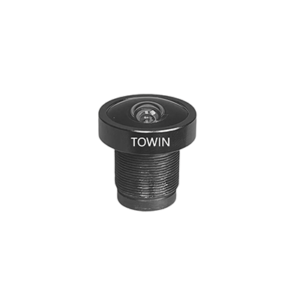


Photography enthusiasts and professionals alike understand the transformative power of a high-quality lens. Among the most coveted tools in a photographer’s arsenal is the F1.8 Wide Angle Lens, a marvel of optical engineering that combines speed, versatility, and breathtaking clarity.
Why Choose an F1.8 Wide Angle Lens?
The F1.8 aperture is a standout feature, offering exceptional light-gathering capabilities. This makes the lens ideal for low-light conditions, such as golden-hour photography or indoor events, where natural light is limited. The wide aperture also enables a shallow depth of field, allowing photographers to isolate subjects with creamy bokeh while keeping the background softly blurred.
A Wide Angle Lens typically covers a focal length range of 14mm to 35mm, providing a broader field of view than standard lenses. This expansive perspective is perfect for architectural photography, real estate, travel, and creative storytelling. When paired with an F1.8 aperture, the lens becomes a powerhouse for both artistic and practical applications.
Key Benefits of the F1.8 Wide Angle Lens
- 1. Superior Low-Light Performance: The F1.8 aperture lets in significantly more light than f/2.8 or f/4 lenses, reducing the need for high ISO settings and minimizing noise.
- 2. Fast Autofocus: Wide apertures improve autofocus speed and accuracy, making it easier to capture moving subjects or spontaneous moments.
- 3. Creative Depth of Field: Achieving a shallow depth of field with a wide-angle lens is rare but possible with F1.8, adding a professional touch to portraits or macro shots.
- 4. Versatility: From astrophotography to vlogging, the F1.8 Wide Angle Lens adapts to diverse shooting scenarios.
Technical Specifications to Consider
When selecting an F1.8 Wide Angle Lens, focus on these critical factors:
- Focal Length: Opt for a lens that suits your style. A 16-35mm zoom offers flexibility, while a 24mm prime excels in portability.
- Image Stabilization: Some lenses include built-in stabilization, which is invaluable for handheld shooting in dim conditions.
- Build Quality: Weather-sealed lenses resist dust and moisture, ensuring durability in challenging environments.
- Weight and Size: Compact lenses are easier to carry for travel photographers.
Practical Applications of the F1.8 Wide Angle Lens
- Landscape Photography: Capture vast skies and rolling terrains with minimal distortion.
- Real Estate: Showcase entire rooms or exterior properties in a single frame.
- Event Photography: Freeze moments in crowded venues without sacrificing clarity.
- Astrophotography: The fast aperture excels at capturing the Milky Way or star trails.
Common Challenges and Solutions
While the F1.8 Wide Angle Lens is a stellar performer, it’s not without quirks:
- Distortion: Wide-angle lenses may introduce barrel distortion at the edges. Post-processing software like Adobe Lightroom can correct this.
- Chromatic Aberration: Some lenses exhibit color fringing at high contrast edges. Modern optics and in-camera corrections mitigate this issue.
- Focus Accuracy: At F1.8, the narrow depth of field demands precise focusing. Use manual focus or focus peaking for critical shots.
FAQs
1. Is an F1.8 Wide Angle Lens worth the investment?
Absolutely. If you frequently shoot in low light or need creative control over depth of field, the F1.8 aperture justifies the cost.
2. Can I use an F1.8 Wide Angle Lens for portraits?
Yes! While wide-angle lenses aren’t traditional for portraits, they can create dramatic perspectives when used creatively. Just be mindful of distortion near the edges.
3. How does an F1.8 Wide Angle Lens compare to zoom lenses?
Prime lenses like the F1.8 often offer sharper images and faster apertures than zooms. However, zooms provide flexibility at the expense of bulk and cost.
4. What cameras are compatible with F1.8 Wide Angle Lenses?
Most major brands (Sony, Canon, Nikon, Fujifilm) offer F1.8 wide-angle options. Ensure compatibility with your camera’s mount system.
5. Does the F1.8 Wide Angle Lens work well for video?
Definitely. The fast aperture ensures smooth exposure transitions in varying light, while the wide field of view suits vlogging and cinematic shots.
Conclusion
The F1.8 Wide Angle Lens is a versatile tool that empowers photographers to push creative boundaries. Its ability to deliver sharp, high-contrast images in low light—coupled with the artistic freedom of a wide aperture—makes it indispensable for professionals and hobbyists alike.