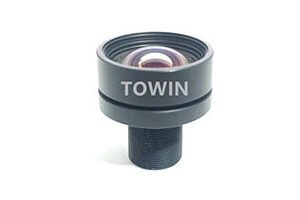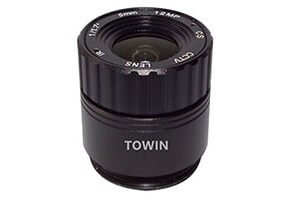


Fixed focus lenses are a cornerstone of optical systems, used in everything from surveillance cameras to industrial machinery. However, not all fixed focus lenses are created equal. The debate between aspherical vs. spherical fixed focus lenses centers on design, performance, and cost.
What Are Fixed Focus Lenses?
Fixed focus lenses, also known as prime lenses, maintain a single focal length without adjustable focusing mechanisms. Unlike zoom lenses, they prioritize simplicity, durability, and often superior image quality. Their rigid design makes them ideal for applications requiring consistent performance, such as CCTV, machine vision, or automotive imaging.
Aspherical vs. Spherical Fixed Focus Lenses: Core Differences
The primary distinction lies in their surface design:
- Spherical lenses use a curved surface that follows a perfect sphere.
- Aspherical lenses feature a non-spherical, complex curvature that corrects aberrations.
1. Image Quality
- Spherical lenses suffer from spherical aberration, where light rays focus at different points, causing blur or distortion. This is particularly noticeable at the edges of the frame.
- Aspherical lenses eliminate spherical aberration by flattening the curvature, resulting in sharper images, improved contrast, and reduced distortion. Towin’s aspherical fixed focus lenses, for example, achieve edge-to-edge clarity even in low-light conditions.
2. Lens Complexity and Size
- Spherical lenses are simpler to manufacture, making them cost-effective for basic applications. However, correcting aberrations often requires multiple lens elements, increasing bulk.
- Aspherical lenses use fewer elements to achieve similar or better results, enabling compact designs. Towin’s ultra-thin aspherical lenses (e.g., the TAF-1220M series) exemplify this, offering high performance in a lightweight package.
3. Cost and Manufacturing
- Producing spherical lenses is cheaper due to their straightforward design. Aspherical lenses require precision molding or polishing, raising costs. However, their efficiency can reduce system expenses by minimizing the need for additional corrective optics.
- Towin balances affordability and quality, offering spherical lenses for budget-conscious projects and premium aspherical options for high-end applications.
4. Applications
- Spherical fixed focus lenses are ideal for cost-sensitive uses like basic surveillance or consumer electronics.
- Aspherical fixed focus lenses excel in professional photography, medical imaging, and autonomous vehicles, where precision is critical.
Towin’s Fixed Focus Lens Offerings
Towin specializes in both spherical and aspherical fixed focus lenses, tailored to diverse needs:
- Spherical Series (e.g., TSF-812M): Affordable, rugged, and suitable for outdoor CCTV.
- Aspherical Series (e.g., TAF-2514M): High-resolution, low-distortion lenses for industrial automation.
- Custom Designs: Towin engineers lenses with specific focal lengths, apertures, and coatings to meet unique requirements.
FAQs
1. Which is better for low-light conditions?
Aspherical lenses perform better due to reduced aberrations, but high-quality spherical lenses with anti-reflective coatings can also deliver strong results.
2. Are aspherical lenses always more expensive?
Generally, yes. However, Towin’s manufacturing efficiency narrows the price gap for bulk orders.
3. Can spherical lenses match the clarity of aspherical designs?
Only with multiple lens elements, which increases size and complexity. Aspherical lenses achieve superior clarity in a single element.
4. What industries benefit most from aspherical lenses?
Autonomous vehicles, medical endoscopy, and high-resolution machine vision systems rely heavily on aspherical optics.
5. Do Towin’s lenses come with warranties?
Yes, Towin offers a standard 1-year warranty, extendable for enterprise clients.
Conclusion
The choice between aspherical vs. spherical fixed focus lenses hinges on your priorities. If cost and simplicity dominate, spherical lenses suffice. For cutting-edge applications demanding uncompromised quality, aspherical lenses are indispensable.