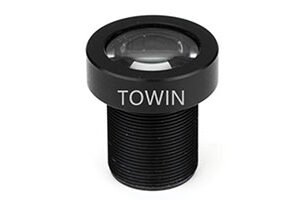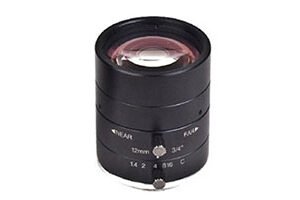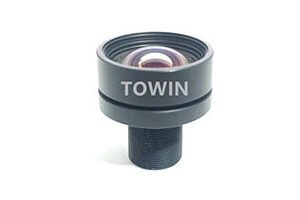


In photography, videography, and precision optics, achieving true-to-life color reproduction and razor-sharp detail is non-negotiable. Enter the Low chromatic aberration lens—a game-changing innovation designed to minimize color fringing, a common issue where light wavelengths refract unevenly, causing unsightly halos around high-contrast edges. Towin, a leader in optical engineering, has mastered this technology, delivering lenses that redefine visual fidelity.
What Is Chromatic Aberration and Why Does It Matter?
Chromatic aberration occurs when a lens fails to focus all colors of light at the same point, resulting in purple or green fringes around objects. This distortion degrades image quality, especially in high-resolution sensors or large prints. A Low chromatic aberration lens combats this by using advanced coatings, aspherical elements, and precision-engineered glass to ensure colors converge accurately.
For professionals, this means cleaner edits, sharper outputs, and fewer post-processing headaches. For enthusiasts, it translates to vivid, artifact-free photos straight out of the camera.
Towin’s Low Chromatic Aberration Lens: Key Features
Towin’s lineup of Low chromatic aberration lenses stands out for its meticulous design and cutting-edge materials. Here’s what sets them apart:
1. Multi-Layer Coatings:
Towin applies ultra-thin nano-coatings to reduce reflections and enhance light transmission. This minimizes flare and ghosting while boosting contrast.
2. Aspherical Elements:
Non-spherical lens surfaces correct distortion more effectively than traditional designs, ensuring edge-to-edge sharpness.
3. ED (Extra-Low Dispersion) Glass:
Specialized glass materials bend light more uniformly, drastically reducing chromatic aberration even at wide apertures.
4. Weather-Sealed Construction:
Dust and moisture resistance make Towin lenses reliable in challenging environments, from desert shoots to rainy landscapes.
5. Fast Apertures:
Models like the Towin Pro Series offer f/1.4 to f/2.8 apertures, enabling shallow depth of field and exceptional low-light performance without sacrificing clarity.
Product Parameters: Precision Meets Performance
Towin’s Low chromatic aberration lenses cater to diverse needs, from portrait photography to astrophotography. Below are typical specifications for their flagship models:
- Focal Length: 24mm–200mm (varies by model)
- Maximum Aperture: f/1.4–f/2.8
- Filter Thread: 67mm–82mm
- Weight: 450g–900g (lightweight for professional use)
- Mount Compatibility: Canon EF, Nikon F, Sony E, Fujifilm X
- Chromatic Aberration Control: <1μm deviation (industry-leading)
Why Choose Towin?
Towin’s commitment to innovation shines through in every lens. Their Low chromatic aberration lenses undergo rigorous testing, including:
- MTF (Modulation Transfer Function) Analysis: Ensures consistent sharpness across the frame.
- Thermal Stability Tests: Prevents focus shifts in extreme temperatures.
- Durability Trials: Withstands drops and impacts without optical degradation.
FAQs
1. How do I know if a lens has low chromatic aberration?
Check specs for ED glass, aspherical elements, or terms like “apochromatic.” Test shots at wide apertures near bright edges (e.g., tree branches against skies) reveal fringing.
2. Can software fix chromatic aberration?
Yes, tools like Lightroom’s “Defringe” slider help, but a Low chromatic aberration lens reduces the need for corrections, saving time.
3. Are low chromatic aberration lenses more expensive?
Premium models cost more due to advanced materials, but Towin offers budget-friendly options like the 50mm f/2.8 with excellent aberration control.
4. Do zoom lenses suffer more from chromatic aberration?
Some do, but Towin’s zoom lenses (e.g., 24–70mm f/2.8) use hybrid ED elements to rival primes in clarity.
Conclusion
In a world where image quality separates professionals from amateurs, a Low chromatic aberration lens is indispensable. Towin’s relentless focus on precision, durability, and affordability makes their lenses a top choice for creators worldwide.