

Introduction
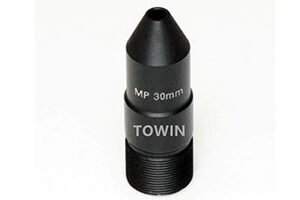
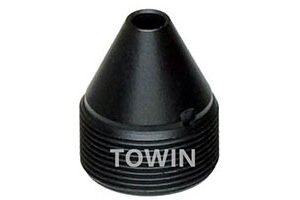
For centuries, the pinhole lens has fascinated scientists, artists, and photographers with its ability to capture images without complex optics. Traditionally, pinhole cameras rely on a tiny aperture to project light onto a surface, creating a simple yet intriguing image. However, their limitations—such as soft focus, limited light sensitivity, and diffraction—have restricted their practical use. Enter the aspherical pinhole lens, a revolutionary design that merges the simplicity of pinhole photography with advanced optical engineering.
What Is an Aspherical Pinhole Lens?
A traditional pinhole lens uses a spherical aperture, which bends light unevenly and causes blurriness. The aspherical pinhole lens, however, replaces this with a non-spherical (aspherical) shape. This design corrects optical distortions, ensuring that light rays converge more precisely. The result? Crisper images, reduced chromatic aberration, and improved contrast—even in low-light conditions.
5 Unbelievable Advantages of the Aspherical Pinhole Lens
1. Enhanced Image Sharpness
Spherical apertures inherently suffer from spherical aberration, where light rays focus at different points. The aspherical pinhole lens eliminates this issue by using a mathematically optimized curve, ensuring uniform focus across the frame. This makes it ideal for high-resolution applications, from macro photography to industrial inspection.
2. Reduced Diffraction
Smaller apertures increase diffraction, which softens images. The aspherical design compensates by allowing slightly larger effective apertures without sacrificing depth of field. This balance is critical for photographers seeking both detail and artistic blur.
3. Compact and Lightweight
Unlike multi-element lenses, the aspherical pinhole lens maintains a minimalist profile. Its single-piece construction reduces weight and bulk, making it perfect for drone photography, surveillance systems, or portable scientific instruments.
4. Versatility in Extreme Conditions
Traditional lenses struggle with dust, moisture, or extreme temperatures. The aspherical pinhole lens’s simple design is inherently rugged, requiring no moving parts or coatings. This durability has attracted aerospace and underwater imaging specialists.
5. Cost-Effective Innovation
Manufacturing aspherical surfaces was once prohibitively expensive. Advances in precision molding and nanofabrication have slashed costs, democratizing access to this technology. Now, hobbyists and professionals alike can experiment with professional-grade optics without breaking the bank.
Applications of the Aspherical Pinhole Lens
1. Photography and Art
Artists leverage the aspherical pinhole lens for its unique aesthetic—a blend of sharpness and softness that traditional pinholes cannot achieve. Landscape photographers appreciate its infinite depth of field, while portrait artists use it to create ethereal, distortion-free portraits.
2. Industrial and Scientific Imaging
In microscopy, the aspherical pinhole lens reduces spherical aberration in fluorescence imaging, enhancing data accuracy. Similarly, machine vision systems benefit from its distortion-free performance in quality control and robotics.
3. Security and Surveillance
Covert cameras require discreet, high-performance optics. The aspherical pinhole lens’s compact size and sharp imaging make it ideal for hidden cameras in security systems.
4. Challenges and Limitations
Despite its strengths, the aspherical pinhole lens is not without drawbacks. Its fixed aperture limits exposure control, requiring longer shutter speeds in low light. Additionally, while it reduces aberrations, it cannot match the versatility of multi-element lenses in dynamic shooting scenarios.
5. Future Trends
The integration of aspherical pinhole lenses with computational imaging is poised to redefine their capabilities. AI-driven post-processing could compensate for fixed apertures, while hybrid designs might combine aspherical optics with adjustable elements.
FAQs
1. What makes an aspherical pinhole lens different from a traditional pinhole?
An aspherical pinhole lens uses a non-spherical aperture to correct optical distortions, resulting in sharper images compared to the spherical blur of traditional pinholes.
2. Can aspherical pinhole lenses be used for professional photography?
Absolutely! While they excel in niche applications like art and scientific imaging, advancements in design have made them viable for high-resolution commercial photography.
3. Are aspherical pinhole lenses more expensive?
Historically, yes. However, modern manufacturing techniques have significantly reduced costs, making them accessible to enthusiasts and professionals alike.
4. Do aspherical pinhole lenses work in low light?
Their fixed apertures require longer exposures, but their reduced diffraction and improved light efficiency make them competitive in dim conditions compared to traditional pinholes.
Conclusion
The aspherical pinhole lens represents a bold leap forward in optical design. By merging simplicity with precision, it challenges the limitations of traditional pinhole photography and opens doors to innovative applications. Whether you’re an artist, scientist, or engineer, this technology deserves a place in your toolkit.