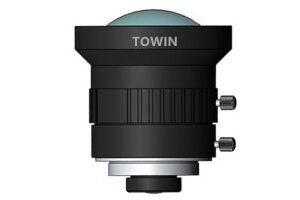


In the era of Industry 4.0, robotics has transitioned from mechanical automation to intelligent systems capable of perception, analysis, and adaptation. At the heart of this transformation lies machine vision lenses—optical components engineered to capture, process, and interpret visual data with microscopic precision.
What Are Machine Vision Lenses Used for in Robotics?
Machine vision lenses are specialized optical systems designed to interface with cameras and sensors, enabling robots to perform tasks that require visual perception. Their applications span industries, including manufacturing, logistics, healthcare, and autonomous systems. Below are five key use cases:
1. Industrial Automation: Precision Assembly & Quality Control
In automotive and electronics manufacturing, robots equipped with machine vision lenses inspect components for defects, measure dimensions with sub-millimeter accuracy, and assemble parts with human-like dexterity.
Key Parameters:
- Resolution: 170 lp/mm ensures crisp edge detection.
- Working Distance: 0.2m–∞ allows flexible placement on robotic arms.
- Low Distortion: <0.35% distortion rate minimizes measurement errors.
2. Logistics & Warehousing: Smart Sorting & Navigation
E-commerce giants rely on robotic systems to sort millions of packages daily. Machine vision lenses guide autonomous mobile robots (AMRs) through warehouses, identify barcodes, and classify items by shape, size, or color.
Why It Matters:
- Wide Field of View: 69.35° (horizontal) captures large areas for efficient navigation.
- Manual Iris Control: Adjusts light intake for varying warehouse lighting.
3. Surgical Robotics: Minimally Invasive Procedures
In medical robotics, machine vision lenses enable surgeons to perform complex operations through tiny incisions. Robotic systems like the Da Vinci Surgical Robot use high-resolution lenses to project 3D images of internal organs, allowing for precise tissue manipulation. Towin’s custom lenses for endoscopic cameras offer 400–700nm wavelength compatibility, ensuring clarity across visible and near-infrared spectra.
Technical Edge:
- Compact Design: ¢38mm diameter fits into narrow surgical tools.
- Anti-Reflective Coating: Reduces glare during laparoscopic procedures.
4. Autonomous Vehicles: Object Detection & Path Planning
Self-driving cars and drones depend on machine vision lenses to interpret traffic signs, avoid obstacles, and map environments.
Performance Highlights:
- Focus Shift Correction: Maintains clarity across visible and SWIR ranges.
- Rugged Build: Withstands vibrations and temperature fluctuations.
5. Agricultural Robotics: Crop Monitoring & Harvesting
Farming robots use machine vision lenses to assess crop health, identify ripe fruits, and weed fields. Towin’s ultra-wide-angle lenses (e.g., 90° FOV) scan entire rows of plants, while AI algorithms analyze color and texture to detect diseases or nutrient deficiencies.
Sustainability Impact:
- Reduced Pesticide Use: Precision spraying targets only affected areas.
- Yield Optimization: Minimizes waste by harvesting produce at peak ripeness.
FAQs
1. How do machine vision lenses differ from standard camera lenses?
Machine vision lenses are optimized for industrial environments, offering higher resolution, lower distortion, and compatibility with harsh conditions (e.g., dust, vibrations). Standard lenses prioritize portability and cost over precision.
2. What factors should I consider when selecting a lens for my robot?
Key parameters include resolution, focal length, working distance, aperture range, and environmental resistance. For example, a robotic arm assembling tiny electronics needs a high-resolution, short-focal-length lens, while a warehouse AMR requires a wide-angle model.
3. Can machine vision lenses work with AI and deep learning systems?
Absolutely! Modern lenses feed high-quality data into AI models, enabling real-time object recognition, defect detection, and predictive maintenance. Towin’s lenses support GPU-accelerated processing for low-latency decision-making.
Conclusion
Machine vision lenses are the unsung heroes of robotics, transforming raw visual data into actionable insights. Whether guiding a surgical robot through a delicate procedure or optimizing a factory’s production line, these lenses are redefining what machines can “see” and achieve.