

Introduction
In the world of optics, achieving the sharpest possible image has always been a holy grail. Traditional lenses, while effective, often face limitations like chromatic aberration, spherical distortion, and bulkiness. Enter the diffraction-limited pinhole lens—a revolutionary tool that redefines clarity by leveraging the principles of diffraction to produce images with near-perfect resolution.
What Is a Diffraction-Limited Pinhole Lens?
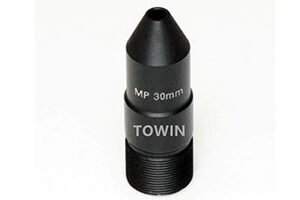
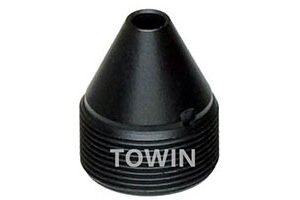
A diffraction-limited pinhole lens is a specialized optical device that uses a tiny aperture (the “pinhole”) to restrict light paths, ensuring that only perfectly parallel rays reach the image plane. Unlike conventional lenses, which rely on refraction to focus light, a pinhole lens eliminates aberrations entirely by relying on diffraction—the bending of light waves around the edges of the aperture. When designed to operate at its diffraction limit, this lens achieves the theoretical maximum resolution possible for its aperture size, making it ideal for applications demanding uncompromising precision.
The term “diffraction-limited” refers to the lens’s ability to resolve fine details without being hindered by optical imperfections. In essence, it means the lens’s performance is limited only by the laws of physics (diffraction), not by manufacturing flaws or design shortcomings.
How Does a Diffraction-Limited Pinhole Lens Work?
The core principle behind a diffraction-limited pinhole lens is simple yet profound. Light travels in straight lines, but when it encounters a small opening, it bends slightly—a phenomenon called diffraction. This bending causes light waves to spread out, creating an interference pattern that forms the image. By carefully controlling the size of the pinhole, engineers can optimize this diffraction effect to produce sharp, aberration-free images.
- Aperture Size Matters: The diameter of the pinhole determines the lens’s resolution. A smaller pinhole increases resolution but reduces light intake, requiring longer exposure times. Conversely, a larger pinhole gathers more light but lowers resolution. The diffraction-limited design balances these factors to maximize sharpness.
- No Refractive Elements: Traditional lenses use glass or plastic elements to bend light, which can introduce distortions. A pinhole lens skips these entirely, relying solely on diffraction for image formation.
- Extended Depth of Field: Due to its tiny aperture, a diffraction-limited pinhole lens has an exceptionally deep depth of field, keeping objects in focus across vast distances—a boon for landscape photography or surveillance systems.
Key Advantages of a Diffraction-Limited Pinhole Lens
1. Unmatched Sharpness
By eliminating refractive aberrations, a diffraction-limited pinhole lens delivers images with razor-sharp detail, even at the edges of the frame. This makes it invaluable for scientific imaging, where precision is non-negotiable.
2. Compact and Lightweight
Traditional lenses are bulky and heavy, but a pinhole lens is incredibly compact, often fitting into spaces where conventional optics cannot. This portability is critical for applications like drone-mounted cameras or space exploration.
3. Cost-Effective
Without complex refractive elements, manufacturing a diffraction-limited pinhole lens is simpler and cheaper than producing high-end glass lenses. This affordability opens doors for hobbyists and researchers alike.
4. Wide Depth of Field
As mentioned earlier, the tiny aperture ensures everything from close-up objects to distant landscapes remains in focus, reducing the need for manual adjustments or autofocus systems.
5. Durability
With no moving parts or delicate glass components, a pinhole lens is highly resistant to shocks, vibrations, and environmental factors like dust or moisture.
Applications of Diffraction-Limited Pinhole Lenses
- Microscopy: In fluorescence microscopy, where minimizing aberrations is crucial, a diffraction-limited pinhole lens enhances contrast and resolution, enabling clearer visualization of cellular structures.
- Astronomy: Telescopes equipped with pinhole lenses can capture sharper images of distant stars and planets by reducing atmospheric distortions.
- Photography: Artists and experimental photographers use pinhole lenses to create unique soft-focus effects or ultra-deep-field shots.
- Security Systems: Surveillance cameras benefit from the compact size and wide depth of field of pinhole lenses, allowing discreet placement without sacrificing image quality.
FAQs
1. What is the main limitation of a pinhole lens?
The primary drawback is light efficiency. Because the aperture is so small, pinhole lenses require longer exposure times or brighter lighting conditions compared to traditional lenses.
2. Can a diffraction-limited pinhole lens replace conventional lenses?
Not entirely. While they excel in specific scenarios (e.g., high-resolution microscopy or compact designs), conventional lenses are better suited for applications requiring fast autofocus or low-light performance.
3. Are diffraction-limited pinhole lenses expensive?
No! Their simple design makes them far more affordable than high-end refractive lenses, though specialized models (e.g., those for scientific use) may cost more.
4. Do pinhole lenses work with digital cameras?
Absolutely! Many modern cameras, including DSLRs and mirrorless systems, can be adapted to use pinhole lenses, often with the help of a body cap or custom mount.
Conclusion
The diffraction-limited pinhole lens represents a paradigm shift in optical technology, offering unparalleled precision in a compact, cost-effective package.