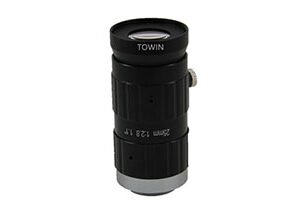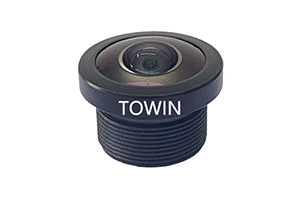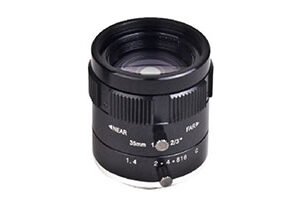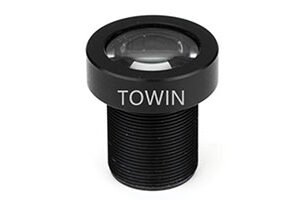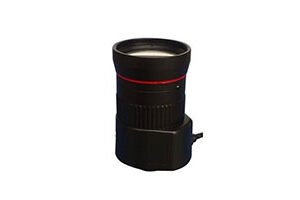


The automotive industry thrives on precision. From engine components to intricate safety systems, every part must meet stringent quality standards to ensure safety, performance, and longevity. Central to this process is the Automotive Part Inspection Lens, a critical component in modern manufacturing workflows. But not all lenses are created equal. Industrial Lens solutions have emerged as game-changers, offering unparalleled accuracy, durability, and adaptability.
Why Industrial Lens Technology Matters in Automotive Part Inspection Lens Systems
Traditional inspection methods, such as manual checks or basic magnifying tools, are prone to human error and inconsistency. These flaws can lead to defective parts slipping through quality control, resulting in costly recalls, brand damage, and safety risks.
Industrial Lenses, however, leverage advanced optics and machine vision integration to deliver microscopic precision. Whether inspecting surface finishes, measuring dimensions, or detecting microscopic cracks, these lenses ensure every detail is captured with clarity. This reduces errors by up to 90%, according to industry studies, making them a cornerstone of modern automotive manufacturing.
Key Features of Industrial Lenses for Automotive Part Inspection Lens Applications
- 1. High-Resolution Imaging: Industrial Lenses are engineered to resolve even the smallest defects, such as hairline scratches or porosity in metal castings. This level of detail is critical for components like fuel injectors or brake discs, where imperfections can compromise functionality.
- 2. Durability Under Harsh Conditions: Automotive factories are rugged environments. Industrial Lenses are built to withstand vibrations, temperature fluctuations, and exposure to oils or coolants without losing focus or degrading in quality.
- 3. Compatibility with Machine Vision Systems: These lenses seamlessly integrate with AI-powered inspection software, enabling real-time defect detection and automated sorting. This speeds up production lines while maintaining consistency.
- 4. Customizable Focal Lengths: From macro lenses for close-up inspections to telecentric lenses for distortion-free imaging, Industrial Lenses can be tailored to specific automotive part geometries.
How Industrial Lenses Enhance Automotive Part Inspection Lens Efficiency
Imagine a production line churning out thousands of spark plugs daily. Each plug must meet exacting tolerances for electrode gap and ceramic insulation thickness. A manual inspector might miss a 0.01mm deviation, but an Automotive Part Inspection Lens paired with an Industrial Lens system catches it instantly.
This efficiency isn’t just about speed—it’s about cost savings. Fewer defective parts mean less waste, lower rework costs, and fewer customer complaints. A 2023 report by the Automotive Industry Action Group (AIAG) found that factories using Industrial Lens-based inspection systems reduced scrap rates by 35% on average.
The Future of Automotive Part Inspection Lens: Trends to Watch
The automotive sector is evolving rapidly, with electric vehicles (EVs) and autonomous driving technologies driving demand for even tighter quality controls. Industrial Lenses are keeping pace by incorporating features like:
- Multi-Spectral Imaging: Detecting subsurface defects invisible to the naked eye.
- 3D Profiling: Creating detailed topographical maps of parts for precise fitment checks.
- AI-Driven Anomaly Detection: Learning from past defects to predict and prevent future issues.
FAQs
1. What makes Industrial Lenses better than standard lenses for automotive inspections?
Industrial Lenses are engineered for durability, precision, and compatibility with automated systems, whereas standard lenses may lack the resolution or ruggedness needed for factory floors.
2. How often do Industrial Lenses need calibration?
Most Industrial Lenses require calibration every 6–12 months, depending on usage. Some advanced models feature self-calibrating mechanisms to minimize downtime.
3. Can Industrial Lenses inspect transparent or reflective automotive parts?
Yes! Specialized coatings and lighting techniques allow these lenses to inspect glass, plastic, or polished metal surfaces without glare or distortion.
4. Are Industrial Lenses suitable for small-batch manufacturers?
Absolutely. While they’re scalable for high-volume production, Industrial Lenses also benefit low-volume makers by ensuring consistent quality across all parts.
5. What’s the lifespan of an Industrial Lens?
With proper maintenance, an Industrial Lens can last 5–10 years, far longer than consumer-grade alternatives.
Conclusion
In an industry where precision isn’t optional, Automotive Part Inspection Lens systems powered by Industrial Lens technology are no longer a luxury—they’re a necessity. From reducing defects to accelerating production, these lenses deliver measurable improvements that impact the bottom line.