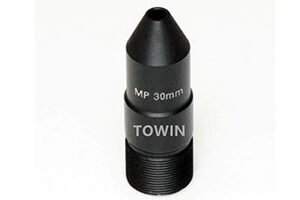


Medical advancements have redefined patient care, and the medical endoscope pinhole lens stands at the forefront of this revolution. This tiny yet mighty component enables clinicians to visualize internal structures with unprecedented precision, minimizing invasiveness while maximizing diagnostic accuracy. Designed for use in endoscopes—devices that navigate natural body openings or small incisions—the pinhole lens combines cutting-edge optics with compact engineering to deliver crystal-clear images in real time.
The Science Behind the Medical Endoscope Pinhole Lens
At its core, a medical endoscope pinhole lens operates on the principle of pinhole imaging, a technique that dates back centuries but has been refined for medical applications. Unlike traditional lenses, which rely on multiple curved surfaces to focus light, a pinhole lens uses a microscopic aperture to project an inverted image onto a sensor. This design eliminates optical distortions such as chromatic aberration, ensuring sharp, high-contrast visuals even in tight spaces.
Modern pinhole lenses are crafted from advanced materials like sapphire or fused silica, which resist scratching and withstand sterilization processes. Their miniature size—often less than 1mm in diameter—allows them to fit into ultra-thin endoscopes used in procedures like arthroscopy, laparoscopy, and gastrointestinal examinations. By integrating with high-resolution cameras and LED lighting, these lenses provide real-time feedback, empowering surgeons to navigate delicate tissues with confidence.
Key Benefits of the Medical Endoscope Pinhole Lens
- Minimally Invasive Imaging: The compact size of the medical endoscope pinhole lens reduces the need for large incisions, lowering infection risks and speeding up recovery times.
- Enhanced Depth Perception: Pinhole lenses produce images with a deep field of view, making it easier to distinguish layers of tissue during surgery.
- Durability: Built to endure repeated sterilization and harsh environments, these lenses maintain optical clarity over thousands of uses.
- Cost-Effectiveness: Their longevity and compatibility with existing endoscope systems reduce long-term healthcare costs.
Applications Across Medical Specialties
The versatility of the medical endoscope pinhole lens spans multiple fields:
- Gastroenterology: Used in colonoscopies and esophagoscopies to detect polyps, ulcers, and early-stage cancers.
- Orthopedics: Guides arthroscopic surgeries by visualizing joint interiors without large cuts.
- Neurology: Assists in minimally invasive spinal procedures by navigating narrow neural pathways.
- Urology: Enables precise biopsies and stone removals via cystoscopes and ureteroscopes.
Challenges and Innovations
While the medical endoscope pinhole lens offers transformative benefits, it faces challenges like limited light intake due to its small aperture. Manufacturers address this by pairing lenses with high-sensitivity sensors and adaptive lighting technologies. Additionally, advancements in 3D printing enable the production of custom-shaped lenses tailored to specific anatomical needs, further expanding their utility.
FAQs
How does a pinhole lens differ from a conventional endoscope lens?
A conventional lens uses curved surfaces to focus light, which can introduce distortions. A pinhole lens relies on a tiny aperture to project images, eliminating these distortions and providing clearer visuals in confined spaces.
Are pinhole lenses suitable for all types of endoscopic procedures?
While highly versatile, pinhole lenses excel in scenarios requiring compact imaging, such as navigating narrow ducts or joints. For procedures needing wider fields of view, hybrid lenses combining pinhole and traditional optics may be preferred.
What maintenance is required for a medical endoscope pinhole lens?
Regular cleaning and sterilization are essential. Most lenses are compatible with autoclaving or chemical disinfection, but manufacturers provide specific guidelines to prevent damage.
Can pinhole lenses capture color images?
Yes! Modern pinhole lenses work with color sensors to produce vibrant, true-to-life images, crucial for identifying tissue abnormalities.
The Future of Medical Imaging
The medical endoscope pinhole lens represents a leap forward in minimally invasive technology. As research continues, we can expect even smaller, more durable lenses with enhanced imaging capabilities, such as fluorescence detection for cancer markers or augmented reality overlays for surgical guidance.