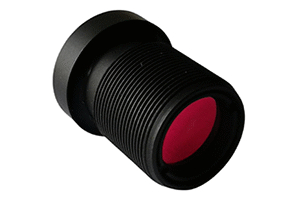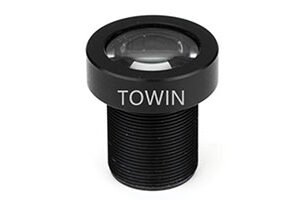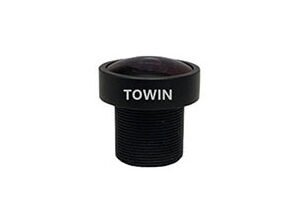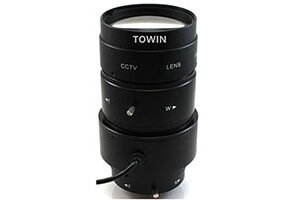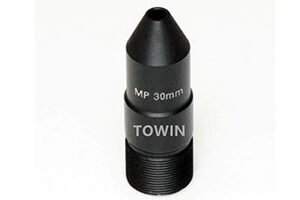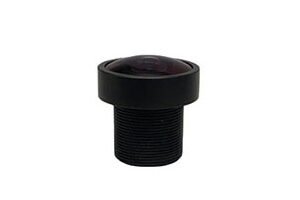


The rapid evolution of 3D sensing technology has transformed industries ranging from robotics to augmented reality (AR), demanding precision-engineered components that deliver unmatched performance. Among these, S-Mount Lenses for 3D Sensing Systems stand out as a critical innovation, offering compactness, versatility, and optical excellence.
Why S-Mount Lenses Are Essential for 3D Sensing Systems
3D sensing systems rely on capturing depth, spatial relationships, and object contours with high accuracy. Traditional lenses often struggle to meet the compact form factor and optical requirements of modern devices. S-Mount Lenses for 3D Sensing Systems address this challenge with their threaded design (M12 x 0.5 standard), enabling seamless integration into cameras, LiDAR modules, and time-of-flight (ToF) sensors. Their compact size—typically under 10mm in diameter—makes them ideal for space-constrained applications without compromising image quality.
These lenses are engineered to minimize distortion, chromatic aberration, and vignetting, ensuring sharp, distortion-free images critical for 3D mapping, gesture recognition, and facial authentication. Their compatibility with CMOS and CCD sensors further enhances their adaptability across industries.
Key Advantages of S-Mount Lenses for 3D Sensing Systems
1. Compact Design:
S-Mount Lenses are designed to fit into tiny housings, making them perfect for portable devices like smartphones, drones, and wearables. Their lightweight build reduces mechanical stress on sensors, improving durability.
2. High Optical Performance:
Advanced coatings and aspherical elements reduce flare and ghosting, while wide-angle variants (e.g., 120° FOV) capture expansive scenes. This precision is vital for autonomous vehicles navigating complex environments or AR headsets tracking user movements.
3. Cost-Effectiveness:
Mass production of S-Mount Lenses lowers costs compared to custom-designed alternatives, accelerating adoption in consumer electronics and industrial automation.
4. Customization Flexibility:
Manufacturers offer lenses with varying focal lengths, aperture sizes, and IR filters, allowing tailored solutions for specific 3D sensing needs. For instance, narrow-aperture lenses enhance depth accuracy in LiDAR systems.
Applications of S-Mount Lenses in 3D Sensing
1. Robotics and Automation
Robots in manufacturing and logistics use 3D vision systems powered by S-Mount Lenses to detect objects, avoid obstacles, and manipulate tools with sub-millimeter precision. Their compact size enables integration into robotic arms and mobile platforms.
2. Automotive Safety
Advanced driver-assistance systems (ADAS) rely on S-Mount Lenses in LiDAR and stereo cameras to monitor road conditions, detect pedestrians, and enable autonomous parking. Their rugged design withstands vibrations and temperature fluctuations.
3. AR/VR and Gaming
Augmented reality headsets use S-Mount Lenses to track user hand movements and map environments in real time. Their low-latency performance ensures seamless interaction, enhancing immersive experiences.
4. Medical Imaging
Endoscopes and dental scanners leverage S-Mount Lenses to capture high-resolution 3D images of internal organs or teeth, aiding diagnostics and surgical planning.
5. Facial Recognition and Security
Smartphones and access control systems employ S-Mount Lenses in 3D facial recognition modules to create depth maps, thwarting spoofing attacks with liveness detection.
Choosing the Right S-Mount Lenses for Your 3D Sensing System
Selecting the optimal lens involves evaluating parameters like focal length, aperture, and field of view (FOV). For example:
- Short focal lengths (2–5mm): Ideal for wide-angle applications like surveillance or AR.
- Long focal lengths (8–12mm): Suit distance measurement in automotive LiDAR.
- IR-pass filters: Enhance performance in low-light or ToF sensors.
FAQs
What makes S-Mount Lenses suitable for 3D sensing?
Their threaded design, compact size, and high optical clarity enable precise depth perception and spatial mapping in 3D systems.
Can S-Mount Lenses be used outdoors?
Yes, many variants feature weather-resistant coatings and UV filters, making them durable for outdoor applications like autonomous vehicles.
How do S-Mount Lenses compare to C-Mount lenses?
S-Mount lenses are smaller and more cost-effective, while C-Mount lenses offer larger apertures for low-light conditions but require bulkier housings.
Are S-Mount Lenses compatible with all sensors?
They work with most CMOS and CCD sensors, but compatibility depends on sensor size (e.g., 1/3”, 1/2.7”) and mounting specifications.
What is the typical lifespan of an S-Mount Lens?
With proper handling, S-Mount Lenses can last 5–10 years, though harsh environments may reduce longevity.
Conclusion
As industries demand smarter, more compact 3D sensing solutions, S-Mount Lenses for 3D Sensing Systems emerge as a game-changer. Their blend of precision, affordability, and adaptability positions them as the go-to choice for applications spanning robotics, healthcare, and beyond.