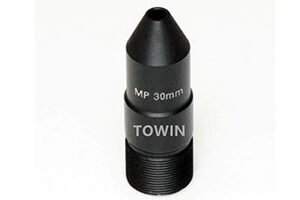


Dental imaging has evolved dramatically over the past decade, with advancements like 3D scans and digital X-rays reshaping patient care. However, one innovation stands out for its simplicity and precision: the dental imaging pinhole lens. This compact device is redefining how dentists capture high-resolution images while minimizing radiation exposure and costs.
What Is a Dental Imaging Pinhole Lens?
A dental imaging pinhole lens is a specialized optical component designed to focus light through a tiny aperture, creating sharp, detailed images of oral structures. Unlike traditional lenses, which rely on multiple glass elements to bend light, a pinhole lens uses a single, microscopic opening to eliminate distortion. This principle, rooted in basic optics, has been adapted for dental use to enhance diagnostic accuracy.
The lens works by allowing only parallel light rays to pass through the pinhole, blocking scattered light that causes blurriness. When paired with dental imaging sensors or cameras, it produces images with exceptional clarity, making it ideal for detecting cavities, fractures, and even early signs of gum disease.
How the Dental Imaging Pinhole Lens Enhances Diagnostic Accuracy
Traditional dental X-rays and intraoral cameras often struggle with image quality due to factors like movement artifacts or overlapping structures. The dental imaging pinhole lens addresses these issues by:
- Reducing Blur: The pinhole’s narrow aperture minimizes light scatter, ensuring crisp images even in challenging angles.
- Improving Depth of Field: Unlike conventional lenses, which focus on a single plane, the pinhole lens captures a wider range of depths, making it easier to examine multi-layered oral tissues.
- Enhancing Contrast: By filtering out stray light, the lens highlights subtle differences in tissue density, aiding in the detection of hidden decay or infections.
Key Advantages of the Dental Imaging Pinhole Lens
1. Lower Radiation Exposure
Traditional X-rays require radiation to generate images, which can accumulate over time. The dental imaging pinhole lens, when used with digital sensors, reduces the need for repeated exposures by delivering clearer images in fewer attempts. Some systems even eliminate radiation entirely by relying on visible light, making them safer for children and pregnant patients.
2. Cost-Effectiveness
Pinhole lenses are inexpensive to produce and maintain compared to multi-element lenses or CT scanners. Their simplicity also reduces the risk of equipment failure, lowering long-term repair costs. For small practices, this affordability democratizes access to advanced imaging technology.
3. Portability and Ease of Use
Weighing less than a smartphone, pinhole lens attachments can be added to existing dental cameras or handheld devices. This portability allows dentists to perform scans chairside without relocating patients to specialized imaging rooms, streamlining workflows.
4. Compatibility with Existing Systems
The dental imaging pinhole lens doesn’t require overhauling current equipment. Many models are designed as add-ons for intraoral cameras, slotting seamlessly into existing setups.
5. Environmentally Friendly
By reducing the need for chemical processing (as in traditional film X-rays) and lowering energy consumption, pinhole-based systems align with sustainable dental practices. This eco-conscious approach appeals to patients increasingly prioritizing green healthcare options.
Common Applications in Dentistry
The versatility of the dental imaging pinhole lens makes it suitable for:
- Cavity Detection: Identifying early-stage decay invisible to the naked eye.
- Periodontal Assessments: Measuring gum pocket depths with millimeter precision.
- Endodontic Planning: Mapping root canal anatomy for safer, more effective treatments.
- Orthodontic Evaluations: Tracking tooth movement during braces or aligner therapy.
FAQs
How does a pinhole lens compare to traditional dental X-rays?
Pinhole lenses often produce images with comparable or superior clarity to X-rays but without radiation. However, X-rays remain essential for visualizing dense structures like bone, so the two technologies are frequently used complementarily.
Is the dental imaging pinhole lens suitable for all patients?
Yes! Its non-invasive nature makes it safe for everyone, including those with pacemakers or metal implants who might avoid X-rays.
What maintenance does a pinhole lens require?
Minimal upkeep is needed—just regular cleaning with a microfiber cloth to prevent dust accumulation on the aperture.
Can pinhole lenses replace 3D imaging systems?
While pinhole lenses excel in 2D imaging, 3D systems like CBCT scanners are still preferred for complex cases requiring volumetric data. Pinhole technology is best viewed as a cost-effective alternative for routine diagnostics.
Are there any drawbacks to using a pinhole lens?
The primary limitation is reduced light intake, which can lengthen exposure times in low-light settings. However, advancements in LED illumination have largely mitigated this issue.
The Future of Dental Imaging
As AI and machine learning integrate with dental diagnostics, the dental imaging pinhole lens is poised to play a pivotal role. Its ability to feed high-quality data into algorithms for automated decay detection or treatment planning could revolutionize preventive care. Imagine a future where your dentist spots a cavity months before it becomes visible—all thanks to the humble pinhole lens.
Conclusion
The dental imaging pinhole lens represents a leap forward in diagnostic precision, safety, and affordability. By harnessing the power of simple optics, it offers dentists a tool that’s as practical as it is innovative. Whether you’re a practitioner looking to upgrade your equipment or a patient curious about the latest in dental tech, this tiny lens deserves attention. Its impact on modern dentistry is undeniable—and it’s only getting started.