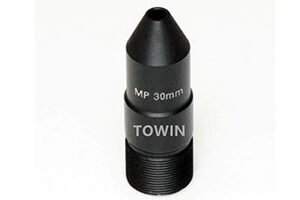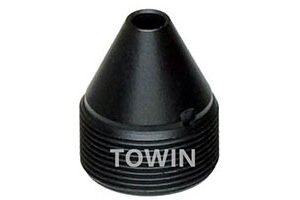


In modern manufacturing and engineering, precision is non-negotiable. From detecting microscopic flaws in aerospace components to ensuring seamless circuit board assembly, industrial inspections demand tools that deliver uncompromising accuracy. Enter the industrial inspection pinhole lens—a game-changing optical component designed to capture minute details in confined spaces.
What Is an Industrial Inspection Pinhole Lens?
An industrial inspection pinhole lens is a compact, high-precision optical device engineered to produce ultra-narrow field views. Unlike traditional lenses, which capture broader areas, pinhole lenses focus on a single point, minimizing distortion and enhancing resolution. This makes them ideal for applications where space is limited, such as inspecting internal components of machinery, electronic circuits, or medical devices.
The lens operates on a simple principle: light passes through a tiny aperture (the “pinhole”), creating a sharp image by blocking peripheral rays. This design eliminates chromatic aberration and reduces glare, ensuring clarity even in challenging lighting conditions. For industries relying on flawless quality control, the industrial inspection pinhole lens is a critical tool.
Key Advantages of Using an Industrial Inspection Pinhole Lens
1. Unmatched Precision in Confined Spaces
Traditional lenses struggle in tight areas, but an industrial inspection pinhole lens excels. Its compact size allows it to fit into narrow gaps, such as inside engines or electronic enclosures, capturing high-resolution images without physical interference.
2. High-Resolution Imaging
By focusing light through a minuscule aperture, pinhole lenses produce sharper images with minimal distortion. This is vital for detecting defects like cracks, scratches, or misalignments that standard lenses might miss.
3. Cost-Effective and Durable
Pinhole lenses are simpler in design compared to multi-element lenses, reducing manufacturing costs. Their robust construction also makes them resistant to vibrations and temperature fluctuations, ensuring longevity in harsh industrial environments.
4. Versatility Across Industries
From automotive to pharmaceuticals, the industrial inspection pinhole lens adapts to diverse needs. For example, in semiconductor manufacturing, it inspects solder joints on circuit boards, while in food processing, it verifies packaging integrity.
5. Enhanced Depth of Field
Pinhole lenses offer a deeper focus range, allowing inspectors to capture clear images of objects at varying distances without adjusting the lens. This streamlines workflows and reduces inspection time.
Applications of Industrial Inspection Pinhole Lenses
- Automotive: Inspecting engine components, fuel injectors, and transmission parts for wear or defects.
- Electronics: Verifying solder quality on printed circuit boards (PCBs) and detecting micro-cracks in connectors.
- Medical Devices: Ensuring sterile packaging integrity and inspecting minimally invasive surgical tools.
- Aerospace: Checking turbine blades for stress fractures or corrosion in high-pressure environments.
- Food and Beverage: Monitoring packaging seals and detecting contaminants in production lines.
Choosing the Right Industrial Inspection Pinhole Lens
- Aperture Size: Smaller apertures increase resolution but reduce light intake, requiring brighter illumination.
- Material: Glass lenses offer superior clarity, while plastic variants are lighter and more affordable.
- Mounting Options: Ensure compatibility with your inspection system, whether it’s a microscope, camera, or robotic arm.
- Environmental Resistance: Opt for lenses with anti-reflective coatings or waterproof casings if used in dusty or wet conditions.
FAQs
How does a pinhole lens differ from a standard lens?
A pinhole lens uses a tiny aperture to focus light, producing sharper images in narrow spaces. Standard lenses rely on multiple glass elements to bend light, which can introduce distortion in confined areas.
Can pinhole lenses work in low-light conditions?
Yes, but they require brighter illumination due to their small aperture. LED ring lights or coaxial lighting systems are often paired with pinhole lenses to enhance visibility.
Are pinhole lenses suitable for high-speed inspections?
Absolutely. Their simple design allows for rapid image capture, making them ideal for automated production lines where speed is critical.
What maintenance do pinhole lenses require?
Regular cleaning to prevent dust buildup on the aperture is essential. Avoid touching the lens surface directly; use a microfiber cloth and lens cleaning solution instead.
Do pinhole lenses support color imaging?
Yes, many modern pinhole lenses are designed for full-color inspection, though monochrome variants are also available for specific applications like edge detection.
Conclusion
The industrial inspection pinhole lens is a powerful tool for industries prioritizing precision and efficiency. Its ability to capture high-resolution images in tight spaces, coupled with cost-effectiveness and durability, makes it indispensable in quality control workflows.