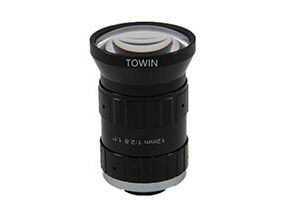


The world of photography and videography is constantly evolving, with innovations pushing the boundaries of what’s possible. One such breakthrough is the Floating Focus FA Lens, a cutting-edge optical system that redefines clarity, adaptability, and performance. Whether you’re a professional photographer, a filmmaker, or an enthusiast, understanding the mechanics and benefits of this lens can elevate your creative output.
What Is a Floating Focus FA Lens?
The Floating Focus FA Lens is a specialized optical lens system that uses a floating element design to maintain sharpness and minimize aberrations across varying focal distances. Unlike traditional lenses, where internal elements move uniformly during focusing, the FA Lens employs a floating mechanism that adjusts multiple lens groups independently. This dynamic movement compensates for focus-related distortions, ensuring consistent image quality from macro to infinity.
How Does the Floating Focus FA Lens Work?
The core innovation of the Floating Focus FA Lens lies in its multi-group element movement. When focusing, the lens divides its internal components into distinct groups, each shifting at different rates or directions. This “floating” action counteracts optical imperfections that typically occur when focusing at short or long distances. For example:
- Close-up shots: The lens groups adjust to correct spherical aberration and field curvature, ensuring macro images remain crisp.
- Distant subjects: The system minimizes coma and astigmatism, preserving detail in landscapes or portraits.
- This adaptability makes the Floating Focus FA Lens ideal for hybrid shooters who switch between stills and video, as it maintains focus accuracy during rapid zooming or panning.
Key Benefits of the Floating Focus FA Lens
- 1. Superior Image Quality: By reducing aberrations, the FA Lens delivers sharper images with natural color reproduction.
- 2. Faster Autofocus: Independent element movement enables quicker focus acquisition, crucial for capturing moving subjects.
- 3. Compact Design: Despite its advanced mechanics, the Floating Focus FA Lens remains lightweight, making it portable for on-the-go use.
- 4. Versatility: Works seamlessly across genres, from portraits to astrophotography, without compromising performance.
- 5. Durability: Built with high-grade materials, the FA Lens withstands harsh environments, ensuring longevity.
Applications of the Floating Focus FA Lens
- Photography: Portrait, macro, and landscape photographers benefit from its precision and clarity.
- Videography: Filmmakers appreciate its smooth focus transitions and low-light capabilities.
- Surveillance: Security cameras use FA Lenses for clear imaging over varying distances.
- Medical Imaging: Endoscopes and microscopes leverage floating focus for accurate diagnostics.
Choosing the Right Floating Focus FA Lens
- Focal Length Range: Opt for a lens that covers your primary shooting scenarios (e.g., 24-70mm for general use).
- Aperture Size: A wider aperture (e.g., f/2.8) enhances low-light performance and background blur.
- Build Quality: Weather-sealed lenses protect against dust and moisture, ideal for outdoor shoots.
- Compatibility: Ensure the lens fits your camera mount (e.g., Sony E-mount, Canon RF).
FAQs
What makes the Floating Focus FA Lens different from standard lenses?
The FA Lens uses independent floating elements to correct aberrations dynamically, whereas standard lenses rely on uniform element movement, which can introduce distortions at extreme focus distances.
Is the Floating Focus FA Lens suitable for beginners?
Absolutely! While its technology is advanced, many FA Lenses offer user-friendly features like autofocus and image stabilization, making them accessible to novices.
Can the Floating Focus FA Lens replace multiple prime lenses?
Yes, in many cases. Its versatility allows it to handle tasks typically requiring separate prime lenses, reducing the need to carry extra gear.
Does the Floating Focus FA Lens perform well in low light?
Yes. The floating element design minimizes light loss, and pairing it with a wide-aperture lens (e.g., f/1.8) further enhances low-light performance.
Are Floating Focus FA Lenses expensive?
Prices vary, but high-quality FA Lenses often cost more than standard lenses due to their complex mechanics. However, their durability and performance justify the investment for professionals.
Conclusion
The Floating Focus FA Lens represents a leap forward in optical engineering, combining precision, adaptability, and portability. Whether you’re capturing fast-paced action or delicate details, this lens ensures your vision translates flawlessly into imagery.