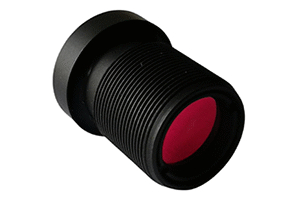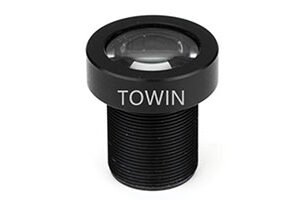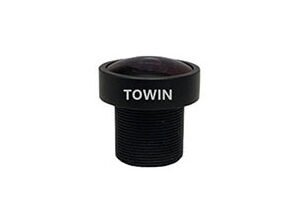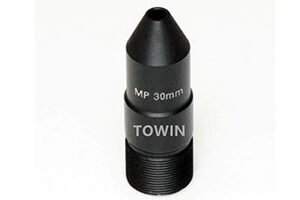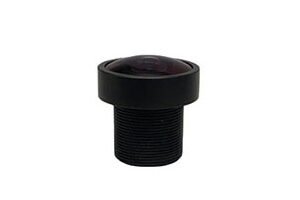


The rise of augmented reality (AR) and virtual reality (VR) headsets has redefined how we interact with digital content, from gaming and education to industrial training and remote collaboration. Central to this evolution is the S-Mount Lens for AR/VR Headsets, a compact, high-performance optical component that enables sharper visuals, wider fields of view, and ergonomic designs.
Why S-Mount Lens for AR/VR Headsets Matter
In the first 10% of this content, let’s address the core question: Why are S-Mount Lenses critical for AR/VR headsets? These lenses, named for their standardized S-Mount threading (M12 x 0.5), are engineered to balance size, weight, and optical performance. Unlike bulkier traditional lenses, S-Mount solutions fit seamlessly into the slim profiles of modern headsets, reducing strain on users during extended wear. Their compatibility with advanced coatings—such as anti-reflective and blue-light filters—further enhances image quality while minimizing eye fatigue.
The global AR/VR market is projected to grow at a CAGR of 38.5% through 2030 (source: Grand View Research), driven by demand for hyper-realistic visuals. S-Mount Lenses meet this need by supporting resolutions up to 4K per eye and field-of-view (FOV) angles exceeding 100 degrees. Their modular design also allows manufacturers to customize focal lengths and aperture sizes, catering to diverse use cases from enterprise training to consumer entertainment.
Key Benefits of S-Mount Lens for AR/VR Headsets
- 1. Compact Form Factor: S-Mount Lenses are significantly smaller than C-Mount or CS-Mount alternatives, enabling sleeker headset designs without sacrificing optical clarity.
- 2. Cost Efficiency: Mass production of standardized S-Mount components reduces manufacturing costs, making high-end AR/VR technology more accessible.
- 3. Versatility: These lenses support both single-lens and multi-lens arrays, facilitating innovations like foveated rendering (where resolution focuses on the user’s gaze point).
- 4. Durability: Built with robust materials like glass or advanced polymers, S-Mount Lenses resist scratches and environmental wear, ensuring longevity in demanding settings.
For developers, the plug-and-play nature of S-Mount Lenses accelerates prototyping. For example, a startup creating a medical training simulator can quickly test different lens configurations to optimize depth perception and spatial accuracy.
Applications Across Industries
- Healthcare: Surgeons use AR headsets with S-Mount Lenses to overlay patient data during procedures, improving precision and reducing errors.
- Education: Students explore 3D models of historical sites or molecular structures, enhancing engagement through interactive visuals.
- Manufacturing: Technicians wear VR headsets with S-Mount Lenses to receive real-time guidance while assembling complex machinery, reducing downtime.
- Entertainment: Gamers experience lifelike environments with minimal latency, thanks to the high refresh rates enabled by S-Mount optics.
Challenges and Innovations
Despite their advantages, S-Mount Lenses face challenges. For instance, achieving wide FOV without distortion requires precise engineering, as aberrations can distort edges of the visual field. Manufacturers are addressing this through aspherical lens designs and advanced simulation software.
FAQs
What is the difference between S-Mount and C-Mount lenses for AR/VR?
S-Mount lenses are smaller (M12 threading vs. C-Mount’s M25.5) and better suited for compact devices. C-Mount lenses offer wider aperture options but are bulkier, limiting their use in portable headsets.
Can S-Mount lenses support 8K resolution?
Yes! While most current headsets use 4K per eye, S-Mount lenses with ultra-low distortion coatings can theoretically support 8K, paving the way for photorealistic AR/VR.
Are S-Mount lenses expensive?
No. Standardized production keeps costs low, making them ideal for both budget-friendly consumer devices and premium enterprise solutions.
How do S-Mount lenses improve ergonomics?
Their small size reduces headset weight, distributing pressure evenly across the face. This is crucial for applications like remote collaboration, where users wear headsets for hours.
Conclusion
The S-Mount Lens for AR/VR Headsets is more than a component—it’s a catalyst for innovation. By merging precision optics with compact design, these lenses empower developers to push boundaries in resolution, FOV, and user comfort.