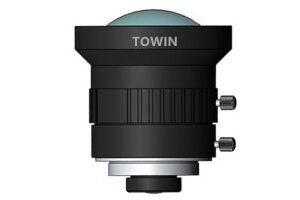


In industrial automation, robotics, and quality control, the term Machine Vision lens is pivotal to achieving precision. But what is the resolution of a machine vision lens, and why does it matter? Resolution defines the ability of a lens to distinguish fine details, directly influencing the accuracy of image analysis in applications like inspection, measurement, and guidance.
Understanding Resolution in a Machine Vision Lens
Resolution, in the context of a machine vision lens, refers to the smallest distinguishable feature or detail that the lens can capture and project onto an image sensor. It is typically measured in line pairs per millimeter (lp/mm) or pixels per inch (PPI), depending on the context. Higher resolution means sharper images, enabling systems to detect defects, measure dimensions, or recognize patterns with greater accuracy.
The resolution of a machine vision lens is not solely determined by the lens itself but also by the sensor resolution and the system’s overall optical design. For instance, a high-resolution lens paired with a low-resolution sensor will not achieve its full potential, as the sensor limits the amount of detail that can be recorded. Conversely, a low-quality lens can degrade even the sharpest sensor’s output.
Key Factors Affecting Machine Vision Lens Resolution
- 1. Optical Design: The quality of glass elements, coatings, and lens construction affects light transmission and aberration correction. Aspherical lenses, for example, reduce spherical aberrations, improving edge-to-edge sharpness.
- 2. Aperture Size: A wider aperture (lower f-number) allows more light but can reduce depth of field and introduce diffraction at very small apertures, impacting resolution.
- 3. Focal Length: Longer focal lengths may offer higher magnification but can reduce the field of view, affecting resolution at a given distance.
- 4. Sensor Compatibility: The pixel size and arrangement on the sensor must align with the lens’s resolving power to avoid underutilization or over-sampling.
- 5. Working Distance: The distance between the lens and the object being inspected influences resolution, especially in macro or telecentric applications.
How to Measure the Resolution of a Machine Vision Lens
Measuring the resolution of a machine vision lens involves testing its ability to resolve line pairs or patterns under controlled conditions. The most common method is the Modulation Transfer Function (MTF), which quantifies how well a lens reproduces contrast at different spatial frequencies (detail sizes).
- MTF Charts: These graphs plot contrast (y-axis) against spatial frequency (x-axis). A higher MTF value at a given frequency indicates better resolution.
- Test Targets: USAF 1951 resolution charts or Siemens star patterns are often used to visually assess resolution limits.
Why High Resolution Matters in Machine Vision
- Quality Control: Detecting micro-scratches, cracks, or contaminants on products.
- Robotics: Guiding robots to pick and place components with sub-millimeter accuracy.
- Medical Imaging: Analyzing cellular structures or tissue samples.
- Automotive: Inspecting printed circuit boards (PCBs) or engine components for defects.
A low-resolution lens in these scenarios could lead to false positives, missed defects, or operational inefficiencies, costing time and money.
Choosing the Right Machine Vision Lens Resolution
- Define Your Needs: Determine the smallest feature size you need to resolve. For example, inspecting 0.1mm defects requires a lens capable of at least 50 lp/mm (assuming a 1:1 relationship between feature size and resolution).
- Consider Sensor Size: Match the lens’s resolution to the sensor’s pixel pitch. A 5MP sensor with 3.45µm pixels pairs well with a lens offering ≥145 lp/mm.
- Balance Cost and Performance: Higher resolution lenses are often more expensive. Evaluate whether the added cost justifies the improved accuracy for your use case.
FAQs
Can a high-resolution lens compensate for a low-resolution sensor?
No. The lens and sensor work together. A high-resolution lens cannot improve a low-resolution sensor’s output beyond its inherent capabilities.
Does a wider aperture always improve resolution?
Not necessarily. While a wider aperture increases light intake, it can reduce depth of field and introduce aberrations at extreme settings, potentially lowering effective resolution.
What is the typical resolution range for industrial machine vision lenses?
Most industrial lenses range from 50 lp/mm to 300 lp/mm, depending on the application. High-end telecentric lenses can exceed 500 lp/mm for ultra-precise tasks.
How does working distance affect resolution?
Longer working distances may reduce resolution due to light diffraction, especially in lenses not designed for telecentricity. Short working distances in macro lenses can also challenge resolution if not properly calibrated.
Conclusion
What is the resolution of a machine vision lens? It’s the cornerstone of image clarity, enabling systems to “see” and interpret the world with unparalleled precision. By understanding the factors influencing resolution—from optical design to sensor compatibility—you can select the right lens for your application, balancing cost, performance, and reliability.