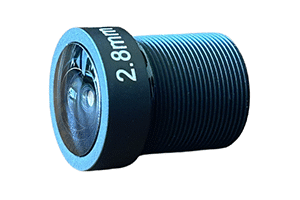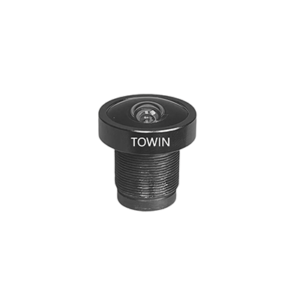


Driving safely demands unobstructed awareness of your surroundings. Traditional car mirrors and cameras often fall short, leaving dangerous blind spots that increase accident risks. Enter the Automotive Wide Angle Lens—a game-changing innovation designed to eliminate these gaps and elevate your driving experience.
What Is an Automotive Wide Angle Lens?
An Automotive Wide Angle Lens is a specialized optical component engineered to capture a broader field of view than standard lenses. By distorting light at the edges to expand the visible area, it provides drivers with a panoramic perspective of their surroundings. This technology is commonly integrated into rearview cameras, side mirrors, and dashcams, offering a 180-degree or even 200-degree view in some cases.
Unlike traditional lenses, which may crop or narrow the image, a Wide Angle Lens prioritizes coverage over magnification. This makes it ideal for scenarios where spatial awareness is critical, such as merging lanes, parking, or detecting pedestrians in low-light conditions.
Key Benefits of the Automotive Wide Angle Lens
1. Eliminates Blind Spots
Blind spots are a leading cause of collisions, accounting for over 840,000 accidents annually in the U.S. alone. A Wide Angle Lens reduces these gaps by extending the camera’s or mirror’s field of view, ensuring you spot cyclists, motorcycles, or other vehicles lurking outside your peripheral vision.
2. Enhances Parking Precision
Parallel parking or maneuvering in tight spaces becomes effortless with a Wide Angle Lens. Its expanded view lets you gauge distances accurately, avoiding curbs, poles, or other obstacles. Some advanced systems even overlay gridlines to guide your movements.
3. Improves Low-Light Performance
Many Automotive Wide Angle Lenses incorporate anti-glare coatings and infrared technology, enhancing visibility during dawn, dusk, or nighttime driving. This is particularly useful for detecting animals or debris on rural roads.
4. Supports Advanced Driver-Assistance Systems (ADAS)
Modern vehicles rely on ADAS features like lane departure warnings and collision avoidance. A Wide Angle Lens feeds high-quality, distortion-free data to these systems, improving their reliability and reducing false alerts.
5. Cost-Effective Safety Upgrade
Installing a Wide Angle Lens is often cheaper than upgrading to a new car with built-in safety tech. Aftermarket kits are available for most vehicle models, making it an accessible upgrade for budget-conscious drivers.
How Does an Automotive Wide Angle Lens Work?
The science behind a Wide Angle Lens hinges on its curved glass elements, which bend light rays to capture a wider scene. Unlike fisheye lenses, which create extreme barrel distortion, automotive-grade lenses minimize warping to maintain image clarity. Here’s a breakdown of its mechanics:
- Light Bending: The lens’s convex shape refracts incoming light, spreading it across a larger sensor area.
- Distortion Control: Advanced algorithms correct minor distortions, ensuring straight lines (like road markings) appear natural.
- Sensor Integration: The lens works seamlessly with cameras or mirrors, transmitting real-time footage to your dashboard or smartphone app.
Choosing the Right Automotive Wide Angle Lens
- Compatibility: Ensure the lens fits your car’s make and model. Some kits require professional installation.
- Field of View: Opt for 180–200 degrees for maximum coverage.
- Durability: Look for weather-resistant lenses with scratch-resistant coatings.
- Resolution: Higher megapixels (e.g., 1080p or 4K) deliver sharper images.
Installation Tips for Your Automotive Wide Angle Lens
- Clean the Mounting Surface: Remove dust or debris to ensure a secure fit.
- Align the Lens Properly: Use a leveling tool to avoid skewed images.
- Test the View: Adjust the angle to cover blind spots without obstructing your mirror’s primary function.
- Secure the Wiring: If the lens connects to your car’s electrical system, hide cables to prevent damage.
FAQs
Do Wide Angle Lenses Work at Night?
Yes! Many models feature night vision capabilities, using infrared LEDs to illuminate dark areas without glare.
Can I Install a Wide Angle Lens Myself?
It depends on the kit. Simple rearview camera lenses may require basic tools, while dashcam integrations might need professional help.
Will a Wide Angle Lens Distort the Image?
Minimal distortion is common, but high-quality lenses use software to correct warping, ensuring straight lines stay straight.
Are Wide Angle Lenses Legal?
Absolutely. As long as they don’t obstruct your view of the road, they’re permitted in most regions. Always check local laws before installation.
Do Wide Angle Lenses Replace Side Mirrors?
No. They complement mirrors by filling in blind spots but shouldn’t replace them entirely.
Are Wide Angle Lenses Waterproof?
Most are rated IP67 or higher, meaning they withstand rain, splashes, and temporary submersion.
Final Thoughts
In an era where safety is paramount, the Automotive Wide Angle Lens stands out as a simple yet transformative tool. By expanding your field of view, it reduces stress, prevents accidents, and makes driving more enjoyable.