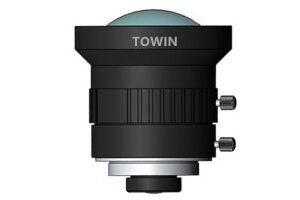


Introduction
Machine vision systems rely on lenses to capture high-resolution images for tasks like quality inspection, robotic guidance, and barcode scanning. But not all lenses are created equal. One of the most critical metrics for evaluating a Machine vision lens is its Modulation Transfer Function (MTF). What is the MTF of a Machine vision lens, and why does it matter?
What is the MTF of a Machine Vision Lens?
The Modulation Transfer Function (MTF) quantifies a lens’s ability to transfer contrast from the object to the image sensor. It evaluates performance across two key factors:
- Spatial Frequency: How fine the details are (e.g., 10 lines/mm vs. 100 lines/mm).
- Contrast: The difference between light and dark areas in the image.
A Machine vision lens with excellent MTF maintains high contrast even at high spatial frequencies, ensuring crisp edges and minimal distortion. Conversely, a poor MTF results in soft images, making it harder for algorithms to detect defects or read codes.
How is MTF Measured?
MTF is tested by imaging a pattern of alternating black and white lines (a sine wave or bar target) at varying frequencies. The contrast ratio between the input and output patterns is plotted on a graph, with higher values indicating better performance.
Why MTF Matters for Machine Vision Lenses
Machine vision systems demand flawless image quality to function reliably. Here’s why MTF is a critical metric:
1. Precision in Defect Detection
High MTF ensures tiny flaws (e.g., scratches on a semiconductor wafer) are visible, reducing false negatives.
2. Faster Processing Speeds
Sharp images require less post-processing, accelerating inspection workflows.
3. Consistency Across Environments
MTF remains stable even under varying lighting or temperatures, ensuring reliable performance.
4. Cost Efficiency
A high-MTF Machine vision lens reduces the need for rework or system recalibration, saving time and money.
How to Read an MTF Chart for a Machine Vision Lens
MTF charts can be intimidating, but they’re straightforward once you know what to look for. Here’s a breakdown:
Axes
- X-axis: Spatial frequency (lines/mm). Higher values = finer details.
- Y-axis: Contrast (0–100%). Higher values = better performance.
Curves
- Sagittal (S): Measures contrast in lines radiating from the center.
- Tangential (T): Measures contrast in lines perpendicular to the sagittal lines.
Interpretation
- A lens with curves close to 100% across all frequencies is ideal.
- Sharp drops at high frequencies indicate blurriness.
Pro Tip: Compare MTF charts from multiple vendors to identify the best Machine vision lens for your application.
FAQs
What is a good MTF value for a Machine vision lens?
A good MTF value depends on the application. For high-precision tasks, aim for >70% at the highest relevant spatial frequency.
How does temperature affect MTF in a Machine vision lens?
Extreme temperatures can cause thermal expansion or contraction, altering the lens’s optical properties and reducing MTF. Use temperature-stabilized lenses for critical applications.
Can software compensate for low MTF?
Deblurring algorithms can marginally improve image quality, but they can’t recreate lost details. A high-MTF Machine vision lens is always preferable.
What’s the difference between MTF and resolution?
Resolution refers to the smallest detail a lens can resolve, while MTF measures how well it reproduces contrast at different detail levels.
How often should MTF be tested?
Test MTF during initial setup and after major environmental changes (e.g., temperature shifts or vibrations). Periodic testing ensures consistent performance.
Conclusion
What is the MTF of a Machine vision lens? It’s the cornerstone of optical performance, determining whether your system detects defects accurately, reads codes reliably, and operates at peak efficiency.