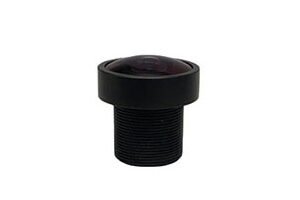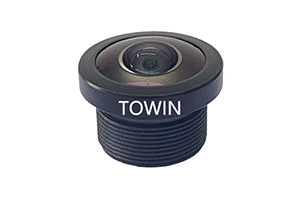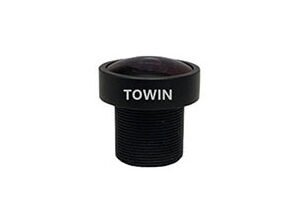


In the world of photography, capturing expansive landscapes, immersive interiors, or dynamic action shots requires lenses that push boundaries. Enter the High-Precision Fisheye Lens—a game-changing tool designed to deliver ultra-wide perspectives with unmatched accuracy.
What Makes a Fisheye Lens “High-Precision”?
A standard Fisheye Lens captures extreme wide-angle views (typically 180° or more) with a distinctive curved distortion. However, a High-Precision Fisheye Lens takes this a step further by minimizing chromatic aberration, sharpening edge-to-edge clarity, and ensuring consistent focus across the frame. These lenses are engineered with advanced optics, such as aspherical elements and low-dispersion glass, to reduce imperfections and deliver professional-grade results.
Key Features of a High-Precision Fisheye Lens
1. Ultra-Wide Field of View:
A High-Precision Fisheye Lens captures up to 220° of the scene, creating dramatic, immersive images that standard lenses can’t replicate.
2. Minimal Distortion Control:
While traditional fisheye lenses exaggerate curvature, high-precision models allow for subtle adjustments, letting you balance creativity with realism.
3. Fast Aperture:
Many High-Precision Fisheye Lenses feature wide apertures (e.g., f/2.8), enabling sharp shots in dim lighting without compromising on depth of field.
4. Durable Build Quality:
Built to withstand harsh conditions, these lenses often include rubber gaskets and magnesium alloy frames for dust and moisture resistance.
5. Compatibility with Accessories:
From filters to dome ports for underwater use, High-Precision Fisheye Lenses support a range of add-ons to expand your creative possibilities.
Applications Across Industries
1. Architecture & Real Estate:
Capture entire rooms or building exteriors in a single shot, highlighting spatial relationships with minimal distortion.
2. Virtual Reality (VR) & 360° Content:
Stitch multiple fisheye images to create seamless VR environments or panoramic videos.
3. Wildlife & Sports Photography:
Track fast-moving subjects while maintaining context within their surroundings, thanks to the lens’s expansive coverage.
4. Scientific Research:
Document microscopic or astronomical phenomena with high-resolution, distortion-free imagery.
How to Choose the Right High-Precision Fisheye Lens
1. Focal Length:
Circular fisheye lenses (e.g., 8mm) produce a circular image with black corners, while full-frame fisheye lenses (e.g., 15mm) cover the entire sensor.
2. Autofocus Speed:
For dynamic shooting, opt for a lens with fast, silent autofocus (e.g., Canon’s Ring USM technology).
FAQs
Can I use a Fisheye Lens for portraits?
Yes, but with caution. The extreme distortion can create artistic effects, but it’s rarely flattering for traditional portraits. Use it sparingly for experimental shots.
Are High-Precision Fisheye Lenses worth the investment?
Absolutely. If you frequently shoot wide-angle scenes or need distortion-free results, the precision and durability justify the cost.
How do I correct distortion in post-processing?
Software like Adobe Lightroom or Photoshop offers lens profiles to automatically adjust fisheye distortion. Some lenses also include built-in correction profiles.
Can I attach a Fisheye Lens to a smartphone?
Yes! Clip-on fisheye adapters are available for smartphones, though they lack the precision of dedicated lenses. For professional results, use a DSLR or mirrorless camera.
What’s the difference between a fisheye and ultra-wide-angle lens?
A fisheye lens prioritizes extreme coverage (180°+) with intentional distortion, while ultra-wide lenses (e.g., 14–24mm) offer a more natural perspective with minimal curvature.
Final Thoughts
The High-Precision Fisheye Lens isn’t just a niche tool—it’s a gateway to unparalleled creativity. By combining cutting-edge optics with rugged design, these lenses empower photographers to push boundaries and redefine visual storytelling.