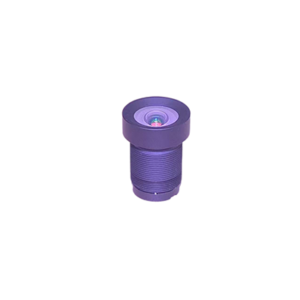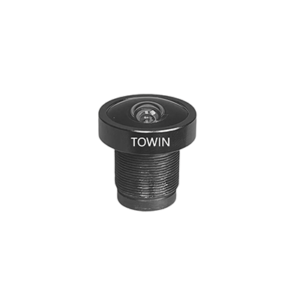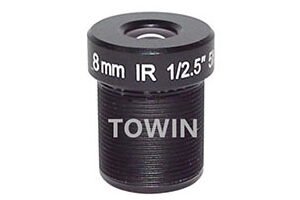


In the rapidly evolving world of optical technology, TOF lens (Time-of-Flight lens) have emerged as a game-changer for 3D sensing. By harnessing the speed of light, these lenses capture depth data with unparalleled accuracy, enabling applications from autonomous navigation to augmented reality (AR).
The Core Mechanism: Measuring Light’s Journey
A TOF lens operates on a straightforward yet powerful principle: emitting modulated infrared light pulses and calculating the time it takes for them to reflect off objects and return to the sensor. Here’s a step-by-step breakdown:
- Emission: A near-infrared (NIR) light source (typically 850–940nm) emits short, high-frequency pulses.
- Reflection: These pulses bounce off surfaces, with the return time varying based on distance.
- Detection: A high-speed sensor measures the phase shift or time delay of reflected light.
- Calculation: Using the constant speed of light (~300,000 km/s), the system computes depth for each pixel, generating a real-time 3D point cloud.
Unlike traditional stereo vision or structured light, TOF lenses do not rely on pattern matching or texture analysis, making them robust in low-light conditions and immune to ambient light interference.
Towin’s TOF Lens Parameters: Precision Engineered for Performance
Towin TOF lenses are designed to meet the rigorous demands of industrial automation, consumer electronics, and robotics. Below are the key technical specifications that set them apart:
- Focal Length: Ranging from 1.44mm to 16.6mm (customizable), Towin offers ultra-wide angles (e.g., 148.7° FOV) for applications like AGV navigation, as well as narrow fields for long-range detection.
- Aperture: With options from F1.0 to F2.2, large apertures (e.g., F1.0) enhance low-light performance, making them ideal for outdoor agricultural robots operating in variable lighting conditions.
- Wavelength Range: Compatible with 780–1000nm wavelengths, these lenses work seamlessly with VCSEL or edge-emitting lasers, supporting varied sensing ranges.
- Resolution: From 240×180 to 1280×960 pixels, higher resolutions (e.g., 1280×960) enable detailed facial recognition for smart door locks or gesture control in AR systems.
- Weight: Lightweight designs (1.4g–16.3g) make them perfect for drones and wearables without compromising durability.
- Mount Type: Flexible options like M8×0.35 to M18×0.5 ensure easy integration with existing hardware.
Why Choose Towin’s TOF Lenses?
1. High Transmittance & Low Stray Light:
Towin utilizes glass non-spherical lenses, reducing optical aberrations and improving the signal-to-noise ratio by 30% compared to plastic lenses. This ensures crisp depth data even in challenging environments.
2. Compact & Durable:
Weighing as little as 1.4g, these lenses suit portable devices without sacrificing robustness. Optional IP67-rated housing protects against dust and water, extending their lifespan in harsh conditions.
3. Customization Flexibility:
Towin offers tailored solutions for specific wavelengths, focal lengths, and mounting interfaces, ensuring compatibility with diverse sensors like Sony DepthSense or Intel RealSense.
Applications Redefining Industries
1. Autonomous Mobile Robots (AMRs):
TOF lenses enable AMRs to map environments in real time, avoiding collisions and optimizing paths. For instance, Towin’s lenses power agricultural robots to identify ripe fruit by size and color, even under direct sunlight.
2. Smart Manufacturing:
In concrete production, TOF-equipped systems measure stockpile volumes with ±0.5cm accuracy, automating inventory management and reducing waste.
3. Consumer Electronics:
Smartphones use TOF lenses for portrait mode bokeh and AR gaming.
FAQs
What is a TOF lens and how does it work in low-light conditions?
TOF lenses rely on active illumination (NIR light), making them independent of ambient light. This ensures reliable depth sensing in darkness, unlike stereo cameras that struggle with textureless surfaces.
Can TOF lenses measure moving objects?
Yes! With frame rates up to 25fps, Towin’s lenses track fast-moving targets, such as hand gestures for AR control or vehicle speed detection in traffic systems.
Are TOF lenses affected by reflective surfaces?
Multi-path interference can occur, but Towin’s lenses incorporate advanced algorithms to filter out false reflections, ensuring accuracy even on glossy objects.
How do TOF lenses compare to LiDAR?
While LiDAR offers longer range (up to 200m), TOF lenses are more cost-effective for short-to-medium-range applications (0.1m–10m) and require less computational power, making them ideal for mass-market devices.
Conclusion
TOF lens represent a paradigm shift in spatial awareness, merging physics and engineering to unlock applications once confined to science fiction. Towin’s commitment to precision, customization, and durability positions its TOF lenses as the gold standard across industries.