

Introduction
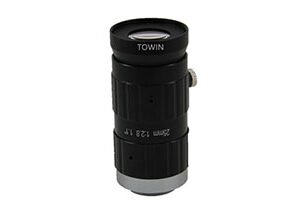
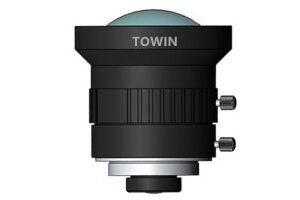
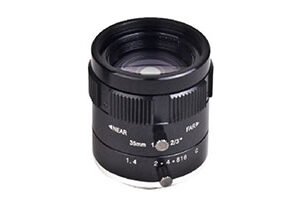
When it comes to precision optics, the C-mount lens stands out as a versatile and reliable choice. But what exactly is a C-mount lens used for? Whether you’re a photographer, engineer, or hobbyist, understanding the applications of this specialized lens can open doors to innovative projects and high-performance imaging. Designed with a threaded flange distance of 17.52mm, C-mount lenses are compatible with cameras requiring a compact, standardized mounting system.
What is a C-Mount Lens Used For?
1. Industrial Imaging and Machine Vision
C-mount lenses are the backbone of automated inspection systems in manufacturing. Their ability to maintain focus across varying distances makes them ideal for quality control tasks like detecting defects in electronics, textiles, or automotive parts. For example, a C-mount lens paired with a high-resolution camera can identify microscopic scratches on a smartphone screen during production.
2. Microscopy and Scientific Research
In laboratories, C-mount lenses adapt to microscopes to capture detailed images of cells, tissues, or materials. Their compatibility with C-mount camera adapters allows researchers to document findings with clarity. A study published in Nature Methods highlighted how C-mount lenses improved fluorescence microscopy imaging by reducing chromatic aberration.
3. Surveillance and Security Systems
C-mount lenses excel in surveillance due to their adjustable focal lengths. Security cameras use them to zoom in on distant objects without losing image quality. For instance, a C-mount lens with a 50mm focal length can monitor a large parking lot while capturing license plate details from 100 feet away.
4. Cine and Broadcast Applications
While less common, C-mount lenses are used in filmmaking for their compact size and sharpness. Indie filmmakers often repurpose vintage C-mount lenses for creative bokeh effects. The Kowa Prominar series, for example, is prized for its anamorphic-like flares and low distortion.
5. Photography and DIY Projects
Photographers experimenting with macro or astrophotography may use C-mount lenses with adapters. Their short flange distance allows for creative setups, like attaching a lens backward for extreme close-ups. Online communities like Reddit’s r/photography share tutorials on modifying C-mount lenses for DSLR cameras.
Advantages of C-Mount Lenses
- Interchangeability: Swap lenses quickly across compatible cameras.
- Compact Design: Ideal for space-constrained setups.
- Cost-Effectiveness: Often more affordable than CS-mount or F-mount alternatives.
- High Resolution: Many C-mount lenses support 4K or higher imaging sensors.
C-Mount vs. CS-Mount Lenses: What’s the Difference?
A common question is how C-mount lenses differ from CS-mount lenses. Both use the same thread size (1-inch diameter), but C-mount lenses have a 17.52mm flange distance, while CS-mount lenses have a shorter 12.5mm distance. Using a C-mount lens on a CS-mount camera requires a 5mm spacer to achieve proper focus. Conversely, CS-mount lenses cannot be used on C-mount cameras without risking damage.
How to Choose the Right C-Mount Lens
- Focal Length: Shorter lengths (8–16mm) suit wide-angle views; longer lengths (50mm+) are for zooming.
- Aperture: A lower f-number (e.g., f/1.4) allows more light, crucial for low-light environments.
- Sensor Size: Ensure the lens covers your camera’s sensor (e.g., 1/2” or 2/3”).
- Mount Compatibility: Verify thread size and flange distance.
FAQs
Can I use a C-mount lens on a DSLR?
Yes, with an adapter. However, manual focus and infinity focus may be limited due to the DSLR’s longer flange distance.
Are C-mount lenses better than CCTV lenses?
C-mount lenses generally offer higher optical quality and are preferred for precision tasks. CCTV lenses are cheaper but may sacrifice resolution.
What is a C-mount lens used for in robotics?
In robotics, C-mount lenses help cameras navigate environments by providing clear images for object recognition and depth perception.
Do C-mount lenses work with mirrorless cameras?
Yes, via adapters. However, autofocus and electronic features may not function.
Conclusion
From factory floors to film sets, the C-mount lens proves its worth through adaptability and precision. What is a C-mount lens used for? The answer lies in its ability to bridge the gap between professional and hobbyist applications, offering a cost-effective solution without compromising quality.