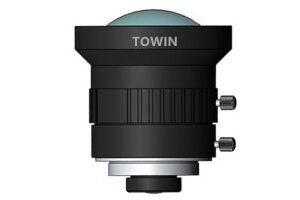


Machine vision systems are revolutionizing industries by enabling automated inspection, precision robotics, and real-time decision-making. At the heart of these systems lies the Machine vision lens, a critical component that determines accuracy, speed, and reliability. But what defines the performance of a Machine vision lens? How do factors like resolution, distortion, and environmental adaptability influence its effectiveness?
The Performance of a Machine Vision Lens: Why It Matters
The performance of a Machine vision lens directly impacts the efficiency of automated processes. A high-performing lens ensures sharp images, minimal distortion, and consistent operation across varying conditions. For instance, in automotive manufacturing, a poorly performing lens could lead to faulty part detection, causing costly production delays. Conversely, a lens optimized for high resolution and low distortion can enhance throughput by 30% or more, as seen in advanced assembly lines.
To understand the performance of a Machine vision lens, we must evaluate its core attributes: optical clarity, resolution, aperture, focal length, and environmental resistance. Let’s explore each in detail.
1. Optical Resolution: The Foundation of Precision
Resolution refers to a lens’s ability to distinguish fine details in an image. Measured in line pairs per millimeter (LP/mm), higher resolution lenses capture sharper edges and smaller defects, making them ideal for applications like semiconductor inspection or pharmaceutical packaging.
For example, a Machine vision lens with 200 LP/mm resolution can detect micro-scratches on a glass surface, whereas a lower-resolution lens might miss them entirely. This precision is critical in industries where defects as small as 0.01mm can render a product unusable.
2. Distortion Control: Ensuring Geometric Accuracy
Distortion occurs when straight lines in a scene appear curved in the captured image. While minor distortion is acceptable in some applications, industries like 3D mapping or metrology demand near-zero distortion to maintain geometric accuracy.
Modern Machine vision lenses use advanced optical designs, such as aspherical elements, to minimize distortion. For instance, telecentric lenses eliminate perspective distortion entirely, making them indispensable for dimensional measurement tasks.
3. Aperture and Light Sensitivity
The aperture (f-number) of a lens controls how much light reaches the camera sensor. A wider aperture (lower f-number) allows more light, enabling faster shutter speeds and better performance in low-light conditions. However, wider apertures also reduce depth of field, which can be a drawback in applications requiring focus across varying distances.
For high-speed sorting systems, a Machine vision lens with an f/1.4 aperture might be preferred to capture fast-moving objects without motion blur. In contrast, a lens with f/8 or higher would suit static inspections where depth of field is critical.
4. Focal Length and Field of View
Focal length determines the magnification and field of view (FOV) of a lens. Shorter focal lengths (e.g., 8mm) provide a wider FOV, ideal for capturing large areas like warehouse floors or printed circuit boards. Longer focal lengths (e.g., 50mm) offer narrower FOVs but higher magnification, suitable for inspecting small components like electronic chips.
Selecting the right focal length depends on the application’s requirements. A Machine vision lens with a variable focal length (zoom lens) can offer flexibility, though fixed-focal-length lenses often provide superior optical performance.
5. Environmental Resilience: Withstanding Harsh Conditions
Industrial environments expose lenses to dust, vibrations, temperature extremes, and chemicals. The performance of a Machine vision lens under such conditions is non-negotiable.
Lenses with IP67 ratings are sealed against dust and water, while those with anti-reflective coatings reduce glare in bright settings. For high-vibration applications, lenses with metal housings and locking mechanisms prevent misalignment, ensuring consistent performance over time.
FAQs
How does resolution affect the performance of a Machine vision lens?
Higher resolution lenses capture finer details, improving defect detection accuracy. For example, a 5MP lens with 150 LP/mm resolution will outperform a 2MP lens with 100 LP/mm in identifying small flaws.
What is the ideal aperture for low-light Machine vision applications?
An aperture of f/1.4 or f/2.8 is recommended for low-light conditions, as it allows more light to reach the sensor. However, balance this with depth-of-field requirements to avoid blurry images.
Can distortion be corrected in post-processing?
While software can partially correct distortion, it’s more efficient to use a lens with minimal inherent distortion. Post-processing corrections may introduce artifacts or reduce image quality.
How do environmental factors impact lens performance?
Dust, moisture, and temperature fluctuations can degrade image quality or damage the lens. Choose lenses with protective coatings and robust housings for industrial use.
What is the lifespan of a high-quality Machine vision lens?
With proper maintenance, a premium Machine vision lens can last 5–10 years. Regular cleaning and calibration are essential to maximize longevity.
Conclusion
The performance of a Machine vision lens is a multifaceted metric influenced by resolution, distortion, aperture, focal length, and environmental resilience. As industries demand faster, more accurate automation, lens manufacturers are pushing boundaries with innovations like liquid lenses (which adjust focus electronically) and AI-driven defect detection algorithms.