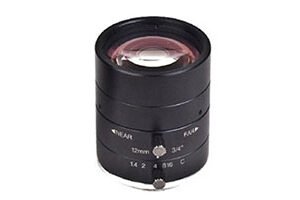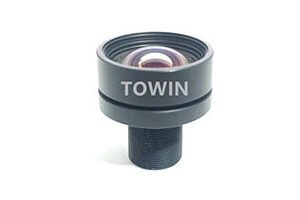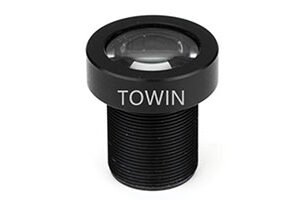


In the world of professional photography and videography, achieving pixel-perfect clarity with minimal distortion is non-negotiable. Whether you’re capturing architectural marvels, product details, or portraits, a Low Distortion Megapixel Lens stands out as a game-changer. Designed to deliver razor-sharp images with negligible warping, these lenses are revolutionizing industries that demand precision.
What Makes a Low Distortion Megapixel Lens Special?
A Low Distortion Megapixel Lens combines advanced optical engineering with high-resolution sensors to minimize geometric distortions like barrel distortion (where edges bulge outward) or pincushion distortion (edges pinch inward). Unlike standard lenses, which often compromise on edge sharpness to reduce distortion, these lenses maintain uniform clarity across the frame, even at wide apertures.
Key Features:
- 1. Aspherical Elements: Reduce spherical aberrations for sharper corners.
- 2. Multi-Coating Technology: Minimizes reflections and chromatic aberrations.
- 3. High Megapixel Compatibility: Supports sensors with 20MP+ resolution without pixel degradation.
- 4. Wide Field of View: Ideal for landscape or interior shots without distortion.
Why Distortion Matters in Photography
Distortion can ruin an otherwise perfect shot. Imagine photographing a skyscraper only to find the edges curved like a funhouse mirror, or capturing a product with uneven proportions. A Low Distortion Megapixel Lens eliminates these issues, ensuring straight lines remain straight and details stay intact. This is critical for:
- Architectural Photography: Accurate representation of buildings and structures.
- E-Commerce: Highlighting product features without misleading warping.
- Medical Imaging: Precision in microscopic or endoscopic visuals.
Applications of Low Distortion Megapixel Lenses
1. Real Estate Photography
Agents rely on wide-angle lenses to showcase entire rooms, but distortion can make spaces appear smaller or skewed. A Low Distortion Megapixel Lens ensures rooms look spacious and proportionate, boosting buyer confidence.
2. Product Photography
For e-commerce, even slight distortion can misrepresent sizes or shapes. These lenses maintain true-to-life images, reducing return rates and enhancing brand credibility.
3. Drone and Surveillance Imaging
Aerial shots demand accuracy for mapping or security purposes. A Low Distortion Megapixel Lens ensures straight lines in infrastructure or crowd monitoring, avoiding costly errors.
4. Cinematography
Filmmakers use these lenses for visual effects (VFX) plates, where distortion-free backgrounds are essential for seamless compositing.
How to Choose the Right Low Distortion Megapixel Lens
- Distortion Rating: Look for lenses with <1% distortion at wide angles.
- Aperture Range: A wider aperture (e.g., f/2.8) allows better low-light performance.
- Build Quality: Weather-sealed lenses withstand harsh conditions.
- Compatibility: Ensure the lens fits your camera mount (e.g., Sony E-mount, Nikon Z).
FAQs
Can a Low Distortion Megapixel Lens replace post-processing corrections?
Yes! While software like Lightroom can fix distortion, it often crops the image or reduces resolution. A Low Distortion Megapixel Lens eliminates the need for corrections, preserving image integrity.
Are these lenses heavier than standard lenses?
Not necessarily. Modern designs use lightweight materials like magnesium alloy, balancing durability and portability.
Do Low Distortion Megapixel Lenses work with crop-sensor cameras?
Absolutely! They’re compatible with both full-frame and crop-sensor bodies, though the effective focal length may change.
Can I use a Low Distortion Megapixel Lens for astrophotography?
Yes! Their sharpness and minimal coma distortion make them ideal for capturing stars without trailing or warping.
Final Thoughts
A Low Distortion Megapixel Lens isn’t just a tool—it’s a commitment to excellence. By reducing warping and maximizing resolution, these lenses empower photographers and videographers to deliver work that stands out in a crowded market.