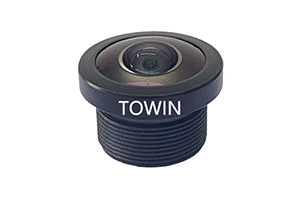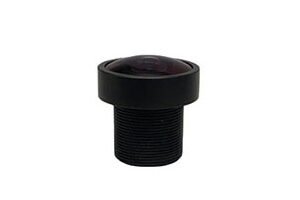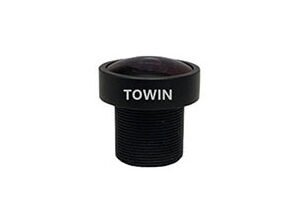


For educators seeking innovative ways to engage students, a Fisheye Lens is a game-changer. This ultra-wide-angle lens creates distorted, spherical images that inspire creativity in subjects like photography, art, and even science. However, high costs often deter schools from investing in specialized equipment.
Why Choose a Fisheye Lens for Education?
- Visual Storytelling: Students can experiment with perspective, symmetry, and abstract composition.
- STEM Applications: In physics or geometry, lenses demonstrate optical distortion and curvature.
- Cost-Effective Learning: Affordable models make hands-on experiments accessible to all.
Key Features to Look for in an Affordable Fisheye Lens
- 1. Compatibility: Ensure the lens fits your school’s cameras (e.g., DSLR, mirrorless, or smartphone adapters).
- 2. Aperture Range: A wider aperture (e.g., f/2.8–f/4) allows better low-light performance.
- 3. Build Quality: Durable materials withstand classroom use.
- 4. Ease of Use: Manual focus and lightweight designs simplify operation for beginners.
How to Integrate a Fisheye Lens into Educational Curriculums
- Photography Classes: Assign projects on perspective distortion or abstract art.
- Science Labs: Study how lenses bend light or model astronomical phenomena.
- Art Projects: Encourage students to create surreal landscapes or self-portraits.
- Field Trips: Capture panoramic views of ecosystems or historical sites.
FAQs
What is the ideal aperture for a classroom Fisheye Lens?
An aperture of f/3.5–f/5.6 balances light intake and depth of field, making it versatile for indoor and outdoor use.
Can a Fisheye Lens be used for video projects?
Absolutely! Its unique distortion adds dramatic flair to short films or documentaries.
Are there any drawbacks to budget Fisheye Lenses?
Lower-priced models may have softer edges or limited compatibility, but they remain excellent for learning fundamentals.
How do I clean and maintain a Fisheye Lens?
Use a microfiber cloth and lens cleaning solution. Avoid touching the glass directly, and store the lens in a padded case.
Conclusion
An Affordable Fisheye Lens for Educational Purposes is more than a tool—it’s a gateway to innovation. By prioritizing compatibility, durability, and ease of use, educators can introduce students to the wonders of optical science and artistic expression without straining budgets.