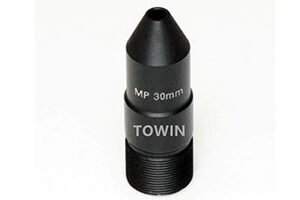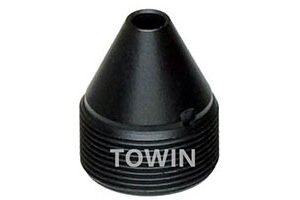


Stargazing has captivated humans for millennia, but modern technology often overshadows the elegance of simplicity. Enter the astronomy pinhole lens—a minimalist tool that transforms how we observe celestial wonders. Unlike bulky telescopes, this unassuming device uses a tiny aperture to project sharp images of stars, planets, and even solar eclipses.
What Is an Astronomy Pinhole Lens?
An astronomy pinhole lens is a simple optical device that relies on a small hole (typically less than 1mm in diameter) to project light onto a surface. When aligned with a telescope or camera, it creates a focused image by allowing only parallel light rays to pass through, blocking scattered light that causes blurriness. This principle, rooted in the camera obscura effect, has been used for centuries but remains relevant today for its affordability and ease of use.
The astronomy pinhole lens is particularly valuable for:
- Solar observation: Safely viewing sunspots or eclipses without expensive filters.
- Planetary imaging: Capturing crisp details of Jupiter’s bands or Saturn’s rings.
- Educational purposes: Teaching optics basics without complex equipment.
How Does an Astronomy Pinhole Lens Work?
The magic of the astronomy pinhole lens lies in its simplicity. Light from a distant object enters the tiny aperture and projects an inverted image onto a screen or sensor. The smaller the hole, the sharper the image—but too small, and diffraction distorts the view. Finding the “sweet spot” depends on wavelength and distance, a balance that makes the astronomy pinhole lens both a science and an art.
Benefits of Using an Astronomy Pinhole Lens
- 1. Affordability: A DIY astronomy pinhole lens costs pennies to make using aluminum foil, cardboard, and a needle.
- 2. Portability: Weighing next to nothing, it’s ideal for travel or impromptu stargazing sessions.
- 3. Safety: Unlike direct solar viewing, it eliminates the risk of eye damage.
- 4. Low maintenance: No lenses to clean or mirrors to align—just a hole and a surface.
Common Challenges and Solutions
- Dim images: Smaller apertures limit light intake. Solution: Use a longer projection distance or a brighter day.
- Diffraction: Tiny holes cause fuzzy edges. Solution: Experiment with hole sizes (0.1–0.5mm for most uses).
- Alignment issues: Shaky hands blur projections. Solution: Mount the lens on a tripod or stable surface.
For advanced users, combining the astronomy pinhole lens with a telescope eyepiece can enhance brightness while maintaining simplicity.
DIY Astronomy Pinhole Lens: A Step-by-Step Guide
- Gather materials: A thin metal sheet (e.g., aluminum foil), cardboard tube, and a sharp needle.
- Create the aperture: Poke a hole in the metal sheet using the needle. Aim for 0.3mm diameter.
- Assemble the projector: Attach the metal sheet to one end of the tube and cover the other end with white paper.
- Test it: Point the hole at a bright light source (e.g., the Sun) and adjust the tube’s length until the image sharpens.
FAQs
Can I use an astronomy pinhole lens for nighttime stargazing?
Yes! While it’s less common, the astronomy pinhole lens can project faint stars onto a screen, though results are best under bright conditions like lunar observations.
What’s the ideal pinhole size for planetary imaging?
Start with 0.3mm for planets like Jupiter or Saturn. Adjust based on light conditions—larger holes for dimmer objects, smaller for sharper details.
Is a pinhole lens better than a solar filter?
No. For direct solar viewing, always use certified filters. The astronomy pinhole lens is safe only for projected images.
How do I reduce diffraction in my pinhole projections?
Use a laser-cut aperture instead of a needle-poked hole. Laser precision minimizes irregular edges that cause blurriness.
Can I attach a pinhole lens to my smartphone camera?
Absolutely! Many DIY tutorials show how to adapt a astronomy pinhole lens to a phone lens for solar or lunar photography.
Final Thoughts
The astronomy pinhole lens proves that you don’t need expensive gear to explore the cosmos. Its humble design hides a powerful tool for safety, education, and creativity. Whether you’re projecting solar eclipses or experimenting with optics, this tiny aperture opens a window to the universe—no batteries required.