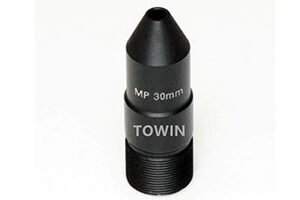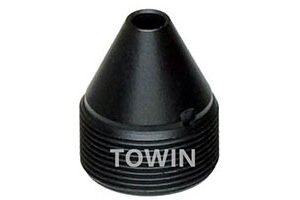


The automotive industry is undergoing a seismic shift toward smarter, safer vehicles, and at the heart of this transformation lies Automotive ADAS pinhole lens technology. Advanced Driver Assistance Systems (ADAS) rely on precise imaging to detect obstacles, navigate lanes, and prevent collisions. Among the myriad of lens options, the pinhole lens stands out for its compact size, exceptional durability, and high-resolution capabilities.
What Is an Automotive ADAS Pinhole Lens?
A pinhole lens is a specialized optical component designed to capture images with minimal distortion and maximum clarity. Unlike traditional lenses, which use multiple glass elements to focus light, a pinhole lens relies on a tiny aperture to project sharp images onto a sensor. This simplicity makes it ideal for ADAS applications, where space constraints and environmental resilience are critical.
In automotive systems, the Automotive ADAS pinhole lens is engineered to withstand extreme temperatures, vibrations, and humidity while delivering consistent performance. Its compact form factor allows seamless integration into cameras mounted on windshields, side mirrors, or bumpers, enabling features like lane departure warnings, adaptive cruise control, and automatic emergency braking.
Key Benefits of Automotive ADAS Pinhole Lens Technology
1. Compact Design for Space Efficiency
The Automotive ADAS pinhole lens is significantly smaller than conventional lenses, freeing up valuable space within vehicle interiors and exteriors. This is crucial for ADAS cameras, which must be discreetly placed without obstructing driver visibility or vehicle aerodynamics.
2. Enhanced Durability in Harsh Conditions
Automotive environments expose lenses to dust, moisture, and temperature fluctuations. The pinhole lens’s solid-state construction lacks moving parts, making it resistant to shock and wear. This reliability ensures long-term functionality, even in off-road or extreme-weather scenarios.
3. High-Resolution Imaging with Low Distortion
Despite its simplicity, the Automotive ADAS pinhole lens produces crisp images with minimal optical aberrations. This accuracy is vital for ADAS algorithms, which rely on precise data to make split-second decisions. For example, a distorted image could misinterpret a pedestrian as a stationary object, leading to dangerous outcomes.
4. Cost-Effective Production
Manufacturing a pinhole lens involves fewer materials and processes compared to multi-element lenses, reducing production costs. This affordability accelerates the adoption of ADAS technology across budget-friendly vehicle models, democratizing safety features for all drivers.
5. Seamless Integration with AI and Machine Learning
Modern ADAS systems leverage artificial intelligence to analyze visual data. The Automotive ADAS pinhole lens provides high-quality input for AI models, enabling features like object recognition, traffic sign detection, and predictive analytics. As AI evolves, the pinhole lens will remain a cornerstone of intelligent vehicle systems.
Applications of Automotive ADAS Pinhole Lens in Modern Vehicles
- Lane Keeping Assist (LKA): Cameras equipped with pinhole lenses monitor lane markings and alert drivers if they unintentionally drift.
- Surround View Systems: Multiple pinhole lenses create a 360-degree view, aiding parking and low-speed maneuvering.
- Driver Monitoring Systems (DMS): Infrared pinhole lenses track eye movements and head position to detect drowsiness or distraction.
- Night Vision Enhancement: Thermal pinhole lenses improve visibility in low-light conditions, reducing collision risks.
Future Trends in Automotive ADAS Pinhole Lens Technology
- Miniaturization: Lenses are shrinking further to fit into smaller sensors, enabling more cameras per vehicle.
- Multi-Spectral Imaging: Combining visible light with infrared or LiDAR data enhances object detection in diverse conditions.
- Improved Low-Light Performance: Innovations in sensor technology and lens coatings are boosting nighttime visibility.
FAQs
How does a pinhole lens differ from a conventional lens in ADAS systems?
A conventional lens uses multiple glass elements to focus light, while a pinhole lens relies on a tiny aperture. This makes the pinhole lens more compact, durable, and cost-effective for automotive applications.
Can a pinhole lens capture high-quality images for ADAS?
Yes! Despite its simplicity, the Automotive ADAS pinhole lens produces sharp images with minimal distortion, making it ideal for critical safety systems.
Are pinhole lenses suitable for all weather conditions?
Absolutely. The solid-state design of the pinhole lens resists dust, moisture, and temperature extremes, ensuring reliable performance in any environment.
What role do pinhole lenses play in autonomous driving?
Pinhole lenses provide high-resolution, low-distortion images for AI algorithms, enabling features like object recognition, lane detection, and collision avoidance—all essential for autonomous vehicles.
How do manufacturers ensure the durability of Automotive ADAS pinhole lenses?
Manufacturers use advanced materials like sapphire or reinforced polymers to protect pinhole lenses from scratches and impacts. Additionally, coatings are applied to reduce glare and enhance light transmission.
Conclusion
The Automotive ADAS pinhole lens is revolutionizing vehicle safety by combining compact design, durability, and high-performance imaging. As ADAS systems become more sophisticated, the pinhole lens will remain a vital component, driving innovation in autonomous driving and beyond.