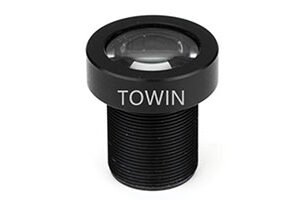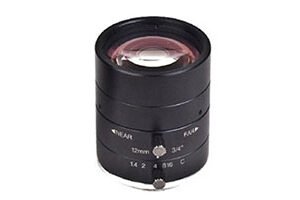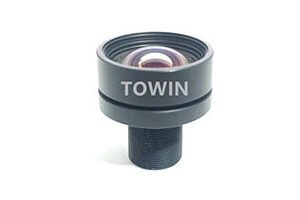


When it comes to capturing flawless images or videos, low distortion lenses are indispensable tools for photographers, filmmakers, and content creators. These lenses are engineered to reduce geometric distortions like barrel distortion (where straight lines bow outward) or pincushion distortion (where lines bend inward), ensuring your subjects appear natural and true to life.
Why Low Distortion Lenses Matter
Distortion is a common optical issue that occurs when light rays bend incorrectly through a lens, causing straight lines to appear curved. This is particularly problematic in architectural photography, product shots, and any scenario where precision matters. Low distortion lenses minimize these aberrations, ensuring your images maintain their integrity without post-processing fixes.
For professionals, the best low distortion lenses save time in editing and deliver consistent results. For enthusiasts, they provide a gateway to higher-quality imagery without the frustration of correcting distortions manually.
FAQs
What causes distortion in lenses?
Distortion occurs when light rays bend incorrectly through a lens, often due to the lens’s design or curvature of its elements. Barrel distortion (outward bending) is common in wide-angle lenses, while pincushion distortion (inward bending) affects telephoto lenses.
Can software fix lens distortion?
Yes, software like Adobe Lightroom or Photoshop can correct distortion using lens profiles. However, the best low distortion lenses minimize the need for post-processing, saving time and preserving image quality.
Are prime lenses better than zooms for low distortion?
Prime lenses often have simpler optical designs, which can result in lower distortion. However, modern zoom lenses like the Nikon NIKKOR Z 24-70mm f/2.8 S are engineered to rival primes in distortion control.
Do all lenses have some distortion?
Almost all lenses exhibit some degree of distortion, but the best low distortion lenses are designed to minimize it through advanced optics and coatings.
Are low distortion lenses worth the extra cost?
If you shoot architecture, product photography, or any genre where straight lines and accuracy matter, the best low distortion lenses are worth the investment. They reduce editing time and deliver professional-grade results.
Final Thoughts
Investing in the best low distortion lenses is a game-changer for photographers and videographers who prioritize image accuracy and clarity.