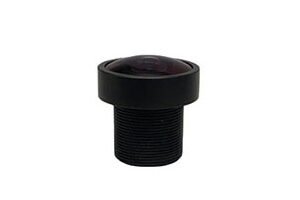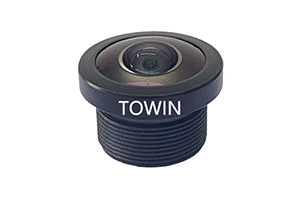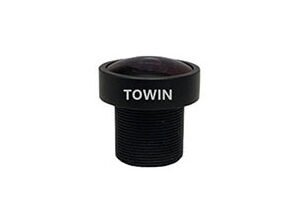


Photography enthusiasts seeking to push creative boundaries often turn to specialized lenses. Among these, the Fisheye lens with wide aperture options stands out as a game-changer, offering unparalleled distortion and light-gathering capabilities.
Why Opt for a Fisheye Lens with Wide Aperture Options?
A Fisheye lens is renowned for its ultra-wide field of view, typically between 180° and 220°, creating a spherical, distorted effect. When paired with a wide aperture (e.g., f/2.8 or lower), it unlocks two critical advantages:
- Low-Light Performance: A wide aperture lets in more light, enabling sharper shots in dim environments like concert venues or nighttime cityscapes.
- Shallow Depth of Field: This feature isolates subjects from busy backgrounds, adding artistic flair to portraits or macro photography.
For instance, a Fisheye lens with an f/2.8 aperture can capture starry skies with minimal noise, while maintaining edge-to-edge clarity.
How to Choose the Right Fisheye Lens with Wide Aperture Options
- Mount Compatibility: Ensure the lens fits your camera body.
- Aperture Size: Prioritize f/2.8 or wider for low-light scenarios.
- Focal Length: Circular fisheyes (e.g., 8mm) create a full-circle effect, while diagonal fisheyes (e.g., 15mm) fill the frame.
- Weight and Size: Compact lenses are easier for travel or handheld shooting.
- Autofocus vs. Manual Focus: Autofocus aids speed, but manual focus offers precision for static subjects.
Common Challenges and Solutions
- Distortion Control: Fisheye lenses exaggerate curves. Use post-processing tools like Adobe Lightroom to correct minor distortions.
- Chromatic Aberration: High-contrast edges may show color fringing. Opt for lenses with ED (Extra-Low Dispersion) glass.
- Focus Fall-Off: Wide apertures can lead to soft edges. Stop down to f/5.6-f/8 for sharper results.
FAQs
1. Can I use a Fisheye lens for portraits?
Yes! The exaggerated distortion can create playful, artistic portraits, especially when positioning the subject near the center of the frame.
2. How do I avoid lens flare with a Fisheye lens?
Use a lens hood and avoid shooting directly into bright light sources. Some lenses, like the Nikon NIKKOR 8-15mm, include built-in flare resistance.
3. Is manual focus difficult with a Fisheye lens?
Not necessarily. The hyperfocal distance technique (focusing at a specific point to keep everything from near to infinity sharp) simplifies shooting.
4. Can I shoot video with a Fisheye lens?
Absolutely! The dynamic distortion adds energy to action sequences, music videos, or vlogs.
5. What’s the difference between circular and diagonal Fisheye lenses?
Circular fisheyes produce a distinct circular image within the frame, while diagonal fisheyes fill the entire rectangular frame with distortion.
Final Thoughts
A Fisheye lens with wide aperture options is a powerful tool for photographers seeking to break free from conventional perspectives. By balancing aperture size, focal length, and build quality, you can capture images that leave a lasting impression.