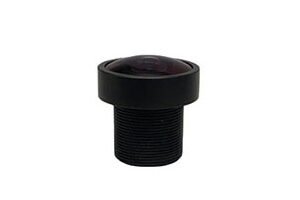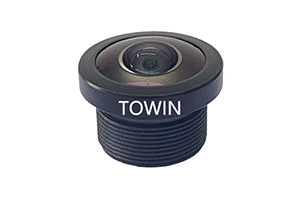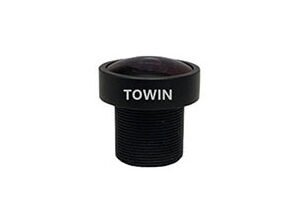


Photography enthusiasts and professionals constantly seek tools that push boundaries and redefine creativity. Among these, the High-Performance Fisheye Lens stands out as a revolutionary accessory, offering unparalleled perspectives and artistic freedom. Whether you’re capturing sweeping landscapes, dynamic action shots, or abstract compositions, this lens transforms ordinary scenes into extraordinary visuals.
What Is a High-Performance Fisheye Lens?
A High-Performance Fisheye Lens is an ultra-wide-angle lens designed to capture a hemispherical view of the world, typically spanning 180 degrees or more. Unlike standard wide-angle lenses, which aim to minimize distortion, fisheye lenses embrace it, creating unique, curved lines that add drama and depth to images. The term “fisheye” originates from its resemblance to a fish’s convex eye, which provides a similarly expansive field of view.
High-performance variants of these lenses are engineered with precision optics, advanced coatings, and durable builds to deliver sharp, high-contrast images even in challenging lighting conditions. They’re available in two primary types:
- Circular Fisheye Lenses: Produce a circular image surrounded by black borders, emphasizing the extreme curvature.
- Full-Frame Fisheye Lenses: Fill the entire frame with a slightly less distorted, rectangular image.
Both types cater to different creative needs, but a High-Performance Fisheye Lens excels in versatility, offering superior image quality and reliability.
Key Features of a High-Performance Fisheye Lens
Ultra-Wide Field of View
The defining feature of a High-Performance Fisheye Lens is its ability to capture an expansive 180-degree view, making it ideal for immersive landscapes, architectural photography, and underwater shots.
Minimal Chromatic Aberration
High-performance models use low-dispersion glass elements to reduce color fringing, ensuring edges remain crisp and colors vibrant.
Fast Aperture for Low Light
Many High-Performance Fisheye Lenses boast apertures as wide as f/2.8, allowing more light to reach the sensor. This is crucial for astrophotography or indoor shooting without sacrificing sharpness.
Durable Build Quality
Built to withstand rugged environments, these lenses often feature weather-sealing and robust materials, making them reliable companions for outdoor adventures.
Compatibility with Multiple Camera Systems
Whether you use a DSLR, mirrorless, or even a drone, High-Performance Fisheye Lenses are available in mounts like Canon EF, Nikon F, Sony E, and MFT, ensuring seamless integration.
Why Choose a High-Performance Fisheye Lens Over Standard Lenses?
Creative Distortion: The intentional curvature adds a surreal, artistic flair to images, perfect for music videos, extreme sports, or abstract art.
- Compact Size: Despite their wide field of view, fisheye lenses are often smaller and lighter than equivalent zoom lenses, enhancing portability.
- Cost-Effectiveness: High-performance models provide professional-grade results without the premium price tag of ultra-wide zooms.
Applications of a High-Performance Fisheye Lens
Landscape Photography
Capture the grandeur of mountains, forests, or coastlines with a single frame, emphasizing the vastness of nature.
Action Sports and Adventure
From skateboarding tricks to surfing waves, the fisheye’s wide view keeps the entire scene in focus, even at close range.
Virtual Reality (VR) and 360-Degree Content
Stitch multiple fisheye shots to create seamless VR environments or immersive panoramas.
Architecture and Interior Design
Showcase entire rooms or buildings in a single shot, highlighting spatial relationships and design elements.
Underwater Photography
The waterproof housing compatibility of many High-Performance Fisheye Lenses makes them perfect for capturing marine life up close.
FAQs
Are High-Performance Fisheye Lenses Suitable for Beginners?
Absolutely! While they require some practice to master, their unique perspective encourages experimentation. Start with static subjects like landscapes before moving to dynamic scenes.
Can I Use a Fisheye Lens for Portraits?
Yes, but with caution. The distortion can create playful, unconventional portraits, but it’s best suited for creative projects rather than traditional headshots.
How Do I Correct Fisheye Distortion in Post-Processing?
Software like Adobe Lightroom or Photoshop offers lens correction tools to straighten lines and reduce curvature. However, many photographers embrace the distortion as part of the fisheye aesthetic.
What’s the Difference Between a Fisheye Lens and a Wide-Angle Lens?
A fisheye lens prioritizes extreme curvature and a 180-degree view, while wide-angle lenses aim for minimal distortion and a narrower field of view (typically 65–84 degrees).
Do High-Performance Fisheye Lenses Work Well in Low Light?
Yes, especially models with fast apertures (e.g., f/2.8). Their ability to gather light makes them excellent for astrophotography or dimly lit venues.
Conclusion
A High-Performance Fisheye Lens is more than just a niche tool—it’s a gateway to uncharted creative territories. Its ability to bend reality and capture the impossible makes it indispensable for photographers and filmmakers looking to stand out.