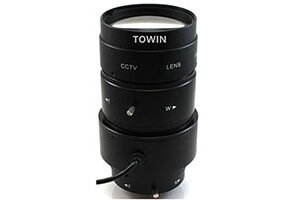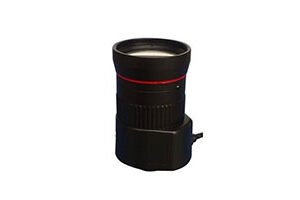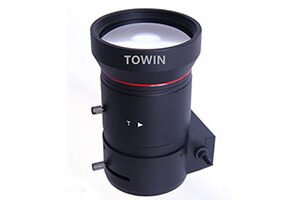


In the world of security and surveillance, clarity isn’t just a luxury—it’s a necessity. Whether you’re monitoring a busy retail space, securing a corporate office, or safeguarding a residential property, the quality of your CCTV footage can make or break your ability to detect threats, identify individuals, or gather evidence. At the heart of this clarity lies a critical component: the high-resolution CCTV lens.
What Is a High-Resolution CCTV Lens?
A high-resolution CCTV lens is engineered to deliver superior image quality by optimizing light transmission, minimizing distortion, and maximizing pixel density. Unlike standard lenses, which may struggle with blurriness, glare, or low-light performance, a high-resolution CCTV lens ensures every frame is crisp, even in challenging conditions. These lenses are designed to work seamlessly with high-definition (HD) and 4K cameras, ensuring that the camera’s full potential is unlocked.
The key difference lies in the lens’s construction. High-resolution CCTV lenses use advanced materials like aspherical glass elements, anti-reflective coatings, and precision-engineered apertures to reduce aberrations and enhance contrast. This results in images that are not only sharper but also more vibrant, with accurate color reproduction and deeper blacks.
Why Invest in a High-Resolution CCTV Lens?
1. Unmatched Detail and Clarity
A high-resolution CCTV lens captures finer details, such as facial features, license plates, or small objects, from a distance. This is critical for surveillance applications where evidence quality matters, such as law enforcement investigations or retail loss prevention.
2. Improved Low-Light Performance
Many high-resolution lenses incorporate wide apertures (e.g., f/1.2 or f/1.4) to allow more light into the camera sensor. This enhances visibility in dimly lit environments, reducing noise and graininess in nighttime footage.
3. Reduced Distortion and Aberrations
Standard lenses often suffer from optical distortions like barrel distortion (where straight lines appear curved) or chromatic aberration (color fringing around edges). A high-resolution CCTV lens minimizes these issues, ensuring accurate representation of scenes.
4. Long-Term Cost Efficiency
While high-resolution lenses may have a higher upfront cost, they reduce the need for frequent replacements or upgrades. Their durability and compatibility with future camera technologies make them a smart long-term investment.
5. Enhanced Security Coverage
With clearer images, security teams can monitor larger areas without sacrificing detail. This is particularly useful for wide-angle applications, such as parking lots or warehouse floors, where a single high-resolution CCTV lens can replace multiple lower-quality cameras.
How to Choose the Right High-Resolution CCTV Lens
Selecting the perfect lens depends on your specific surveillance needs. Here are key factors to consider:
- Focal Length: Determines the field of view. Shorter focal lengths (e.g., 2.8mm) offer wider angles, while longer focal lengths (e.g., 12mm) provide narrower, zoomed-in views.
- Aperture Size: A wider aperture (lower f-number) improves low-light performance but may reduce depth of field.
- Mount Type: Ensure compatibility with your camera’s mount (e.g., C-mount or CS-mount).
- IR Compatibility: If using infrared (IR) cameras, choose a lens with IR-corrected optics to prevent focus shifts in night mode.
- Resolution Rating: Match the lens’s resolution rating (measured in megapixels) to your camera’s sensor for optimal performance.
FAQs
1. Can a high-resolution CCTV lens work with any camera?
Most high-resolution lenses are compatible with modern HD and 4K cameras, but always check the mount type and resolution rating to ensure compatibility.
2. Do high-resolution lenses require more maintenance?
No. These lenses are built to withstand harsh environments and require the same maintenance as standard lenses—regular cleaning and occasional recalibration.
3. Are high-resolution CCTV lenses worth the extra cost?
Absolutely. The improved image quality, durability, and long-term savings justify the investment, especially in high-stakes applications like banking or critical infrastructure.
4. Can a high-resolution lens improve night vision?
Yes, if paired with an IR-compatible camera and a wide-aperture lens, low-light performance is significantly enhanced, reducing blur and noise.
5. What’s the difference between a varifocal and fixed-focal high-resolution CCTV lens?
A varifocal lens allows manual adjustment of the focal length (e.g., 2.8–12mm), offering flexibility in framing shots. A fixed-focal lens has a set focal length, providing consistent image quality but less adaptability.
Final Thoughts
In an era where security threats are increasingly sophisticated, a high-resolution CCTV lens isn’t just an upgrade—it’s a necessity. By delivering unparalleled clarity, reducing blind spots, and ensuring reliable performance in any lighting condition, these lenses empower surveillance systems to operate at their peak.