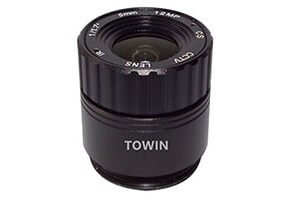


Infrared (IR) technology has transformed industries from security to astronomy, enabling machines to “see” beyond the visible spectrum. But achieving clear, accurate images in IR wavelengths isn’t straightforward. Traditional lenses often struggle with chromatic aberration—a distortion caused by differing refractive indices of light at various wavelengths. This is where IR corrected lenses shine. Designed to minimize aberrations in infrared light, these lenses ensure sharp, high-contrast images even in low-light or thermal conditions.
How Do IR Corrected Lenses Work? The Core Mechanism
At the heart of IR corrected lenses lies their ability to bend (refract) infrared light in a way that compensates for wavelength-specific distortions. Unlike standard lenses optimized for visible light (400–700 nm), IR corrected lenses are engineered for wavelengths like near-infrared (NIR, 700–1,100 nm) or thermal infrared (LWIR, 8–14 μm). Here’s how they achieve this:
1. Material Selection:
IR corrected lenses use specialized optical materials like germanium (Ge), zinc selenide (ZnSe), or chalcogenide glasses. These materials have unique refractive indices in the IR spectrum, allowing them to focus light without significant dispersion. For example, germanium’s high refractive index makes it ideal for LWIR applications, while ZnSe is transparent across a broad IR range.
2. Multi-Element Design:
A single lens element can’t correct all aberrations. IR corrected lenses combine multiple elements, each with distinct shapes and materials, to counteract distortions. For instance, an achromatic doublet pairs two materials to cancel out chromatic aberration, ensuring all IR wavelengths converge at the same focal point.
3. Anti-Reflective Coatings:
IR light is prone to reflection losses at lens surfaces. To maximize transmission, IR corrected lenses feature anti-reflective (AR) coatings tailored to specific IR bands. These coatings reduce glare and improve contrast, critical for applications like thermal imaging.
4. Aspheric Surfaces:
Traditional spherical lenses introduce spherical aberration, blurring edges. IR corrected lenses often use aspheric surfaces—non-uniform curvatures—to eliminate this issue, delivering sharper images across the field of view.
By integrating these features, IR corrected lenses overcome the limitations of standard optics, making them indispensable in IR-dependent systems.
Why Are IR Corrected Lenses Essential? Key Benefits
1. Enhanced Image Quality:
By minimizing chromatic and spherical aberrations, IR corrected lenses produce crisp, high-resolution images even in challenging IR conditions.
2. Broader Wavelength Compatibility:
Unlike visible-light lenses, IR corrected variants support multiple IR bands, enabling multi-spectral imaging systems that combine visible, NIR, and thermal data.
3. Improved Efficiency:
AR coatings and optimized designs reduce light loss, ensuring more IR photons reach the sensor. This boosts sensitivity, crucial for low-light applications like night vision.
4. Durability:
Materials like germanium are rugged and resistant to environmental factors like humidity and temperature fluctuations, making IR corrected lenses ideal for outdoor or industrial use.
Applications of IR Corrected Lenses
From military surveillance to medical diagnostics, IR corrected lenses power diverse technologies:
1. Thermal Imaging Cameras:
Used in firefighting, building inspections, and wildlife monitoring, thermal cameras rely on IR corrected lenses to detect heat signatures accurately.
2. Night Vision Systems:
Military and law enforcement use IR corrected lenses in night vision goggles (NVGs) to amplify ambient IR light, enabling visibility in total darkness.
3. Machine Vision:
In industrial automation, IR corrected lenses inspect products under IR illumination, identifying defects invisible to the naked eye.
4. Astronomy:
Telescopes equipped with IR corrected lenses observe celestial objects in IR wavelengths, revealing hidden features like star-forming regions.
5. Automotive Safety:
Advanced driver-assistance systems (ADAS) use IR corrected lenses in LiDAR and thermal sensors to detect pedestrians or obstacles in low-light conditions.
FAQs
Can IR corrected lenses work in visible light?
While possible, IR corrected lenses are rarely used for visible light due to their suboptimal performance compared to dedicated visible-light optics. Their strength lies in IR applications.
How do IR corrected lenses improve thermal imaging?
By reducing aberrations and maximizing light transmission, IR corrected lenses enhance thermal cameras’ sensitivity and resolution, enabling clearer heat maps even in low-contrast scenes.
Are IR corrected lenses weather-resistant?
Many IR corrected lenses, especially those using germanium or ZnSe, are highly durable and resistant to moisture, dust, and temperature extremes, making them suitable for outdoor use.
How do IR corrected lenses work in multi-spectral systems?
Multi-spectral systems combine data from visible, NIR, and thermal sensors. IR corrected lenses ensure each IR band is focused accurately, preventing misalignment between spectral channels.
Conclusion
As industries demand higher precision in IR imaging, the role of IR corrected lenses becomes increasingly vital. From enabling autonomous vehicles to advancing medical diagnostics, these lenses are pushing the boundaries of what’s possible in low-light and thermal environments.