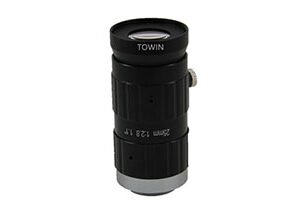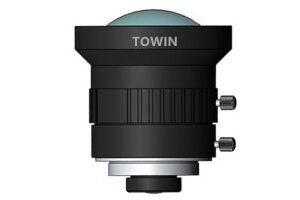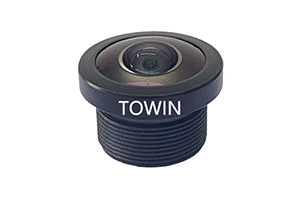


C-mount lenses are a cornerstone of industrial imaging, machine vision, and specialized photography. But how does a C-mount lens work, and what makes it distinct from other lens types?
What Is a C-Mount Lens?
A C-mount lens is a type of optical lens designed with a standardized threaded interface (1-inch diameter with 32 threads per inch) for attaching to cameras or sensors. Originating in the 1920s for 16mm film cameras, C-mount lenses evolved into critical tools for industrial applications due to their compact size, versatility, and compatibility with various devices.
Key Features of C-Mount Lenses:
- Threaded Mount: The 1-inch thread allows secure attachment to cameras, microscopes, or CCTV systems.
- Adjustable Focus: Manual or motorized focus rings enable precise control over image clarity.
- Fixed or Variable Aperture: Some models offer adjustable apertures for light management, while others prioritize simplicity with fixed settings.
- Short Back Flange Distance: The distance between the lens mount and sensor is minimal, making them ideal for compact systems.
How Does a C-Mount Lens Work?
To understand how does a C-mount lens work, let’s break down its core components and optical principles:
1. Optical Elements:
C-mount lenses contain multiple glass elements arranged to focus light onto a sensor or film. These elements correct aberrations (e.g., chromatic distortion) to ensure sharp, accurate images.
2. Aperture Control:
The aperture regulates light intake via diaphragm blades. A wider aperture (low f-number) lets in more light, while a narrower one (high f-number) enhances depth of field.
3. Focus Mechanism:
By rotating the focus ring, the lens elements shift along the optical axis, adjusting the focal plane. This ensures objects at varying distances appear sharp.
4. Mount Compatibility:
The C-mount’s threaded design ensures compatibility with cameras, microscopes, and CCTV systems. Adapters can even bridge C-mount lenses to other formats (e.g., CS-mount cameras).
Example: In a machine vision system, a C-mount lens captures high-resolution images of a production line. Its adjustable focus and aperture allow operators to inspect tiny components with precision, even under varying lighting conditions.
Why Choose a C-Mount Lens?
- Industrial Imaging: Their robust design withstands harsh environments, while their compatibility with machine vision cameras makes them ideal for automation.
- Microscopy: C-mount lenses attach to microscopes, enabling digital documentation of specimens.
- Surveillance: CCTV systems use C-mount lenses for their flexibility in focal length and aperture settings.
- Cost-Effectiveness: Compared to specialized lenses, C-mount models are affordable and widely available.
Common Applications of C-Mount Lenses
1. Machine Vision Systems:
C-mount lenses inspect products for defects, guide robots, or measure components with sub-millimeter accuracy.
2. Medical Imaging:
Endoscopes and microscopes rely on C-mount lenses to capture detailed internal views for diagnostics.
3. Security Cameras:
Adjustable focal lengths and apertures make C-mount lenses perfect for monitoring large areas or focusing on specific zones.
4. Astronomy:
Telescopes use C-mount adapters to attach cameras, capturing celestial objects with clarity.
FAQs
Can I use a C-mount lens on a DSLR?
No, DSLRs use proprietary mounts (e.g., Nikon F-mount). However, adapters exist, but they may compromise image quality or functionality.
What is the maximum sensor size for C-mount lenses?
C-mount lenses are designed for sensors up to 1 inch (diagonal). Larger sensors (e.g., full-frame) may cause vignetting.
Are C-mount lenses weather-sealed?
Most standard C-mount lenses lack weather sealing. Industrial-grade models may offer limited protection against dust and moisture.
How do I clean a C-mount lens?
Use a blower brush to remove dust, then wipe the glass with a microfiber cloth and lens cleaning solution. Avoid touching the threads to prevent damage.
Can C-mount lenses autofocus?
Most C-mount lenses are manual focus. However, some motorized versions exist for automated systems.
Conclusion
How does a C-mount lens work? By combining robust optics, adjustable settings, and universal compatibility, C-mount lenses deliver unparalleled precision in industrial, scientific, and surveillance applications. Their affordability and adaptability ensure they remain a staple in fields where accuracy is non-negotiable.