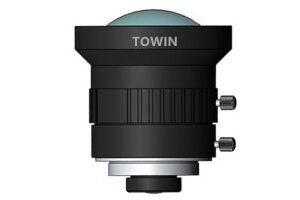


Selecting the perfect machine vision lens is a pivotal decision for engineers and manufacturers aiming to optimize industrial automation, quality control, or robotic applications. A poorly chosen lens can lead to blurred images, inaccurate measurements, or system failures, while the right one enhances precision, speed, and reliability.
Why the Right Machine Vision Lens Matters
A machine vision lens acts as the “eye” of your imaging system, capturing light and focusing it onto a sensor to create clear, detailed images. Its quality directly impacts the accuracy of inspections, defect detection, and process automation. For instance, a lens with insufficient resolution may miss microscopic flaws in electronic components, while one with improper focal length could distort images of large objects. Understanding how to choose the right machine vision lens is therefore critical to avoiding costly errors and maximizing ROI.
Key Factors to Consider When Choosing a Machine Vision Lens
1. Focal Length and Working Distance
The focal length determines the field of view (FOV) and working distance (WD) of your lens. A shorter focal length (e.g., 8mm) provides a wider FOV but requires a closer WD, making it ideal for inspecting small objects or tight spaces. Conversely, a longer focal length (e.g., 50mm) narrows the FOV but increases WD, suitable for capturing details on larger objects from a distance.
To calculate the required focal length, use this formula:
Focal Length = (Sensor Size × Working Distance) / Field of View
For example, if your sensor is 1/2” (6.4mm horizontal) and you need a 100mm WD to inspect a 50mm object:
Focal Length = (6.4mm × 100mm) / 50mm = 12.8mm
Choose a lens with a focal length close to this value for optimal results.
2. Sensor Size Compatibility
Machine vision lenses are designed to work with specific sensor sizes (e.g., 1/3”, 1/2”, 2/3”). Using a lens incompatible with your sensor can cause vignetting (dark corners) or reduced resolution. For instance, a lens built for a 1/2” sensor may not fully illuminate a larger 2/3” sensor, wasting its potential. Always verify compatibility by checking the lens’s “image circle,” which must be larger than your sensor’s diagonal dimension.
3. Resolution and Image Quality
Resolution refers to the lens’s ability to distinguish fine details, measured in line pairs per millimeter (lp/mm). Higher resolution lenses produce sharper images but often cost more. To determine the minimum resolution needed, match it to your sensor’s pixel size. For example, a sensor with 3.45µm pixels requires a lens with at least 145 lp/mm resolution (calculated as 1/(2 × pixel size)).
Additionally, consider lens aberrations like chromatic distortion (color fringing) or spherical aberration (blurriness at edges). High-quality lenses minimize these issues, ensuring uniform sharpness across the image.
4. Aperture and Light Sensitivity
The aperture (f-number) controls how much light enters the lens. A lower f-number (e.g., f/1.4) allows more light, making it ideal for low-light environments or high-speed applications. However, wider apertures reduce depth of field (DoF), the range of distances where objects appear in focus. For applications requiring large DoF (e.g., inspecting stacked objects), use a higher f-number (e.g., f/8 or f/11).
5. Mount Type and Mechanical Stability
Machine vision lenses come with various mount types, such as C-mount (1” diameter, 17.52mm flange distance) or F-mount (Nikon’s bayonet mount). Ensure your lens mount matches your camera’s interface to avoid misalignment. Additionally, prioritize lenses with robust mechanical designs to withstand vibrations in industrial settings.
6. Environmental Resistance
Industrial environments often expose lenses to dust, moisture, or extreme temperatures. Opt for lenses with IP67 ratings (dust-tight and waterproof) or coatings that resist scratches and chemicals. For high-temperature applications (e.g., automotive welding), choose lenses rated for operating temperatures above 100°C.
7. Cost vs. Performance Trade-offs
While budget constraints are real, compromising on lens quality can lead to higher long-term costs due to rework or system downtime. Balance cost with performance by prioritizing critical features (e.g., resolution for defect detection) and opting for mid-range models for less demanding tasks.
How to Choose the Right Machine Vision Lens: A Step-by-Step Approach
- Define your application requirements: What are you inspecting (size, speed, environment)?
- Calculate focal length and WD: Use the formula above or online calculators.
- Match sensor size: Ensure the lens’s image circle covers your sensor.
- Select resolution: Choose a lens with resolution ≥ your sensor’s needs.
- Evaluate aperture and DoF: Balance light sensitivity with focus range.
- Check mount and durability: Verify compatibility and environmental resistance.
- Test and validate: Use sample lenses to assess real-world performance.
FAQs
What is the difference between a fixed-focal-length and a zoom lens?
A fixed-focal-length lens has a single focal length (e.g., 25mm), offering superior image quality and lower cost. A zoom lens allows adjustable focal lengths (e.g., 12–36mm), providing flexibility but often at the expense of resolution and price.
Can I use a consumer camera lens for machine vision?
No. Consumer lenses lack the precision, durability, and compatibility required for industrial applications. They may also introduce distortions that compromise inspection accuracy.
How often should I replace my machine vision lens?
With proper maintenance, a high-quality lens can last 5–10 years. Replace it if you notice scratches, reduced sharpness, or alignment issues.
Do I need a lens with auto-focus for machine vision?
Rarely. Machine vision systems typically operate at fixed distances, making manual focus sufficient. Auto-focus lenses add complexity and cost without significant benefits.
What is the impact of lens distortion on machine vision?
Distortion (e.g., barrel or pincushion) can warp images, leading to measurement errors. Choose lenses with low distortion or use software correction tools to mitigate effects.
Final Thoughts
Mastering how to choose the right machine vision lens is a blend of technical knowledge and practical consideration. By prioritizing factors like focal length, sensor compatibility, and resolution, you can build a system that delivers unmatched precision and reliability.