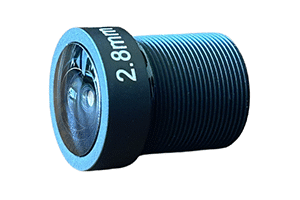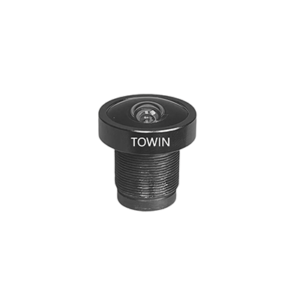


In the realm of optics, achieving flawless image quality across diverse environments remains a top priority. Whether for professional photography, security surveillance, or industrial inspections, the demand for lenses that deliver sharp, accurate visuals under varying conditions is ever-growing. Enter the IR Corrected Wide Angle Lens—a cutting-edge solution designed to overcome one of the most persistent challenges in imaging: infrared (IR) interference.
What Is an IR Corrected Wide Angle Lens?
An IR Corrected Wide Angle Lens is a specialized optical device engineered to minimize the effects of infrared light, which can distort images and reduce color accuracy. Unlike standard lenses, which may struggle with IR contamination—especially in low-light or multi-spectral imaging—IR-corrected variants feature multi-layer coatings and optimized glass elements that filter out unwanted wavelengths. This correction is paired with a wide-angle design, enabling the lens to capture expansive fields of view (often exceeding 100 degrees) without sacrificing edge-to-edge sharpness.
Key Features of IR Corrected Wide Angle Lenses
- 1. Infrared Rejection: Advanced coatings block IR light (typically 700–1000nm wavelengths) from reaching the sensor, preventing overexposure and preserving natural colors.
- 2. Wide Field of View: With angles as broad as 180 degrees, these lenses capture expansive scenes in a single frame, ideal for landscape photography or large-area surveillance.
- 3. Low Distortion Design: Optical engineering ensures minimal barrel or pincushion distortion, maintaining straight lines and geometric accuracy.
- 4. Enhanced Light Transmission: High-quality glass elements maximize light intake, improving performance in low-light conditions without compromising clarity.
- 5. Durability: Many models feature rugged builds, weatherproofing, and anti-reflective coatings, making them suitable for outdoor and industrial use.
Applications of IR Corrected Wide Angle Lenses
The versatility of an IR Corrected Wide Angle Lens spans multiple industries:
- Photography & Videography: Capturing breathtaking landscapes or architectural marvels with minimal distortion.
- Surveillance & Security: Monitoring large areas like parking lots, stadiums, or borders with high-definition clarity.
- Industrial Inspection: Inspecting machinery, pipelines, or infrastructure for defects without missing critical details.
- Agriculture & Drone Imaging: Analyzing crop health or terrain features with multispectral data free from IR interference.
Why Choose an IR Corrected Wide Angle Lens Over Standard Lenses?
Standard wide-angle lenses often struggle with two issues: IR contamination and edge distortion. IR light can cause color shifts, reducing the fidelity of red and blue hues, while uncorrected wide-angle designs may warp straight lines into curves. An IR Corrected Wide Angle Lens addresses both challenges head-on:
- Color Accuracy: By filtering IR wavelengths, colors appear natural and balanced, even under artificial lighting.
- Geometric Precision: Advanced lens designs ensure edges remain sharp, making them perfect for architectural or technical photography.
For professionals relying on image quality—such as real estate agents or security analysts—the difference is night and day.
How to Select the Right IR Corrected Wide Angle Lens
Choosing the ideal lens involves evaluating several factors:
- Focal Length: Shorter focal lengths (e.g., 8–14mm) offer wider angles but may require closer proximity to subjects.
- Aperture Size: Larger apertures (e.g., f/2.8) improve low-light performance but may increase cost.
- Mount Compatibility: Ensure the lens fits your camera or device (e.g., C-mount, CS-mount, or M12).
- IR Cut Filter Integration: Some lenses include built-in IR filters, while others rely on external solutions.
FAQs
1. What is the main purpose of IR correction in a wide-angle lens?
IR correction prevents infrared light from distorting colors and details, ensuring images remain sharp and accurate across all lighting conditions.
2. Can IR corrected wide angle lenses be used for night vision?
While they aren’t designed for complete darkness, IR-corrected lenses enhance low-light performance by reducing noise and preserving color integrity, making them suitable for dusk or dimly lit environments.
3. Do IR corrected lenses work with all camera types?
Most IR-corrected wide-angle lenses are compatible with DSLRs, mirrorless cameras, and surveillance systems, but always check mount specifications and sensor size requirements.
4. How do IR corrected lenses compare to fisheye lenses?
Fisheye lenses offer ultra-wide views (up to 180 degrees) but introduce significant distortion. IR-corrected wide-angle lenses provide broader fields of view with minimal distortion, making them more versatile for professional use.
5. Are IR corrected wide angle lenses more expensive?
Yes, due to their advanced coatings and precision engineering, they typically cost more than standard lenses. However, their benefits in image quality and reliability justify the investment for serious users.
Conclusion
The IR Corrected Wide Angle Lens represents a leap forward in optical technology, merging the benefits of wide-angle coverage with unparalleled IR rejection. Whether you’re a photographer seeking perfection, a security professional demanding clarity, or an engineer analyzing critical data, these lenses deliver results that standard optics simply can’t match.