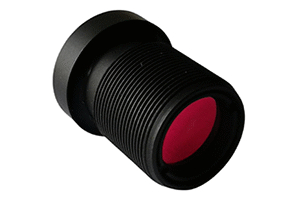


The automotive industry is evolving at breakneck speed, with advanced driver-assistance systems (ADAS) and autonomous driving technologies taking center stage. At the heart of these innovations lies a critical component: the low-distortion automotive lens. These specialized lenses are engineered to minimize optical aberrations, ensuring that cameras and sensors capture images with unparalleled clarity.
Why Low-Distortion Automotive Lenses Matter
In automotive applications, image distortion can lead to misinterpretation of road conditions, pedestrian movements, or traffic signals. A low-distortion automotive lens reduces geometric inaccuracies, such as barrel or pincushion distortion, which are common in standard lenses. This precision is vital for:
- ADAS Reliability: Systems like lane departure warnings, adaptive cruise control, and automatic emergency braking depend on distortion-free imaging to make split-second decisions.
- Driver Confidence: Backup cameras and surround-view systems with low-distortion lenses provide a true-to-life representation of the vehicle’s surroundings, reducing blind spots and accidents.
- Autonomous Driving: Self-driving cars require flawless data from cameras and LiDAR sensors. Even minor distortions can disrupt object detection or path planning, making low-distortion lenses indispensable.
How Low-Distortion Automotive Lenses Are Designed
Creating a low-distortion automotive lens involves advanced optical engineering and material science. Key design elements include:
- Aspherical Surfaces: Unlike traditional spherical lenses, aspherical designs use complex curves to correct distortion at the source.
- Multi-Element Construction: Combining multiple lens elements with varying refractive indices helps balance light paths and minimize aberrations.
- Anti-Reflective Coatings: These coatings reduce glare and improve light transmission, ensuring sharp images even in low-light conditions.
- Thermal Stability: Automotive lenses must withstand extreme temperatures without warping. Materials like glass or high-grade plastics are chosen for their durability.
Applications of Low-Distortion Automotive Lenses
- Surround-View Systems: These systems stitch images from multiple cameras into a bird’s-eye view of the vehicle. Low-distortion lenses ensure seamless alignment, eliminating misalignment errors.
- Night Vision Cameras: Infrared cameras rely on distortion-free optics to detect pedestrians or animals in darkness, enhancing driver awareness.
- LiDAR Sensors: Autonomous vehicles use LiDAR to map their environment. Low-distortion lenses ensure accurate laser beam projection and reflection, critical for 3D mapping.
- Driver Monitoring Systems: Cameras tracking eye movement or head position must capture distortion-free images to assess driver fatigue or distraction accurately.
Advantages Over Traditional Lenses
- Higher Accuracy: Reduced distortion means fewer errors in object recognition, leading to safer ADAS interventions.
- Improved Durability: Designed to withstand vibrations, temperature fluctuations, and moisture, these lenses offer long-term reliability.
- Enhanced Image Quality: Crisper images improve user experience, whether it’s a driver reviewing a backup camera feed or an AI analyzing traffic patterns.
FAQs
What causes distortion in automotive lenses?
Distortion arises from imperfections in lens design, such as spherical aberrations or misaligned elements. Low-distortion lenses use aspherical surfaces and multi-element assemblies to counteract these issues.
How do low-distortion lenses improve ADAS safety?
By providing distortion-free images, these lenses ensure ADAS systems like lane-keeping assist or collision avoidance interpret road conditions accurately, reducing false alerts or missed detections.
Are low-distortion automotive lenses weather-resistant?
Yes. Most are coated with hydrophobic or anti-fog layers to maintain clarity in rain, snow, or fog. They’re also tested for thermal stability to function in extreme temperatures.
Can low-distortion lenses be used in non-automotive applications?
Absolutely. Industries like surveillance, medical imaging, and augmented reality (AR) benefit from their precision, though automotive-grade lenses are optimized for durability and vibration resistance.
What’s the lifespan of a low-distortion automotive lens?
With proper care, these lenses can last the lifetime of a vehicle. Their robust construction resists wear from UV exposure, dust, and chemicals.
Conclusion
The low-distortion automotive lens is a cornerstone of modern vehicle safety and autonomy. By eliminating optical aberrations, these lenses empower ADAS systems, enhance driver awareness, and pave the way for fully autonomous vehicles.