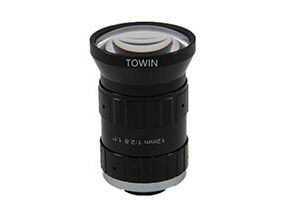


In the world of optics, achieving accurate geometry is non-negotiable. Whether you’re capturing architectural details, conducting industrial inspections, or designing advanced surveillance systems, distortions can compromise data integrity and visual clarity. Enter the Low-Distortion FA Lens—a game-changer in precision imaging. Designed to minimize optical aberrations, this lens ensures every edge, angle, and line remains true to its original form.
What Is a Low-Distortion FA Lens?
A Low-Distortion FA Lens (FA stands for “Fixed Aperture”) is a specialized optical component engineered to reduce geometric distortions, such as barrel distortion, pincushion distortion, and chromatic aberrations. Unlike standard lenses, which may bend straight lines into curves or blur edges, the FA Lens maintains sharpness and proportionality across the entire image frame. This makes it ideal for applications where accuracy is paramount, including machine vision, metrology, and 3D reconstruction.
How Does a Low-Distortion FA Lens Work?
The secret lies in its advanced optical design. A Low-Distortion FA Lens typically features:
- Aspherical elements: These correct spherical aberrations, ensuring uniform focus.
- Multi-coating technology: Reduces reflections and chromatic dispersion.
- Precision alignment: Each component is calibrated to sub-micron tolerances.
By combining these features, the lens minimizes distortions to less than 0.1%, a benchmark that outperforms conventional lenses. For context, a 1% distortion in a 10-meter object could result in a 10-centimeter error—a margin unacceptable in fields like aerospace or semiconductor manufacturing.
Key Benefits of the Low-Distortion FA Lens
1. Unmatched Geometric Accuracy
Straight lines stay straight, and angles remain precise, even at the edges of the frame. This is critical for applications like CAD modeling or quality control in manufacturing.
2. Enhanced Image Quality
Reduced distortions mean sharper images with higher contrast, making it easier to detect defects or analyze fine details.
3. Consistency Across Environments
Whether used in bright sunlight or low-light conditions, the FA Lens maintains its performance, thanks to its fixed aperture design.
4. Cost Efficiency
By eliminating the need for post-processing corrections, the Low-Distortion FA Lens saves time and reduces operational costs.
Applications of the Low-Distortion FA Lens
- Machine Vision: Used in robotics and automation for defect detection and dimensional analysis.
- Architecture & Construction: Captures accurate blueprints and 3D models of buildings.
- Medical Imaging: Ensures precise measurements in endoscopy and microscopy.
- Surveillance Systems: Provides clear, undistorted footage for security applications.
- Aerospace: Supports navigation and mapping with high-fidelity imagery.
Choosing the Right Low-Distortion FA Lens
- Distortion rating: Look for lenses with <0.1% distortion.
- Focal length: Match it to your application’s working distance.
- Mount compatibility: Ensure it fits your camera or sensor.
- Environmental resistance: Opt for weather-sealed models for outdoor use.
FAQs
What causes distortion in lenses?
Distortion arises from imperfections in lens design, such as spherical aberrations or misaligned elements. The Low-Distortion FA Lens counters this with aspherical glass and precision engineering.
Can software correct lens distortion?
While post-processing tools can reduce distortions, they often degrade image quality. A Low-Distortion FA Lens eliminates the need for corrections, preserving raw data integrity.
Are FA lenses suitable for photography?
Yes, but they excel in technical applications. For portrait or landscape photography, a variable-aperture lens might offer more creative flexibility.
How do I maintain my FA lens?
Clean the glass with a microfiber cloth and store it in a dry, dust-free case. Avoid exposing it to extreme temperatures or humidity.
What’s the difference between FA and zoom lenses?
FA lenses have a fixed aperture and focal length, ensuring consistent performance. Zoom lenses offer versatility but often introduce more distortions.
Final Thoughts
In an era where data drives decisions, the Low-Distortion FA Lens stands as a beacon of reliability. Its ability to deliver accurate geometry without compromise makes it indispensable in fields where even a millimeter of error can spell disaster.