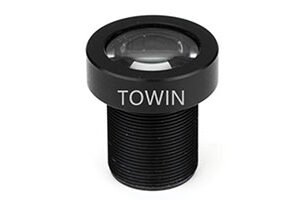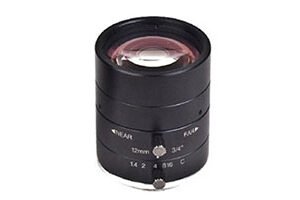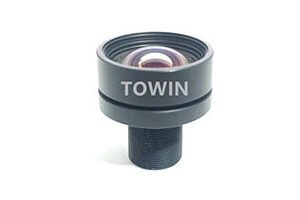


In industries ranging from aerospace to medical imaging, the demand for low distortion lenses has surged. These specialized lenses minimize optical aberrations, ensuring images remain sharp and measurements precise. However, even the most advanced low distortion lens requires meticulous calibration to perform optimally.
Why Low Distortion Lens Calibration Matters
A low distortion lens is engineered to reduce geometric inaccuracies like barrel or pincushion distortion. These errors can skew measurements, degrade image quality, and compromise applications such as 3D scanning, machine vision, and augmented reality. Calibration corrects residual distortions, ensuring the lens meets its design specifications. Without proper calibration, even a high-quality low distortion lens may fail to deliver reliable results.
The Calibration Process: Step-by-Step
1. Preparation
- Select a calibration target (e.g., a grid pattern or checkerboard) with known dimensions.
- Ensure stable lighting and minimal environmental vibrations.
- Use a high-resolution camera or sensor paired with the low distortion lens.
2. Image Capture
- Capture multiple images of the target at varying angles and distances.
- Ensure the target fills the frame to capture edge distortions.
3. Analysis
- Use software like OpenCV or MATLAB to detect distortion patterns.
- Compare captured images against the ideal target geometry to quantify deviations.
4. Correction
- Apply mathematical models (e.g., polynomial or radial distortion correction) to adjust the lens parameters.
- Validate results by re-capturing images and measuring residual errors.
Common Challenges in Low Distortion Lens Calibration
- Environmental Factors: Temperature fluctuations or vibrations may alter lens behavior.
- Target Misalignment: A poorly positioned calibration target introduces errors.
- Software Limitations: Basic tools may not account for complex distortion types.
Tools and Software for Low Distortion Lens Calibration
- OpenCV: An open-source library with built-in distortion correction algorithms.
- MATLAB: Offers advanced modeling for custom lens designs.
- Commercial Solutions: Software like Imatest provides user-friendly interfaces for rapid calibration.
Pair these with a high-precision calibration target, such as a glass reticle or laser-etched grid, to enhance accuracy.
Best Practices for Maintaining Calibration Accuracy
- Regular Checks: Recalibrate the low distortion lens quarterly or after mechanical adjustments.
- Documentation: Record calibration parameters for traceability.
- Environmental Control: Store lenses in temperature-stable environments to prevent drift.
FAQs
How often should a low distortion lens be calibrated?
Calibration frequency depends on usage. High-precision applications like metrology may require monthly checks, while general imaging tasks might need annual recalibration.
Can I calibrate a low distortion lens without specialized software?
While basic tools like GIMP or Photoshop offer distortion correction, they lack the precision of dedicated software. For critical applications, invest in professional solutions.
What’s the difference between radial and tangential distortion?
Radial distortion (barrel/pincushion) warps images along the radius, while tangential distortion shifts pixels tangentially to the optical center. A low distortion lens minimizes both but may require calibration to eliminate residual effects.
Does temperature affect low distortion lens calibration?
Yes. Thermal expansion can alter lens geometry. Always calibrate at the operating temperature to ensure consistency.
Can I use a smartphone camera for low distortion lens calibration?
Smartphones lack the precision for professional calibration. Use industrial-grade cameras with high-resolution sensors for reliable results.
Conclusion
Calibrating a low distortion lens is a critical step in unlocking its full potential. By following structured methods, leveraging advanced tools, and adhering to best practices, you can ensure your lens delivers unmatched accuracy.