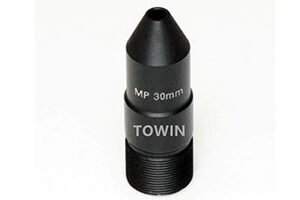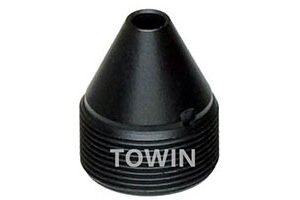


In the world of photography and imaging, precision is paramount. Traditional pinhole lens, while simple and cost-effective, often struggle with distortion, blurriness, and limited light sensitivity. Enter the low-distortion pinhole lens—a revolutionary innovation designed to deliver sharper, more accurate results without compromising on the fundamental simplicity of pinhole technology.
A pinhole lens operates on a basic principle: a tiny aperture projects light onto a sensor or film, creating an image. However, conventional designs suffer from edge distortion, chromatic aberration, and soft focus, especially in low-light conditions. The low-distortion pinhole lens addresses these flaws by optimizing aperture size, material quality, and coating technologies, resulting in near-perfect image reproduction.
How Does a Low-Distortion Pinhole Lens Work?
At its core, a low-distortion pinhole lens maintains the minimalist design of a traditional pinhole but incorporates advanced engineering to refine performance. Key features include:
- Precision Aperture: The pinhole is laser-cut to sub-micron accuracy, ensuring consistent light entry and reducing diffraction.
- Anti-Reflective Coatings: Multi-layer coatings minimize flare and ghosting, enhancing contrast.
- Optimized Focal Length: Calculated to balance sharpness and field of view, reducing curvature at the edges.
Applications of the Low-Distortion Pinhole Lens
The versatility of the low-distortion pinhole lens spans multiple industries:
- Artistic Photography: Artists leverage its unique depth-of-field effects for surreal, dreamlike compositions.
- Surveillance Systems: Compact and discreet, these lenses provide high-resolution imaging for security cameras.
- Scientific Research: Used in microscopy and astrophotography, where accuracy is non-negotiable.
- Mobile Devices: Thin profiles make them suitable for smartphone cameras seeking DSLR-like quality.
Advantages Over Traditional Pinhole Lenses
- Sharpness: Eliminates soft edges, delivering uniform clarity across the frame.
- Light Efficiency: Smaller apertures reduce lens flare while maintaining brightness.
- Durability: Made from scratch-resistant materials, they withstand harsh environments.
- Cost-Effectiveness: Affordable alternative to complex lens systems for hobbyists and professionals alike.
FAQs
1. What makes a low-distortion pinhole lens different from a regular one?
A low-distortion model uses precision engineering to minimize optical errors like chromatic aberration and edge curvature, resulting in sharper images.
2. Can I use a low-distortion pinhole lens with my DSLR?
Yes! Many adapters allow pinhole lenses to attach to DSLR mounts, though manual focusing is required.
3. Are low-distortion pinhole lenses suitable for video recording?
While possible, their fixed aperture makes them challenging for dynamic lighting. They’re better suited for static shots.
4. How do I clean a low-distortion pinhole lens?
Use a microfiber cloth and compressed air. Avoid touching the aperture directly to prevent damage.
5. The Future of Imaging: Why Low-Distortion Pinhole Lenses Matter
As technology advances, the demand for lightweight, high-performance optics grows. The low-distortion pinhole lens bridges the gap between simplicity and sophistication, offering a cost-effective solution for photographers, scientists, and engineers. Its ability to deliver near-perfect images without bulky glass elements positions it as a disruptor in the imaging industry.
Conclusion
The low-distortion pinhole lens is not just an upgrade—it’s a paradigm shift. By combining timeless principles with modern innovation, it redefines what’s possible in photography and beyond.