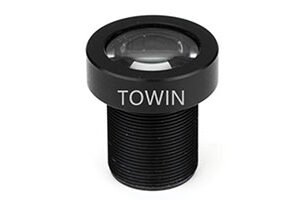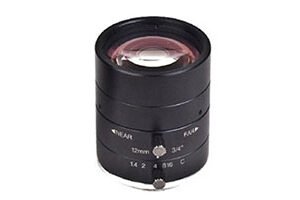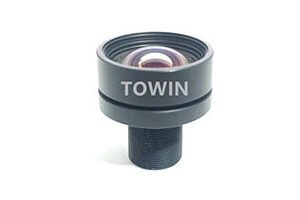


In the world of machine vision and industrial imaging, precision is non-negotiable. Even minor distortions can lead to measurement errors, defective product inspections, and costly production delays. Enter the Low Distortion Lens—a specialized optical component designed to eliminate perspective errors and deliver razor-sharp images with minimal distortion.
What Is a Low Distortion Telecentric Lens?
A Low Distortion Telecentric Lens is engineered to maintain consistent magnification across the entire field of view, regardless of the object’s distance from the lens. Unlike conventional lenses, which suffer from parallax errors (where objects appear shifted based on their position), telecentric lenses use parallel light rays to ensure uniformity. The “low distortion” aspect means these lenses minimize geometric distortions like barrel or pincushion effects, preserving the true shape and dimensions of the subject.
5 Key Advantages of a Low Distortion Telecentric Lens
1. Unmatched Measurement Accuracy
Traditional lenses introduce perspective errors, causing objects to appear larger or smaller depending on their position. A Low Distortion Telecentric Lens eliminates this issue by projecting light perpendicular to the sensor, ensuring consistent magnification. This is critical for industries like electronics manufacturing, where even micron-level inaccuracies can render components unusable.
2. Minimal Geometric Distortion
Geometric distortions—such as barrel (where edges bulge outward) or pincushion (where edges pinch inward)—can warp images and skew measurements. A Low Distortion Telecentric Lens keeps distortions below 0.1%, making it perfect for applications like medical device inspection or automotive part verification.
3. Enhanced Depth of Field
Telecentric lenses maintain focus across a wider depth range compared to standard lenses. This is invaluable for inspecting 3D objects or uneven surfaces, as it ensures every detail remains sharp without refocusing.
4. Consistent Performance Across Distances
Unlike fixed-focus lenses, telecentric lenses provide uniform image quality regardless of the object’s distance from the lens. This reduces setup complexity and ensures reliable results even in dynamic environments.
5. Cost Efficiency in the Long Run
While Low Distortion Telecentric Lenses may have a higher upfront cost, their precision reduces waste from faulty inspections and rework. For high-volume manufacturing, this translates to significant savings over time.
Applications of Low Distortion Telecentric Lenses
- Semiconductor Manufacturing: Inspecting wafer alignment and solder bumps.
- Automotive: Verifying part dimensions and surface defects.
- Pharmaceuticals: Ensuring pill size and packaging consistency.
- Robotics: Guiding automated systems with pixel-perfect precision.
How to Choose the Right Low Distortion Telecentric Lens
- Working Distance: The distance between the lens and the object.
- Field of View: The area the lens can capture.
- Magnification: The ratio of the image size to the object size.
- Wavelength Range: Compatibility with your lighting setup (e.g., UV, visible, or IR).
FAQs
What causes distortion in lenses?
Distortion arises from the lens’s optical design, often due to curved elements bending light unevenly. A Low Distortion Telecentric Lens uses advanced coatings and parallel light paths to minimize this.
Can a Low Distortion Telecentric Lens replace a macro lens?
Not always. While telecentric lenses excel at measurement tasks, macro lenses are better suited for close-up photography where perspective effects are acceptable.
Are telecentric lenses only for industrial use?
Primarily, yes. Their precision makes them overkill for consumer photography but indispensable for machine vision and quality control.
How do I maintain a Low Distortion Telecentric Lens?
Clean the lens regularly with a microfiber cloth and avoid touching the glass. Store it in a dry, dust-free environment to prevent degradation.
What’s the difference between bilateral and unilateral telecentric lenses?
Bilateral telecentric lenses control light paths on both sides (object and image), reducing distortion further. Unilateral lenses manage only one side, making them less precise but more affordable.
Conclusion
In industries where “close enough” isn’t an option, a Low Distortion Telecentric Lens is the ultimate tool for achieving flawless results. By eliminating perspective errors and geometric distortions, it ensures every measurement, inspection, and analysis is as accurate as possible.