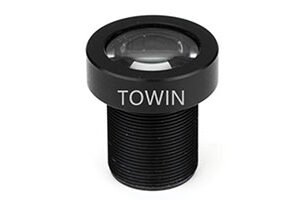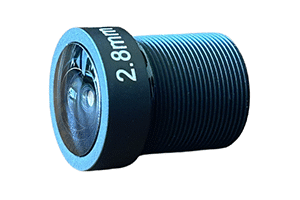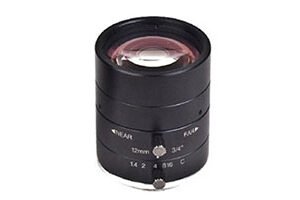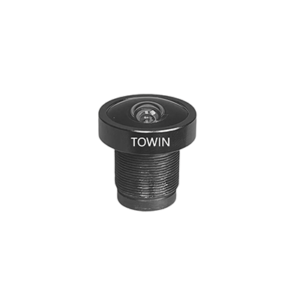


Photography enthusiasts and professionals alike know the struggle of capturing expansive scenes without compromising image quality. Traditional wide-angle lenses often introduce distortion, warping straight lines into curves and distorting proportions. Enter the Low distortion wide-angle lens—a revolutionary tool designed to deliver breathtaking perspectives while maintaining geometric accuracy.
What Makes a Low Distortion Wide-Angle Lens Special?
A Low distortion wide-angle lens minimizes optical aberrations, particularly barrel and pincushion distortion, which are common in wider focal lengths. By using advanced lens coatings, aspherical elements, and precise engineering, manufacturers achieve edge-to-edge sharpness and straight lines even at extreme angles.
Key Benefits of a Low Distortion Wide-Angle Lens
1. Geometric Precision:
Straight lines stay straight, making it ideal for architectural photography. No more curved buildings or skewed horizons.
2. Enhanced Image Quality:
Reduced distortion means sharper details, especially in the corners of the frame. This is critical for professional work where clarity matters.
3. Creative Versatility:
From sweeping landscapes to intimate interior shots, a Low distortion wide-angle lens adapts to diverse scenarios without sacrificing quality.
4. Time Efficiency:
Skip time-consuming edits in software like Photoshop. What you capture in-camera is ready to use.
5. Compact Design:
Modern lenses balance wide fields of view with lightweight builds, perfect for travel and on-the-go shooting.
How to Choose the Right Low Distortion Wide-Angle Lens
When selecting a lens, consider these factors:
- Focal Length: A 14–24mm range suits most needs, but ultra-wide options (e.g., 12mm) exist for extreme perspectives.
- Aperture: Faster lenses (f/2.8 or lower) excel in low light but may cost more.
- Autofocus Speed: Critical for dynamic subjects like wildlife or street photography.
- Build Quality: Weather-sealed lenses endure harsh conditions.
Practical Uses of a Low Distortion Wide-Angle Lens
1. Landscape Photography:
Capture vast skies and rolling terrain without distorting natural features.
2. Real Estate:
Showcase entire rooms or property exteriors accurately.
3. Event Photography:
Fit large groups into a single frame without cropping.
4. Astrophotography:
Wide angles reveal more of the night sky, ideal for star trails or Milky Way shots.
Common Misconceptions About Wide-Angle Lenses
“Wide-angle lenses make everything look small.”
Not true! Proper positioning and composition can emphasize scale.
“Distortion is unavoidable.”
While some distortion exists in all lenses, modern designs drastically reduce it.
“Only professionals need them.”
Hobbyists benefit too, especially for travel and creative projects.
FAQs
1. Can I use a low distortion wide-angle lens for portraits?
Yes! While not traditional, it works for environmental portraits or creative shots. Just avoid placing subjects too close to the edges to prevent distortion.
2. Do I need image stabilization with a wide-angle lens?
It depends. For handheld shooting in low light, stabilization helps. However, many wide-angle lenses rely on fast shutter speeds instead.
3. How do I avoid vignetting with a wide-angle lens?
Stop down the aperture (e.g., f/5.6–f/8) or use lenses with advanced coatings. Post-processing can also correct vignetting.
4. Are low distortion wide-angle lenses heavy?
Not necessarily. Many modern designs prioritize portability without sacrificing performance.
5. Can I shoot video with a low distortion wide-angle lens?
Absolutely! Their wide fields of view are great for vlogging, action sequences, or establishing shots.
Final Thoughts
A Low distortion wide-angle lens is a game-changer for photographers seeking precision and creativity. By eliminating unwanted warping, it opens doors to new compositions and professional-grade results.