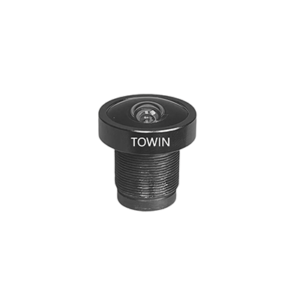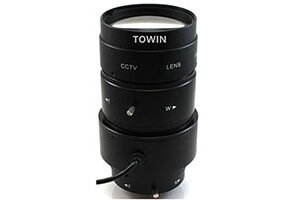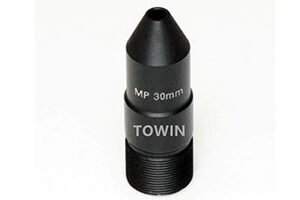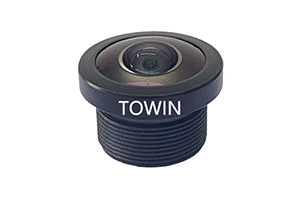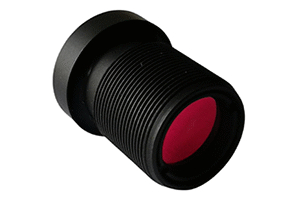


Night vision technology has transformed surveillance, enabling clear imaging in total darkness. At the heart of this innovation lies M12 IR lenses for night vision cameras, a game-changing component designed to optimize infrared (IR) performance. These compact, high-performance lenses are engineered to deliver crisp visuals in low-light conditions, making them indispensable for security, wildlife monitoring, and industrial applications.
What Are M12 IR Lenses for Night Vision Cameras?
M12 IR lenses are specialized optical components tailored for night vision systems. The “M12” refers to their 12mm thread diameter, a standard size that ensures compatibility with a wide range of cameras. These lenses are optimized for infrared light, which is invisible to the human eye but critical for night vision technology. By capturing IR wavelengths (typically 700–1,000 nm), M12 IR lenses enable cameras to “see” in darkness, producing grayscale or color-tinted images depending on the sensor’s capabilities.
Unlike standard lenses, M12 IR variants feature anti-reflective coatings and multi-element designs to minimize light loss and distortion. This ensures maximum IR transmission, even in challenging environments like fog or rain.
Key Features of M12 IR Lenses for Night Vision Cameras
1. Infrared Optimization
M12 IR lenses are engineered to transmit IR light efficiently, reducing “hot spots” or uneven illumination common in low-quality optics. This results in uniform brightness across the frame, critical for accurate object detection.
2. Compact and Lightweight
With a 12mm thread diameter, these lenses are significantly smaller than traditional C-mount alternatives. This makes them perfect for space-constrained applications like body cameras or IoT devices.
3. Durability
Constructed from high-grade materials like aluminum or glass, M12 IR lenses resist scratches, moisture, and temperature fluctuations. Some models even feature IP67 ratings for waterproof performance.
4. Wide Aperture Range
Many M12 IR lenses offer adjustable apertures (e.g., f/1.2 to f/2.8), allowing users to balance light intake and depth of field based on scene requirements.
5. Cost-Effectiveness
Despite their advanced features, M12 IR lenses are often more affordable than larger alternatives, making them accessible for budget-conscious projects.
Applications of M12 IR Lenses for Night Vision Cameras
1. Security Surveillance
From residential perimeters to commercial warehouses, M12 IR lenses enhance nighttime monitoring by providing clear footage of intruders or suspicious activity.
2. Wildlife Research
Researchers use IR-equipped cameras with M12 lenses to study nocturnal animals without disturbing their natural behavior. The compact design ensures minimal environmental impact.
3. Industrial Automation
In factories, M12 IR lenses aid in quality control by inspecting products under low-light conditions. Their durability withstands harsh manufacturing environments.
4. Autonomous Vehicles
Self-driving cars rely on IR sensors for obstacle detection at night. M12 lenses’ compact size fits seamlessly into vehicle designs without compromising performance.
5. Aerospace and Defense
Military drones and reconnaissance equipment use M12 IR lenses for covert operations, where stealth and reliability are paramount.
Why Choose M12 IR Lenses Over Traditional Options?
- Superior Low-Light Performance: M12 IR lenses capture more IR light than standard lenses, reducing noise and improving image clarity.
- Ease of Integration: Their universal M12 mount simplifies installation across various camera models.
- Longevity: High-quality coatings and materials extend the lens’ lifespan, reducing maintenance costs.
FAQs
How do M12 IR lenses improve night vision camera performance?
M12 IR lenses maximize infrared light transmission, reducing graininess and enhancing contrast in dark environments. Their multi-element design also corrects aberrations, ensuring sharp images.
Are M12 IR lenses compatible with all night vision cameras?
Most cameras with an M12 thread mount can use these lenses. However, always verify compatibility with your camera’s sensor size and IR cutoff filter.
Can M12 IR lenses work in daylight?
Yes, but their IR optimization may cause color shifts in visible light. For dual-use applications, consider lenses with switchable IR filters.
What is the typical lifespan of an M12 IR lens?
With proper care, M12 IR lenses can last 5–10 years. Factors like environmental exposure and handling frequency affect durability.
Conclusion
M12 IR lenses for night vision cameras represent a leap forward in low-light imaging technology. Their compact size, infrared optimization, and rugged design make them indispensable for security, wildlife research, and industrial automation. By choosing M12 IR lenses, users gain a cost-effective, high-performance solution that outshines traditional optics in clarity and reliability.