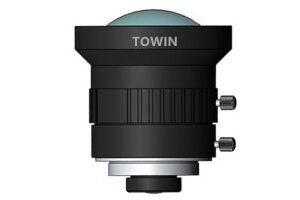


Barcode scanning is the backbone of modern inventory management, logistics, and retail operations. But what powers the seamless decoding of tiny, intricate barcodes under varying lighting conditions and angles? The answer lies in machine vision lenses in barcode scanning—a critical component that ensures high-speed, error-free data capture.
The Role of Machine Vision Lenses in Barcode Scanning
Machine vision lenses are specialized optical systems designed to capture high-resolution images with minimal distortion. Unlike standard lenses, they prioritize precision, depth of field, and light sensitivity, making them ideal for barcode scanning applications.
In barcode scanning, the lens must focus sharply on the barcode’s lines and spaces, even when the code is damaged, blurred, or at an angle. Machine vision lenses achieve this by:
- Optimizing focal length: Adjusting to different distances without losing clarity.
- Enhancing depth of field: Capturing barcodes at varying heights or orientations.
- Reducing distortion: Ensuring straight lines and accurate spacing for reliable decoding.
These features make machine vision lenses in barcode scanning superior to consumer-grade lenses, especially in industrial environments where speed and accuracy are non-negotiable.
How Machine Vision Lenses Improve Barcode Scanning Performance
1. High-Resolution Imaging
Machine vision lenses capture barcodes at resolutions up to 5 megapixels or higher, enabling the detection of even the smallest defects. This is crucial for industries like pharmaceuticals, where misreads can lead to costly errors or safety risks.
2. Fast Auto-Focus Capabilities
In high-speed production lines, barcodes move rapidly past scanners. Machine vision lenses use advanced auto-focus mechanisms to lock onto codes instantly, reducing latency and improving throughput.
3. Wide Depth of Field
A single lens can scan barcodes at multiple distances, eliminating the need for manual adjustments. This is particularly useful in warehouses where products are stacked at varying heights.
4. Durability in Harsh Environments
Industrial-grade machine vision lenses are built to withstand dust, moisture, and extreme temperatures, ensuring consistent performance in factories, cold storage facilities, or outdoor settings.
Applications of Machine Vision Lenses in Barcode Scanning
The versatility of machine vision lenses in barcode scanning spans multiple industries:
- Retail: Self-checkout systems rely on these lenses to scan products quickly, even if barcodes are partially obscured or wrinkled.
- Logistics: Sorting centers use machine vision lenses to decode barcodes on packages moving at high speeds on conveyor belts.
- Manufacturing: Tracking components during assembly requires lenses that can read barcodes on small, reflective, or irregularly shaped parts.
- Healthcare: Pharmaceutical tracking demands error-free scanning of 2D barcodes (like QR codes) on tiny vials or packaging.
Choosing the Right Machine Vision Lens for Barcode Scanning
Selecting the ideal lens depends on your specific needs:
- Focal Length: Shorter focal lengths (e.g., 8mm) suit close-range scanning, while longer ones (e.g., 50mm) are better for distant codes.
- Sensor Size: Ensure the lens matches your camera’s sensor (e.g., 1/2.5” or 1”).
- Lighting Conditions: Low-light environments may require lenses with wider apertures (e.g., f/1.4).
- Barcode Type: 1D barcodes need less resolution than 2D codes like Data Matrix or QR codes.
FAQs
What makes machine vision lenses different from regular lenses?
Machine vision lenses are engineered for industrial precision, offering higher resolution, wider depth of field, and durability compared to consumer lenses.
Can machine vision lenses read 2D barcodes like QR codes?
Yes! Many machine vision lenses are designed to decode both 1D and 2D barcodes with high accuracy.
How do I know if my machine vision lens is compatible with my scanner?
Check the lens’s focal length, sensor size, and mounting interface (e.g., C-mount) to ensure compatibility with your camera and scanning setup.
Are machine vision lenses expensive?
While they cost more than standard lenses, their long-term reliability and performance justify the investment, especially in high-stakes industries.
Can machine vision lenses work in extreme temperatures?
Industrial-grade lenses are built to operate in temperatures ranging from -20°C to 60°C, making them suitable for cold storage or outdoor use.
Conclusion
As industries demand faster, more accurate, and reliable barcode scanning, machine vision lenses in barcode scanning will play an increasingly pivotal role. Their ability to adapt to diverse environments, decode complex codes, and integrate with automation systems makes them indispensable in the era of Industry 4.0.