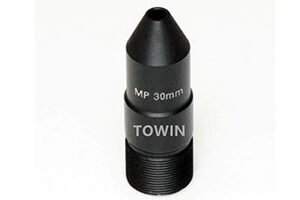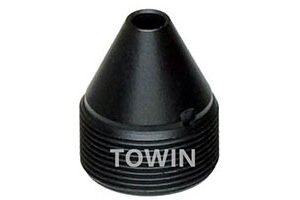


Machine vision systems rely on precision optics to interpret the world with unparalleled accuracy. Among these, the machine vision pinhole lens stands out as a game-changer, offering a compact, cost-effective solution for industries demanding flawless image capture.
What Is a Machine Vision Pinhole Lens?
A machine vision pinhole lens is a minimalist optical device that uses a tiny aperture (the “pinhole”) to focus light onto a sensor. Unlike traditional lenses with multiple glass elements, it eliminates distortion by relying on geometric principles: light travels in straight lines, and the pinhole restricts rays to a single path. This simplicity makes it ideal for applications where space, cost, or durability are critical.
How It Works:
- Light Entry: Light passes through the pinhole, acting as a natural filter.
- Image Formation: Only parallel rays reach the sensor, creating a sharp image.
- Depth of Field: The small aperture provides an extensive depth of field, keeping objects in focus across varying distances.
This design is particularly valuable in machine vision, where clarity and consistency are non-negotiable.
Key Advantages of Machine Vision Pinhole Lenses
1. Compact Size
Pinhole lenses are incredibly small, fitting into tight spaces where bulky lenses can’t. This makes them perfect for embedded systems, drones, or portable devices.
2. Cost Efficiency
With fewer components and no complex coatings, they’re cheaper to manufacture than multi-element lenses. A study by Optical Engineering Journal found pinhole lenses reduce costs by up to 40% in high-volume applications.
3. Durability
Lacking moving parts, they resist shock, vibration, and temperature fluctuations. This reliability is crucial in harsh environments like factories or outdoor settings.
4. Wide Depth of Field
They maintain focus across long distances, eliminating the need for frequent adjustments. For example, a warehouse robot using a machine vision pinhole lens can scan shelves at varying heights without recalibration.
5. Reduced Distortion
Traditional lenses may bend light, causing edge distortion. Pinhole lenses minimize this, ensuring accurate measurements in tasks like defect detection or 3D modeling.
Applications Across Industries
- Manufacturing: Inspecting tiny components for flaws in electronics assembly.
- Automotive: Monitoring production lines for part alignment or surface defects.
- Healthcare: Endoscopes and microscopes use pinhole lenses for high-resolution imaging.
- Agriculture: Drones equipped with these lenses analyze crop health from above.
- Security: Surveillance cameras leverage their wide depth of field for clear footage in large areas.
Choosing the Right Machine Vision Pinhole Lens
- Aperture Size: Smaller pinholes improve sharpness but reduce light intake. Balance is key.
- Sensor Compatibility: Ensure the lens matches your camera’s sensor size (e.g., CMOS or CCD).
- Focal Length: Longer focal lengths suit distant objects, while shorter ones capture closer details.
- Material: Stainless steel or aluminum housings offer durability; plastic may suffice for indoor use.
FAQs
How do pinhole lenses compare to traditional lenses in image quality?
Pinhole lenses sacrifice some brightness for superior distortion control and depth of field. They’re ideal for low-light, high-precision tasks but may struggle in extremely dim environments.
Can pinhole lenses work with any camera sensor?
Most pinhole lenses are designed for specific sensor sizes (e.g., 1/2” or 2/3”). Always verify compatibility to avoid vignetting or blurriness.
What’s the lifespan of a machine vision pinhole lens?
With no moving parts, they can last decades if kept clean and protected from extreme conditions. Regular maintenance, like dust removal, extends their usability.
Are pinhole lenses suitable for high-speed applications?
Yes! Their simplicity allows for rapid image capture, making them perfect for conveyor belt inspections or real-time robotics.
Do pinhole lenses require special software?
No, they integrate seamlessly with standard machine vision software. However, calibration tools may optimize performance for specific tasks.
Conclusion
As industries demand smarter, faster, and more reliable automation, the machine vision pinhole lens is poised to lead the charge. Its blend of affordability, durability, and precision makes it indispensable for everything from smart factories to autonomous vehicles.