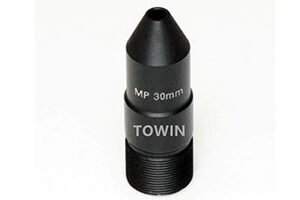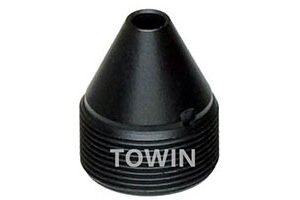


In the realm of optics and imaging, innovation often hinges on simplicity. Enter the scientific research pinhole lens—a minimalist yet transformative tool that has reshaped how researchers capture and analyze light. By stripping away the complexity of traditional lenses, pinhole lenses offer unparalleled precision, making them indispensable in fields ranging from astronomy to medical imaging.
What Is a Scientific Research Pinhole Lens?
A scientific research pinhole lens is a tiny aperture that restricts light to a single point, eliminating the need for curved glass or multiple elements. Unlike conventional lenses, which bend light to form an image, pinhole lenses rely on the principle of diffraction to project sharp, distortion-free images. This simplicity makes them ideal for environments where traditional lenses fail, such as extreme temperatures, high-vibration settings, or applications requiring ultra-compact designs.
The concept dates back centuries, but modern advancements in materials and manufacturing have elevated pinhole lenses to new heights. Today, they are crafted from materials like stainless steel, laser-cut polymers, or even nanostructured surfaces, enabling precision down to micrometers. This evolution has unlocked applications in scientific research that were once unimaginable.
How Scientific Research Pinhole Lenses Work
The magic of a scientific research pinhole lens lies in its ability to control light at the submillimeter scale. When light passes through the tiny aperture, rays from different angles interfere constructively at the focal plane, creating a clear image. This process, known as the “pinhole effect,” eliminates chromatic aberration and geometric distortions common in traditional lenses.
Key advantages include:
- Depth of Field: Pinhole lenses offer an almost infinite depth of field, keeping objects in focus regardless of distance.
- Compact Size: Their minimalist design makes them ideal for space-constrained applications, such as endoscopes or satellite cameras.
- Durability: Without moving parts or delicate glass, pinhole lenses withstand harsh conditions, including radiation, pressure, and temperature extremes.
Applications of Scientific Research Pinhole Lenses
1. Medical Imaging
In endoscopy and laparoscopy, pinhole lenses enable doctors to visualize internal organs with minimal invasiveness. Their compact size allows for flexible, catheter-based cameras, while their durability ensures reliable performance during surgeries.
2. Astronomy
Pinhole lenses help astronomers study solar flares and star clusters by reducing light intensity and scattering. This is critical for protecting sensitive detectors and improving image contrast.
3. Industrial Inspection
Manufacturers use pinhole lenses in quality control systems to inspect tiny components, such as semiconductor chips or microelectronics. Their ability to maintain focus across varying distances ensures consistent, high-resolution imaging.
4. Art Conservation
Conservators leverage pinhole lenses to analyze paintings and artifacts without direct contact. By projecting light through the aperture, they can detect hidden layers or restoration work without damaging the original piece.
5. Security and Surveillance
Pinhole lenses are integral to covert cameras, where discretion is paramount. Their small size allows them to be hidden in everyday objects, providing discreet monitoring without compromising image quality.
Challenges and Limitations
While scientific research pinhhole lenses offer numerous benefits, they are not without drawbacks. The primary limitation is light efficiency—since the aperture is tiny, less light reaches the sensor, requiring longer exposure times or brighter illumination. This can be problematic in low-light environments or fast-moving applications.
Additionally, pinhole lenses struggle with resolution compared to multi-element lenses. While advancements in nanofabrication have improved sharpness, they still lag behind traditional optics in scenarios demanding ultra-high detail.
FAQs
What makes a scientific research pinhole lens different from a regular pinhole?
A scientific research pinhole lens is engineered for precision, often using advanced materials and manufacturing techniques to ensure consistent aperture size and shape. Regular pinholes, like those made from aluminum foil, lack this level of control and are prone to irregularities that degrade image quality.
Can scientific research pinhole lenses be used in consumer cameras?
While possible, their low light efficiency makes them impractical for most consumer applications. However, they are occasionally used in niche products like disposable cameras or artistic photography tools.
How do scientific research pinhole lenses improve medical imaging?
By enabling compact, durable designs, pinhole lenses allow for minimally invasive procedures. Their infinite depth of field also ensures that structures at varying distances remain in focus, simplifying diagnostics.
Are scientific research pinhole lenses expensive?
Costs vary based on material and precision. Basic models can be inexpensive, but high-end scientific research pinhole lenses—especially those used in aerospace or medical fields—may require significant investment due to their specialized manufacturing processes.
What is the maximum resolution achievable with a scientific research pinhole lens?
Resolution depends on aperture size and wavelength of light. Smaller apertures yield higher resolution but reduce light intake. Advances in computational imaging are helping to overcome this trade-off, enabling higher resolutions without sacrificing brightness.
Conclusion
The scientific research pinhole lens is a testament to the power of simplicity in innovation. By harnessing fundamental principles of light and diffraction, these tiny apertures have unlocked applications across medicine, astronomy, industry, and beyond. While challenges remain, ongoing research and technological advancements promise to expand their capabilities even further.