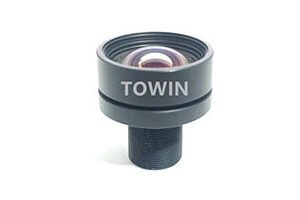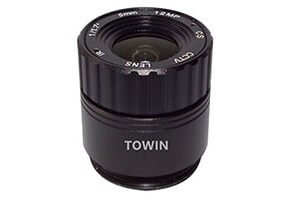


In the realm of optics, fixed focus lenses are celebrated for their simplicity, reliability, and cost-effectiveness. These lenses, designed to maintain a single focal length without manual adjustment, are widely used in applications ranging from industrial machine vision to consumer electronics. However, even the most precise fixed focus lenses can face challenges like glare, reflections, and reduced contrast—issues that anti-reflective (AR) coating effectively addresses.
The Role of Anti-Reflective Coating in Fixed Focus Lenses
Anti-reflective coating is a thin, multi-layer film applied to the surface of optical lenses to minimize light reflections. For fixed focus lenses, this coating is critical for optimizing performance in environments with varying lighting conditions. By reducing internal and external reflections, AR coating enhances light transmission, improves image contrast, and ensures sharper visuals. This is particularly vital in applications like surveillance cameras, barcode scanners, and medical imaging systems, where clarity and accuracy are non-negotiable.
Key Benefits of AR Coating in Fixed Focus Lenses
1. Enhanced Light Transmission:
AR coating allows up to 99% of light to pass through the lens, compared to 92% in uncoated lenses. This boosts brightness and reduces the need for additional lighting in low-light scenarios.
2. Reduced Glare and Reflections:
By eliminating surface reflections, AR coating ensures that fixed focus lenses produce clearer images with minimal distortion. This is especially useful in outdoor applications where sunlight or artificial lighting can cause unwanted glare.
3. Improved Contrast and Sharpness:
AR-coated fixed focus lenses deliver higher contrast ratios, making it easier to distinguish fine details in images. This is crucial for tasks like quality inspection in manufacturing or reading barcodes in logistics.
4. Durability and Scratch Resistance:
Towin’s AR coatings are engineered to withstand harsh environments, including exposure to dust, moisture, and chemicals. This extends the lifespan of fixed focus lenses, reducing maintenance costs.
5. Aesthetic Appeal:
For consumer electronics like smartphones or AR/VR headsets, AR coating reduces the “ghosting” effect caused by reflections, providing a more immersive user experience.
Towin’s Advanced AR Coating Technologies for Fixed Focus Lenses
Towin, a leader in optical solutions, offers a range of AR coatings tailored to fixed focus lenses. Their products combine precision engineering with innovative materials to meet diverse industry needs.
Product Parameters and Features
- 1. Coating Layers: Towin’s AR coatings consist of 5–15 layers, depending on the wavelength range (visible, near-infrared, or ultraviolet).
- 2. Spectral Range: Customizable for wavelengths from 380nm to 1100nm, ensuring compatibility with various light sources.
- 3. Transmission Efficiency: Up to 99.5% light transmission, ideal for high-precision applications.
- 4. Hardness: 6H–9H pencil hardness rating, offering excellent scratch resistance.
- 5. Temperature Resistance: Withstands temperatures from -40°C to 120°C, suitable for extreme environments.
- 6. Adhesion: Meets MIL-C-48497A standards, ensuring long-term durability.
Towin’s fixed focus lenses with AR coating are available in multiple configurations, including C-mount, S-mount, and M12 mounts, catering to different camera systems. Their coatings are also compatible with aspherical and plano-convex lens designs, providing flexibility for custom projects.
FAQs
1. How does AR coating improve image quality in fixed focus lenses?
AR coating reduces surface reflections, allowing more light to reach the sensor or eyepiece. This results in brighter images with higher contrast and fewer artifacts like ghosting or flare.
2. Are AR-coated fixed focus lenses more expensive?
While AR coating adds a slight cost premium, the benefits in terms of performance and durability often outweigh the initial investment, especially in professional applications.
3. Can AR coating be applied to both sides of a fixed focus lens?
Yes, dual-sided AR coating is common for lenses used in high-glare environments, such as outdoor surveillance cameras. Towin offers this option for enhanced performance.
4. How long does AR coating last on fixed focus lenses?
Towin’s AR coatings are designed to last for years under normal operating conditions. Their scratch-resistant properties ensure the coating remains intact even with frequent cleaning.
5. Is AR coating necessary for all fixed focus lenses?
Not always. Applications with controlled lighting or low-glare environments may not require AR coating. However, for most industrial, medical, or outdoor uses, it is highly recommended.
Conclusion
The role of anti-reflective coating in fixed focus lenses cannot be overstated. From enhancing light transmission to improving image contrast, AR coating is a game-changer for industries that demand precision and reliability.