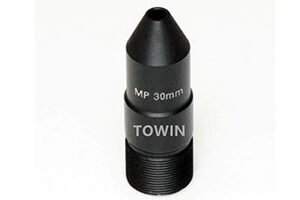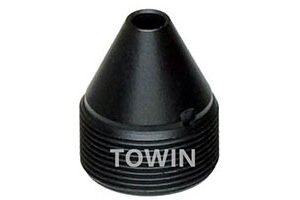


In the realm of precision optics, stability under extreme conditions is non-negotiable. Whether capturing high-resolution images in space or ensuring flawless performance in industrial machinery, even minor thermal fluctuations can disrupt accuracy. Enter the thermally stable pinhole lens—a groundbreaking solution engineered to maintain optical integrity across a vast temperature range.
What Is a Thermally Stable Pinhole Lens?
A thermally stable pinhole lens is a specialized optical component that combines the simplicity of a traditional pinhole design with advanced materials to resist thermal expansion and contraction. Unlike conventional lenses, which rely on curved surfaces to focus light, a pinhole lens uses a tiny aperture to project sharp images by limiting light rays to a narrow path. This minimalist approach inherently reduces aberrations, but standard pinhole lenses can still suffer from image blur or misalignment when exposed to temperature swings.
How Does Thermal Stability Enhance Performance?
The primary advantage of a thermally stable pinhole lens lies in its ability to eliminate thermal-induced distortions. Traditional lenses, even those made from glass or polymers, expand or contract with temperature changes, causing:
- Image shift: The projected image moves slightly, disrupting calibration in systems like laser alignment tools.
- Focus drift: The lens’s effective focal length changes, blurring images in cameras or microscopes.
- Structural stress: Repeated thermal cycling can crack or warp components, leading to premature failure.
A thermally stable pinhole lens circumvents these issues by maintaining its aperture size and position regardless of temperature. This stability is critical in applications like:
- Aerospace: Satellites and spacecraft experience drastic temperature shifts as they orbit Earth or enter/exit sunlight. A thermally stable pinhole lens ensures instruments like star trackers or Earth observation cameras remain accurate.
- Medical imaging: Endoscopes and MRI machines require lenses that won’t deform during sterilization (high heat) or cryogenic storage (extreme cold).
- Industrial automation: Machine vision systems in factories must operate reliably near ovens, freezers, or other temperature-variable equipment.
Key Features of a Thermally Stable Pinhole Lens
1. Material Innovation:
- Low-CTE (Coefficient of Thermal Expansion) Alloys: Invar and other nickel-based alloys minimize dimensional changes.
- Ceramic Composites: Materials like zirconia or alumina offer superior thermal resistance and chemical stability.
- Hybrid Designs: Combining metals and ceramics in a single lens can optimize both strength and thermal performance.
2. Precision Manufacturing:
- The aperture must be machined to sub-micron tolerances to ensure sharp imaging.
- Surface finishes are polished to reduce light scattering, enhancing contrast and resolution.
3. Protective Coatings:
- Anti-reflective coatings improve light transmission, while scratch-resistant layers shield the lens from abrasion.
- Some coatings also repel moisture or chemicals, extending the lens’s lifespan in harsh environments.
Applications Across Industries
The versatility of a thermally stable pinhole lens makes it indispensable in sectors where precision and reliability are paramount:
1. Space Exploration:
NASA and private space companies use these lenses in cameras and sensors to map planetary surfaces or track spacecraft orientation. For instance, the Perseverance Rover on Mars relies on thermally stable optics to capture high-resolution images despite temperature extremes.
2. Automotive Safety:
Lidar systems in autonomous vehicles require lenses that won’t distort in hot engine compartments or cold winter climates. A thermally stable pinhole lens ensures accurate distance measurements, enhancing collision avoidance.
3. Scientific Research:
Microscopes and spectrometers operating in cryogenic labs or high-temperature furnaces depend on these lenses to maintain focus during experiments.
FAQs
How does a thermally stable pinhole lens differ from a standard pinhole lens?
A standard pinhole lens may deform under temperature changes, causing image blur or misalignment. A thermally stable version uses materials with minimal thermal expansion to maintain precision.
What industries benefit most from thermally stable pinhole lenses?
Aerospace, medical imaging, industrial automation, and automotive safety are key sectors due to their need for reliable performance in extreme temperatures.
Can a thermally stable pinhole lens replace traditional lenses in all applications?
No—while they excel in thermal stability, pinhole lenses have inherent limitations like lower light throughput. They’re best suited for applications where simplicity and durability outweigh the need for high brightness.
Are thermally stable pinhole lenses more expensive than conventional options?
Yes, due to the use of specialized materials and precision manufacturing. However, their extended lifespan and reduced maintenance costs often justify the investment.
Conclusion
The thermally stable pinhole lens represents a leap forward in optical engineering, merging minimalist design with cutting-edge materials to deliver unmatched reliability. As industries push the boundaries of what’s possible in extreme environments, this technology will play a pivotal role in ensuring accuracy, safety, and efficiency.